Health
The high cost of sickle cell disease


Sickle-cell disease (SCD) is an inherited blood disorder, which can cause red blood cells to adopt an abnormal sickle-like shape, reducing their mobility. People with sickle-cell disease inherited two haemoglobin gene variants, one from each parent. Haemoglobin is the protein in red blood cells that carries oxygen. Symptoms appear from the age of six months and may include painful seizures, anaemia, stroke, kidney failure and cognitive impairment. It is precisely these symptoms that can make the disease fatal.
Sickle-cell disease is one of the most common genetic disorders worldwide. It is possible to be a carrier of sickle-cell disease without developing symptoms. Genotype tests identify whether a person has inherited a certain trait: AA is considered unaffected, AS means a person carries the sickle-cell trait but does not usually develop symptoms, and SS or SC are forms of sickle-cell disease.
This distinction is important for family planning and medical care. In many countries, particularly in the Global North, screening is already carried out on newborns. However, in sub-Saharan Africa, where the disease is most prevalent, screening gaps remain. According to medical experts, more than half of all children born with SCD in Africa die before their fifth birthday, although accurate data is lacking in many places. In high-income countries, life expectancy is higher. Studies show that, in the US, for example, people born with SCD have an average life expectancy of up to 52.6 years.
There is no treatment that can address the cause of sickle-cell disease, namely the defect in the haemoglobin gene. Treatment for sickle-cell disease mainly consists of basic care aimed at preventing the various health problems that may be associated with the condition, as well as treating them.
Nigeria: the highest global burden
Nigeria has the highest rate of sickle-cell anaemia in the world. According to the Sickle Cell Foundation Nigeria (SCFN), about a quarter of the population carries the sickle-cell gene (AS). WellaHealth, Nigeria’s largest healthcare pharmacy network, estimates that 4 to 6 million people in the country live with SCD (SS or SC), while the SCFN reports that approximately 100,000 to 150,000 babies are born with the disease each year.
However, it is precisely in Nigeria that patients and advocates report that many laboratories continue to produce conflicting results – and that there is insufficient awareness of the need for testing. Experts warn that inadequate regulation, poor quality control and the use of unqualified staff are exacerbating a health crisis that could, in fact, be avoided.
Different clinics, different results
Benita Zacks (name changed) never imagined that a simple laboratory error would determine her family’s fate. The 44-year-old still finds it hard to believe that her three-year-old daughter has sickle-cell disease. Zacks had herself tested before her wedding, and her result was AA, whilst her fiancé’s was AS. Convinced that everything was fine, they got married and started to plan their family. After all, this combination of genes could not have resulted in the genotype required for the disease.
Ten years later, their daughter began waking up at night crying in pain; her joints were swollen. Tests revealed that her genotype is SS. The couple had additional genotype tests carried out at various centres and discovered that Zacks is indeed AS and therefore a carrier of the sickle-cell trait.
Zacks also had further tests carried out on her daughter. A test this year showed the girl had the AA genotype; two months later, at a different hospital, the result was again SS. Contradictory results – for which Zacks’ daughter pays the price. When asked about the matter, the owner of one of the clinics denied any responsibility for the error.
Zacks blames the clinics but says she would also have expected her church to highlight the importance of genotype testing. She says: “I had the test done, but the church never recommended it to me. They were only interested in the pregnancy. But the disease is the real problem.”
A system that works in theory but fails in practice
Her situation is not an isolated case in Nigeria. In a study by the University of Ibadan, more than half of the respondents reported having received incorrect genotyping results. About three out of four of these errors are attributable to private facilities.
Nevertheless, Abdulsalam Yakubu, National Secretary of the Association of Medical Laboratory Science in Nigeria (AMLSN), emphasises that laboratory practice in Nigeria is strictly regulated and licensed by the Medical Laboratory Science Council of Nigeria (MLSCN). He explains that laboratories are expected to adhere to strict quality management systems and procedures. “Should it transpire that they are in breach of these requirements, the Council has the right to impose sanctions on their practice or on them personally.”
Yakubu admits, however, that these standards are frequently disregarded, particularly in private facilities. “You often see doctors looking to make a quick profit. Instead of calling in a scientist trained to carry out the tests, they might opt to hire a technician who is not trained or certified,” he says.
Misinformation and poor standards
Staff shortages are a particular problem in state hospitals and health centres, says Yakubu. “This has led to a situation where, at some clinics, there are staff members who are not authorised by the Council to carry out their duties.” He explains that the Council regularly closes non-compliant laboratories, but enforcement remains difficult in a large country with limited human resources.
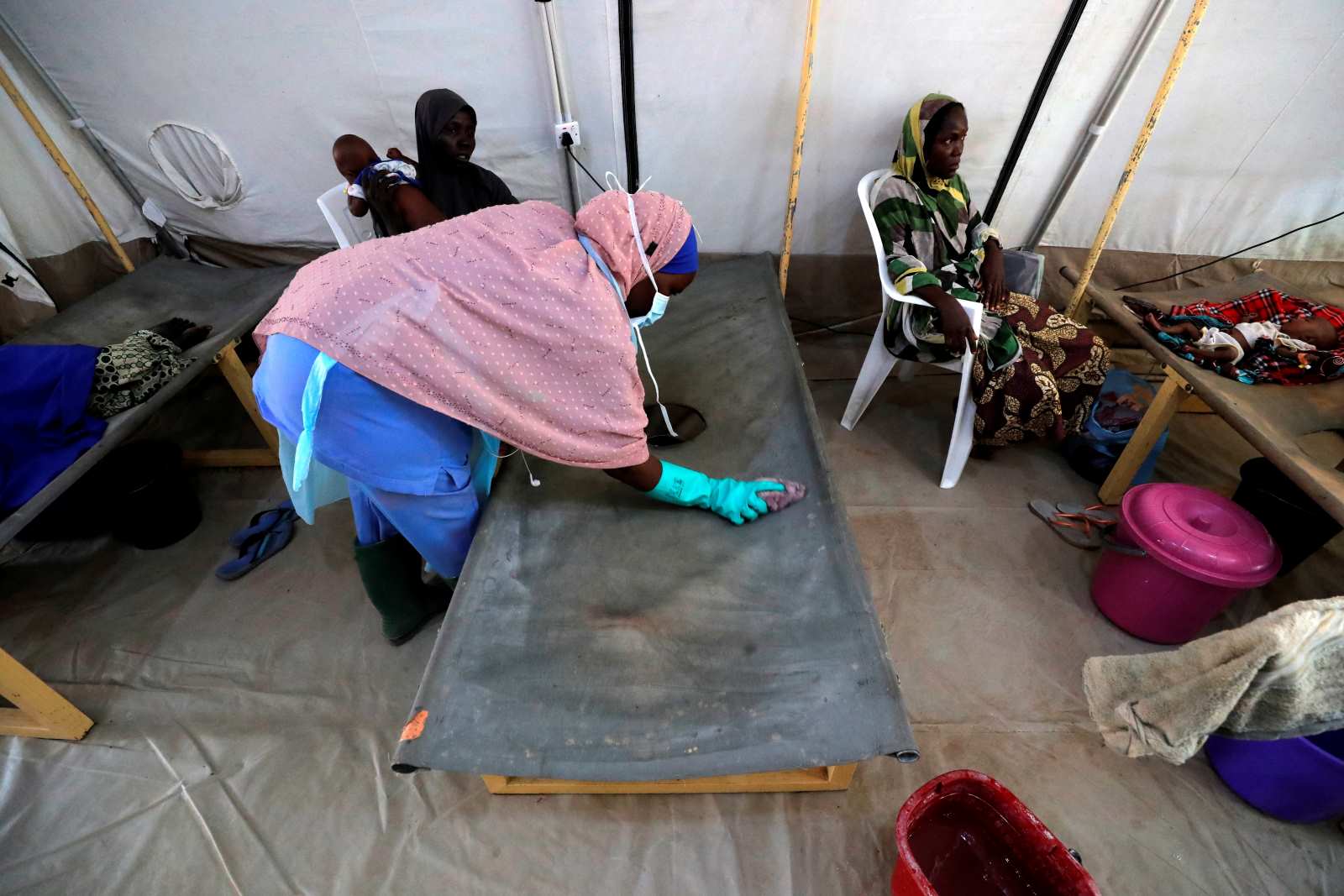
The Sickle Cell Advocacy and Management Initiative (SAMI), a Lagos-based charity, states that errors in private laboratories are widespread due to poor technical standards, and that the most commonly performed test, haemoglobin electrophoresis, is particularly prone to error. Alayo Sopekan, Director of Non-Communicable Diseases at the Federal Ministry of Health, however, partly blames patients for relying on unqualified private laboratories and failing to verify their results. “The first question I always ask is: Where did you have the test done? Public hospitals have qualified staff and certification systems. There, such errors are kept to an absolute minimum.” He adds that some people also deliberately falsify genotype results to “match them to their partner’s. When they start having children, the truth comes to light.”
There are also myths circulating in Nigeria that genotypes can change. Ibrahim Musa, a consultant haematologist at Aminu Kano Teaching Hospital, refutes this: “You don’t have AA and then, without any medical intervention, it changes to AS. If you see two different results, one of them must be an error. High-quality tests such as HPLC or isoelectric focusing are more accurate,” he says, adding that genotypes can only be altered medically through bone marrow transplants or gene therapy.
For the vast majority of people in Nigeria, neither of these treatments is even remotely affordable: a bone marrow transplant costs about $ 50,000 in Nigeria. Gene therapy, which was recently approved in the US, costs around $ 3 million.
Crushing costs
For people living with the disease, the pain is compounded by high costs. At 59, Shehu Olaito Mohammed, an accountant from Abuja, knows exactly how much it costs to survive. “There are standard medicines – folic acid, Paludrin, vitamin C and B complex and hydroxyurea. These alone cost up to $ 22 a month. But when a crisis strikes, the costs multiply,” he says. The average monthly income in Nigeria is around $ 100 to $ 220. The National Health Insurance Authority (NHIA) provides routine medication to prevent diseases that weaken the immune system, such as malaria. Folic acid and antimalarial drugs also help to increase haemoglobin levels in the blood. However, strong painkillers, gloves, disposable items and other consumables must be paid for out of pocket.
In Maraba Loko, in Nasarawa State, tyre repairer John Ishaya and his wife Monica live with their son Destiny, who suffers from sickle-cell anaemia. Ishaya says he knew nothing about genotype testing before their wedding. Starting when Destiny was two years old, his persistent illness meant months-long hospital stays and blood transfusions. “We spent around $ 1000. I had to sell my plot of land,” John Ishaya says. With a monthly income of around $ 14, the family relies on donations. “If we could turn back time,” says Ishaya, “this marriage would not have taken place. The suffering is too great.”
“They see us as half humans”
Across Nigeria, social discrimination is a further burden. Because they are stigmatised for a condition that is beyond their control, many are marginalised at school, in the workplace and even within their own families.
For 27-year-old Shamsiya, a civil servant and mother of one who lives in Abuja, the suffering began at an early age. As a child, her frequent illnesses led relatives to label her a “jinn” – an evil spirit – and she was treated accordingly. “People advised my mother to take me to the riverbank,” she says. “They said that if I were really possessed, I would get up, walk into the river and never return.”
Instead of getting medical help, she was forced to undergo spiritual rituals: smoke was blown into her nose, substances were rubbed onto her body, and she sought out spiritual teachers and herbalists. Even as her condition worsened, she was twice misdiagnosed as having the AA genotype.
It was only after her family had moved to Abuja that she received an accurate diagnosis of her SC genotype. Yet the diagnosis did not put an end to the stigma. In her neighbourhood and at her workplace, Shamsiya’s condition became a reason for her to be marginalised. “It weighed so heavily on me that sometimes I couldn’t bring myself to go to work or be around other people, because they see us as half-people. As if we didn’t function like other people,” she says.
At work, colleagues tacitly undermine Shamsiya’s abilities, and sometimes stigmatisation even comes from other patients, she says. Those with the SS genotype occasionally dismiss SC patients as “not real sicklers”.
Nigeria’s efforts to tackle sickle-cell disease
Alayo Sopekan of the NCD Control Division explains that Nigeria’s efforts to combat SCD are coordinated through the NCD Department, which was established in 1989. After a national survey in 1990 revealed that around 25 % of Nigerians were carriers of the sickle-cell gene, the government set up a dedicated SCD unit and launched awareness campaigns to counteract stigma and misinformation.

A major breakthrough was achieved in 2010 with the introduction of the National Guidelines for the Prevention, Control and Management of Sickle Cell Disease, Nigeria’s first comprehensive framework. Six centres of excellence were established across the country to enable early diagnosis in newborns and prompt care, including routine vaccinations such as those against polio, prophylactic medication and screening for stroke risks. In addition, training manuals were developed to support primary healthcare workers in carrying out newborn screening, particularly in rural areas.
SCD was later incorporated into the broader national strategy for combating non-communicable diseases (NCDs), which encompasses prevention, treatment, staff training and long-term care. However, according to Sopekan, the government has resisted legislation making genotyping compulsory, citing concerns about potential discrimination.
Meanwhile, it was reported last August that a bill introduced to establish a national sickle-cell centre had passed its second reading. In October, Nigerian media reported on the Senate’s plans to set up nationwide research and treatment centres for SCD, at a cost of around $ 3.5 million. Alongside these legislative initiatives, there are research efforts involving the University of Abuja and international partners.
Awareness remains too low
Ayoola Olufemi, Director of Health and Social Care at the National Orientation Agency, the body tasked with communicating government policy, explains that sickle-cell anaemia remains a major burden in Nigeria because many young people are unaware of their genotype. “As 40 to 50 % of our population consists of young people, they need to be aware of the burden of sickle-cell anaemia so that they can make informed decisions when they wish to marry,” he says.
He points out that the government uses radio and television adverts, information and educational materials, social media and community awareness-raising initiatives to promote awareness of genotypes, adding that many participants help to spread the message within their communities.
Nowadays, it is especially social media that provides important platforms. Before her death in June 2025, Edhughoro Ejiroghene Onome, known as Ejiro, used her suffering as a catalyst for her activism. As a journalist and campaigner in the fight against sickle-cell anaemia, she posted unedited videos showing her pain.
Her death, along with that of Joy Mari Wujat, a lawyer and mother who died in the same week at the age of 27, reignited public outrage over the inadequate care provided to people with sickle-cell disease in Nigeria. Joy, too, had shared her struggles online.
Unless Nigeria tightens its health regulations, invests in quality assurance for laboratories and makes premarital genotyping tests compulsory, such preventable tragedies will keep happening.
Munyal Manunyi is an investigative journalist from Abuja, Nigeria.
talkmunyal@gmail.com