Post-conflict societies
Syria’s start-ups: building innovation from the rubble


“The electricity went out three times this afternoon,” says Hamza Hourani, Quizat’s co-founder. The team barely flinched each time, however. One person connected to a phone’s hotspot, another switched their laptop to a cached version of the platform. Work continued. This reflects something essential about how technology is being built in post-war Syria: not in spite of dysfunction but in permanent negotiation with it.
Driving through Damascus and into Homs, you still see the scars of war – collapsed facades, streets where rubble has simply been pushed to the side rather than cleared, apartment blocks with floors missing like punched-out teeth. And yet, in offices tucked into these same neighbourhoods, a generation of entrepreneurs is building ride-hailing apps, education platforms and food delivery networks. They are not waiting for reconstruction to finish. In many ways, they are the reconstruction.
The civil war decimated Syria’s economy, displaced more than half the population at its peak and left cities without reliable electricity or public transport. That a technology sector would survive – let alone grow – in these conditions seemed improbable. But the companies that emerged did so precisely because they designed their business models around the crisis.
Necessity as a design principle
YallaGo, a ride-hailing app launched in late 2018, is one prime example. Its founder, Khaled Moustafa, built the platform for a country where global payment systems are inaccessible, internet connections drop without warning and fuel is chronically scarce. The app runs on minimal data and relies on GPS that functions independently of the mobile network. Payments are in cash, and routes are optimised for fuel efficiency. The platform is now so embedded in daily life that “calling a YallaGo” has become the generic term for ordering a ride. The company estimates that over 35,000 families now earn a livelihood through the platform.
The education app Quizat followed a similar logic. Syria’s school system was devastated by the war: qualified teachers fled, school buildings were bombed and millions of students lost years of learning. Hourani built a platform specifically for low-bandwidth environments and older smartphones – the devices most Syrian families own. The focus is on self-paced study and practice tests for university entrance exams, not live-streamed classes that would require a stable connection.
BeeOrder, a food and grocery delivery service, applied the same thinking to logistics. Rather than building city-wide delivery routes that depend on fuel and open roads, the platform operates hyper-locally: couriers serve specific neighbourhoods, keeping distances short and costs predictable even during fuel shortages or restrictions on movement.
What unites these companies is a shared constraint: they have to work within a broken system or not at all. This has forced them to develop capabilities – offline-first architecture, cash management, bandwidth optimisation – that most start-ups in stable economies never need to think about.
Women entering the Start-up workforce
Another distinctive feature of the Syrian start-up scene is who is actually building it. The war has forced a huge number of Syrian men to flee the country, join the military or simply disappear. This grim reality has opened space, however imperfectly, for women to enter the workforce in new ways.
The majority of Quizat’s core team are women, Hourani says. This was not a policy decision but a reflection of who showed up and stayed. They develop and maintain the app, curate the question databases, coordinate with content contributors and run operations. According to data from Startup Syria, a community-based organisation tracking the sector, the share of women-owned start-ups in Syria rose from just 4.4 % in 2009 to 34.7 % in 2025.
Women are also driving for YallaGo. Suha Khaddour, a 51-year-old former section head at Syrian Telecom, now earns her family’s income through the platform. She has to cope with certain restrictions such as avoiding certain neighbourhoods after dark. But the job exists, and she is doing it.
The diaspora returns
For years, Syria’s technology sector operated in near-total isolation. Sanctions cut off access to global payment systems, cloud infrastructure and international investment. Founders like Moustafa managed partly by operating from Dubai, where they could access business tools unavailable inside Syria. But diaspora capital and networks remained largely out of reach.
That began to change after the Assad regime was ousted in late 2024. In February 2025, a group of Syrian-American engineers and entrepreneurs from Silicon Valley organised SYNC – the first major independent tech conference held in Syria. They expected perhaps 50 or 60 attendees. According to the magazine Rest of World, over 1000 people registered within days of the announcement going public, and more than 1200 were on the waiting list. The summit ultimately drew over 3000 people, with participants arriving from more than 15 countries. A second SYNC conference in Damascus followed just four months later, with workshops being delivered by industry leaders from California, Canada, Germany, France and the United Arab Emirates.
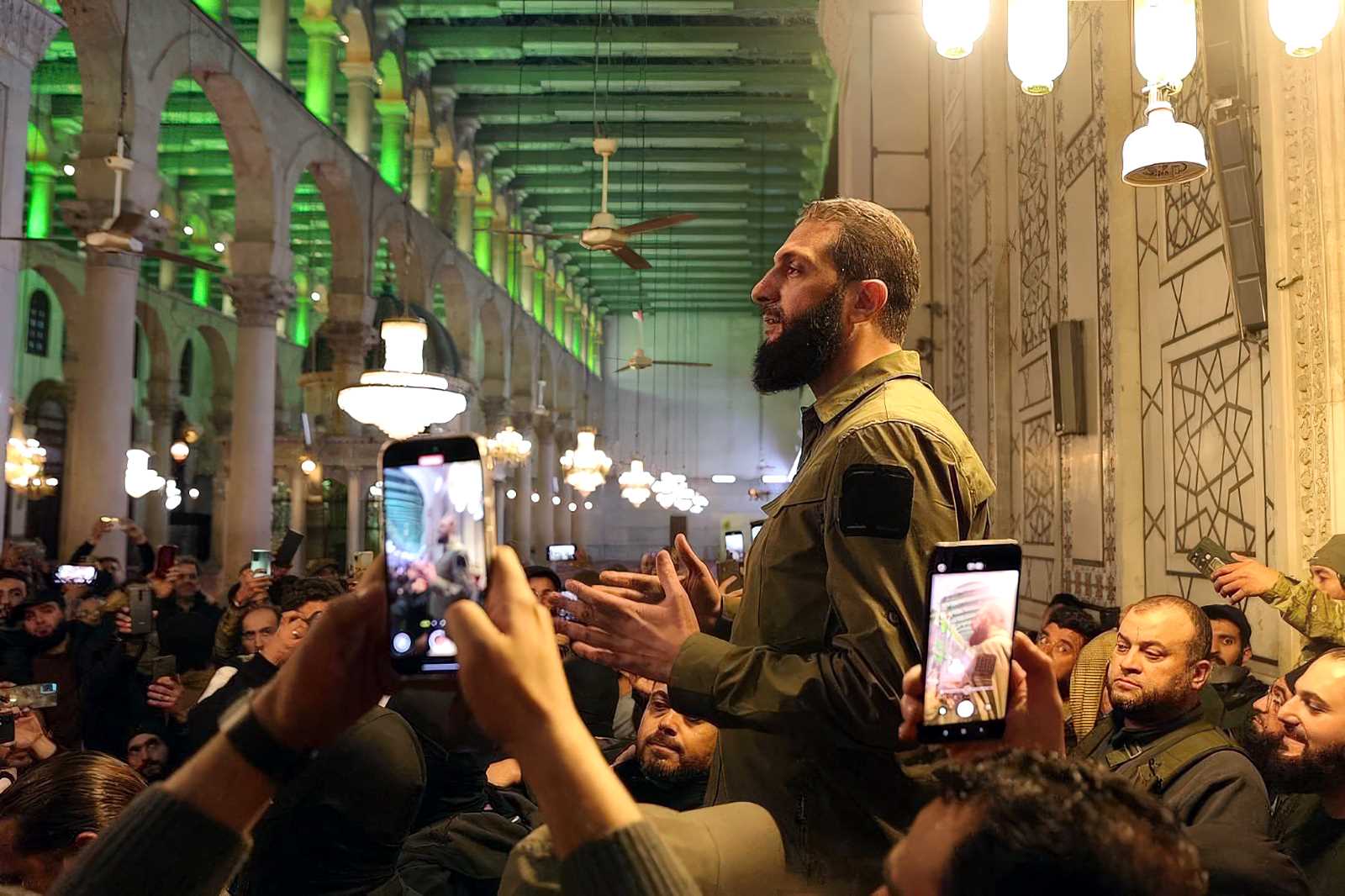
The goal, according to the organisers, is to help facilitate 25,000 new jobs in Syria’s technology sector by 2030. But beyond the numbers, the conferences signalled something harder to quantify: that the global Syrian diaspora – long defined by its departure – is beginning to reconceive itself as a source of funding. Diaspora money now accounts for a big part of investments in Syrian start-ups, according to YallaGo founder Moustafa.
Some of it comes with unrealistic expectations: returnees bring visions that are shaped by Silicon Valley and do not always fit a context where a start-up’s servers can be shut down by the government and switched back on only in response to public pressure on social media. But the diaspora experts also bring mentorship, networks and access to global markets that no amount of local ingenuity could replicate.
A different model of resilience
Syria’s emerging tech sector does not detract from the scale of the country’s crisis. Inflation remains severe, and many skilled Syrians are still leaving. The war’s wounds are not healed by the existence of a ride-hailing app.
But the companies taking shape in Damascus, Homs and Latakia do offer a lesson in post-conflict recovery – one that development practitioners and policymakers would do well to examine. They show that entrepreneurship in fragile states is not simply a scaled-down version – with worse infrastructure – of entrepreneurship elsewhere. It is something structurally distinct: shaped by constraints that become, over time, a form of expertise.
The offline-first design philosophy forced on Syrian developers by poor connectivity is increasingly relevant globally, as climate disruptions and conflict make infrastructure unreliable in more and more places. The hyper-local delivery model developed by BeeOrder in response to fuel scarcity is more sustainable and resilient to crises than the sprawling logistics networks of its well-funded Western competitors.
What Syria’s start-ups have built, in other words, is a blueprint – imperfect, incomplete, but an indication of what real form innovation can take when it has no choice but to work.
Rishabh Jain is a freelance journalist and documentary filmmaker covering topics such as climate change, health, human rights and migration.
rish.jain8899@gmail.com