Technical infrastructure
How start-ups are plugging infrastructure gaps in the Global South


In Nigeria, there’s on average one radiologist for several hundred thousand people – a significantly lower ratio than in industrialised countries. This serious supply gap is symptomatic of many emerging economies. These days, the private tech scene is increasingly coming up with the solutions.
Rology, for example, is an Egyptian health-tech start-up that runs an AI-assisted teleradiology platform. It hooks hospitals up with radiologists around the world who analyse medical imaging data such as X-rays remotely and make a diagnosis. The company addresses the shortfall in radiologists and provides diagnoses more quickly and cheaply, especially in regions with limited medical infrastructure.

Models like Rology reflect a fundamental shift: start-ups in developing countries and emerging economies are no longer just developing products or providing individual services – increasingly, they’re also building the underlying infrastructure. And it’s a model that could also be exported to markets around the world.
Autonomous drones, solar-powered cold storage facilities
What is happening there these days goes significantly beyond the popular narrative of “leapfrogging” – the idea that a country can simply skip certain stages of technological development. Instead, we are witnessing the development of hybrid infrastructure from the bottom up: start-ups build the foundation on which entire ecosystems can grow, with artificial intelligence reaching directly into the physical world.
In Rwanda, for instance, AI controls the flight paths of autonomous drones operated by the US company Zipline. They transport vital medical supplies such as blood to remote areas. In Ghana, the start-up FreezeLink connects solar-powered cold storage facilities with intelligent monitoring systems. This creates infrastructure that is sorely lacking in many African countries to date and ensures that products remain cool throughout their journey from producer to consumer.
North Africa today is characterised by a unique dynamism. Countries such as Morocco, Tunisia and Egypt are seeing the emergence of a young tech-savvy generation that is forming the backbone of a new service infrastructure. Tunisia, for example, ranks among the world’s top countries in terms of graduates in STEM subjects (science, technology, engineering and mathematics).

This pool of engineers and IT specialists means that cities like Casablanca, Tunis and Cairo are becoming central hubs for engineering and cybersecurity as well as for offshore services. Thanks to their geographical proximity to Europe, start-ups in North Africa are also ideal partners for European firms wishing to employ highly qualified remote teams to drive their digital transition. Similar developments can also be observed in other parts of the world.
Digital infrastructure in Southeast Asia and Latin America
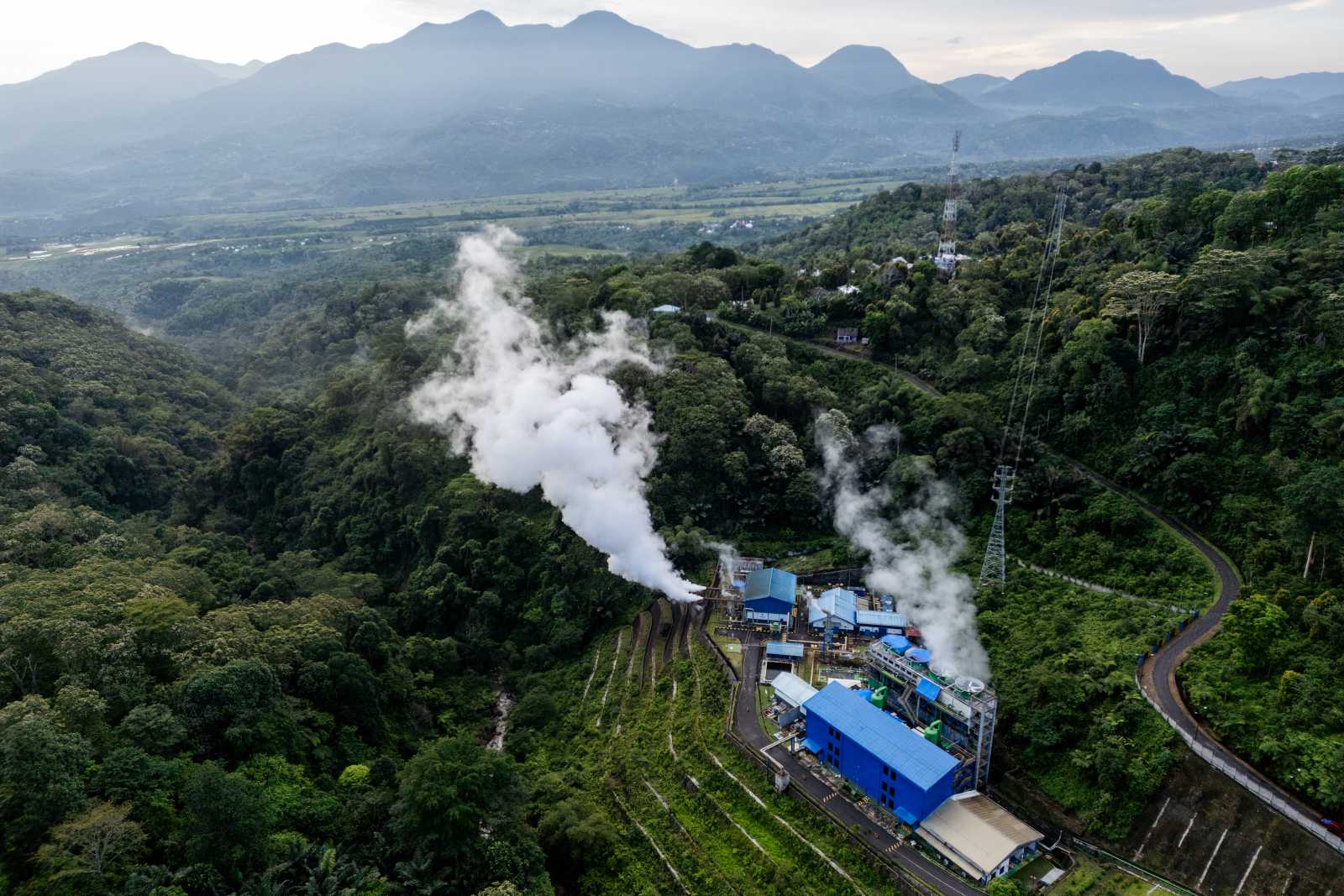
Such “bottom-up infrastructure” has long since become a global phenomenon. In Southeast Asia, especially in archipelagic states such as Indonesia and the Philippines, geographic fragmentation hinders conventional physical trade. In these situations, start-ups have created decentralised logistics and payment systems that are connecting millions of micro-entrepreneurs to the global market for the first time. These “super apps” essentially provide regions that never had access to traditional banking and postal services with a financial and trading infrastructure – in the form of platforms like Gojek in Indonesia or Grab in Southeast Asia, which combine payment, delivery and mobility systems and services in a single app.
The transformation in Latin America is similarly far-reaching. In Brazil and Mexico, fintech pioneers have established a financial infrastructure ecosystem that not only challenges the traditional sector but has actually overtaken it as far as inclusion is concerned. The digitisation of loans and insurances has enabled a degree of economic participation that was previously unthinkable due to rigid bureaucratic hurdles. At the same time, agri-tech start-ups are revolutionising farming from Argentina to Colombia by leveraging satellite data and AI to manage resources more efficiently. In an era of climate change, this is a critical step forward in terms of infrastructure and involves a lot more than just selling software.
For such innovations to have a broad impact, governments need to adopt an attitude of regulatory openness or “regulatory patience”. One well-known example is the M-Pesa mobile payment system in Kenya; its success can be attributed in part to the fact that the regulatory framework initially allowed for flexibility and was only adjusted subsequently.

Regulatory sandboxes are one instrument that is frequently used in such situations. These are safe spaces in which companies can test innovative business models under real-world conditions before extensive regulation comes into force. Though such approaches have also been adopted in industrialised countries, they are often used in particularly flexible ways in the Global South.
This can lead to a “reverse innovation” effect whereby solutions devised in emerging economies act as a catalyst for change in other markets. It’s not so much about replacing existing systems in industrialised countries – it’s about incorporating or further developing new and often more efficient approaches.
Opportunities for private providers of development finance
We are currently experiencing a geopolitical turning point. As states slash their development budgets, private investments are becoming ever more important. Venture capitalists and family offices that manage large private fortunes are increasingly closing the funding gaps left by public-sector actors.
German firms are also showing growing interest in investing in business models that address local problems and are globally scalable at the same time. Capital often has the biggest impact where it is scarce: one additional job created in an emerging economy can have a substantial structural leverage effect.
Boosting local value creation
This is particularly true of models that create real value at the local level – for example, when local production capacities are developed along existing raw material chains. Companies such as Fairafric, a German-Ghanaian social business whose chocolate production facility in Ghana was funded by German development finance institution DEG (Deutsche Investitions- und Entwicklungsgesellschaft), demonstrate how value chains can be retained in the countries that grow the raw materials. This makes it possible for local people to earn a living, reducing Africa’s dependence on conventional raw material exports. In other words, technology enables local resources to be sold on the global market.
This shift means that the international community and private providers of development finance should view start-ups as relevant infrastructure operators. This requires a suitable funding architecture. It should include not only blended finance instruments that combine public capital – to cushion against risks – with private investments, but also circular models that reinvest returns directly in new local projects.
Those wishing to foster this process effectively should be willing to invest in the new digital and physical foundations. For European investors, the Global South is thus no longer just a market – it’s a key test laboratory for the infrastructure of the future.
Wolfgang Krieger is the economist at KfW subsidiary DEG in Cologne and an expert in international markets. He specialises in private investment funding in developing countries and emerging economies.
presse@deginvest.de