International football
“The first thought is: We need a man for this.”


Carolin Braun in an interview with Eva-Maria Verfürth
Germany has been discussing the first female head coach in the men’s Bundesliga for several weeks now. In Kenya, a woman has been coaching in the Kenyan Premier League for the first time for two years. Female coaches in men’s football remain a genuine rarity. You were the first ever female assistant coach of a men’s national team. What brought you to Botswana?
I was working at the Technical University of Munich when an exciting project in Botswana was advertised. I applied, but I didn’t really think I’d get the job, as it was a men’s football project. In the end, the Botswana Football Association (BFA) was given the opportunity to choose from three candidates, and the other two were men with strong qualifications. I assumed that would be that. But the BFA chose me. And I thought: if they’re that open-minded, I’m even more interested. From 2019 to 2022, I was posted to Botswana through a joint project by the German Olympic Sports Confederation (DOSB), the German Football Association (DFB) and the Federal Foreign Office (AA).
But that wasn’t about the national team at first?
No, not at all. My job was to support football development, scout and nurture talent, train and educate coaches, and I also supported women’s football. Thanks to my experience and my UEFA A licence, which qualifies me to work in professional football, I became an instructor for CAF, the Confederation of African Football. I focused on training programmes for coaches who would otherwise have no opportunity to attend courses. I travelled extensively throughout the country, sometimes driving for up to 11 hours to reach some of the locations. It was during that period that the men’s national team changed coaches. The new head coach, Adel Amrouche, approached me several times about joining his staff, but I always declined. I already had a role that was very important to me. Joining the national team was never my goal and, looking back, I’m not sure I ever actually said yes.
So how did it end up happening?
I was travelling abroad with the women’s national team. When I was about to fly back, the team manager told me that my ticket had been rebooked: “You’re now flying directly to the men’s national team, who are currently holding a training camp in Egypt.” He wouldn’t let it go because he thought it was a good idea. I laughed, and then, of course, I was happy to join in. I ended up doing both jobs on many days: first I’d teach an eight-hour coaching course, and then I’d join the national team.
How did the players and the fans react?
The players might have looked a little surprised at first, but the coach made it clear from day one: Caro is the assistant coach, end of story. Then we were on the pitch and none of it mattered anymore. When you’re focused on your work, everything else falls away. We prepared together for the Africa Cup of Nations and World Cup qualifiers. Fans had mixed reactions – some celebrated it while others found it strange. In any case, the media attention was enormous.
What was your biggest footballing success during your time in Botswana?
Qualifying with the women’s national team for the Africa Cup of Nations, for the first time ever. I was with the coaching staff as technical adviser, on the bench and at every training session.
Was there ever any question of you taking on a formal coaching role with the women’s team?
I definitely wouldn’t have wanted that. There was already an established coaching team in place, and someone – a Botswanan coach – would have had to step aside.
If you hadn’t come in from outside, could a Botswanan woman have become assistant coach of the men’s national team at that point?
With the men’s team? No, absolutely not. But that doesn’t just apply to Botswana. Even in Germany and other European countries, we’re still a long way from having women coach men at the national team level – in fact, almost everywhere in the world. It just happened to work out in this particular case: the right time, the right place and a coach who wanted support.
You’d already worked as a coach educator in Gambia and Namibia before. Coming in as a European, with all the colonial history that implies, must have rubbed some people up the wrong way. How did you handle that?
You need a lot of empathy and understanding of how to conduct yourself in each situation. I always made it clear that I was there to collaborate, not to set the direction. In meetings with officials, I would often say early on: “I know – I’m too young, I’m a woman, and I’m a foreigner.” If I said it with a bit of humour, people would smile, the ice would break, and we could actually start talking.
Your most recent position was assistant coach of the men’s national team in Tanzania under Adel Amrouche…
We qualified for the Africa Cup of Nations for only the third time in the country’s history. That was a huge success. In early 2024, we played in Côte d’Ivoire against teams such as Morocco, with players like Bono – Yassine Bounou – and Achraf Hakimi.
Yet you didn’t continue on that path but moved to FIFA instead. What do you do there?
I lead the Stream Expertise of the “Talent Development Scheme” – essentially talent development on a global level. I have a large team of experts who work with the associations around the world. We focus on elite development in both major footballing nations and countries that have not yet achieved much success at the international level. The last few World Cups have been dominated by European teams and a few top nations like Brazil and Argentina. Our goal is that at World Cups – at senior level, but also at U17 and U20 – there is truly a diversity of countries from all regions in the semi-finals and finals.
FIFA has a troubled reputation and calls to boycott men’s World Cups are a fixture of the tournament cycle. What’s it like working there?
These debates tend to overshadow the work of FIFA’s sports sector. Our talent development programme involves 200 of FIFA’s 211 member associations. Each association has a contact person who works with them on a long-term strategy, supports their scouting, focuses on ensuring quality and challenging match opportunities as well as the best training environments. Some projects also receive funding.
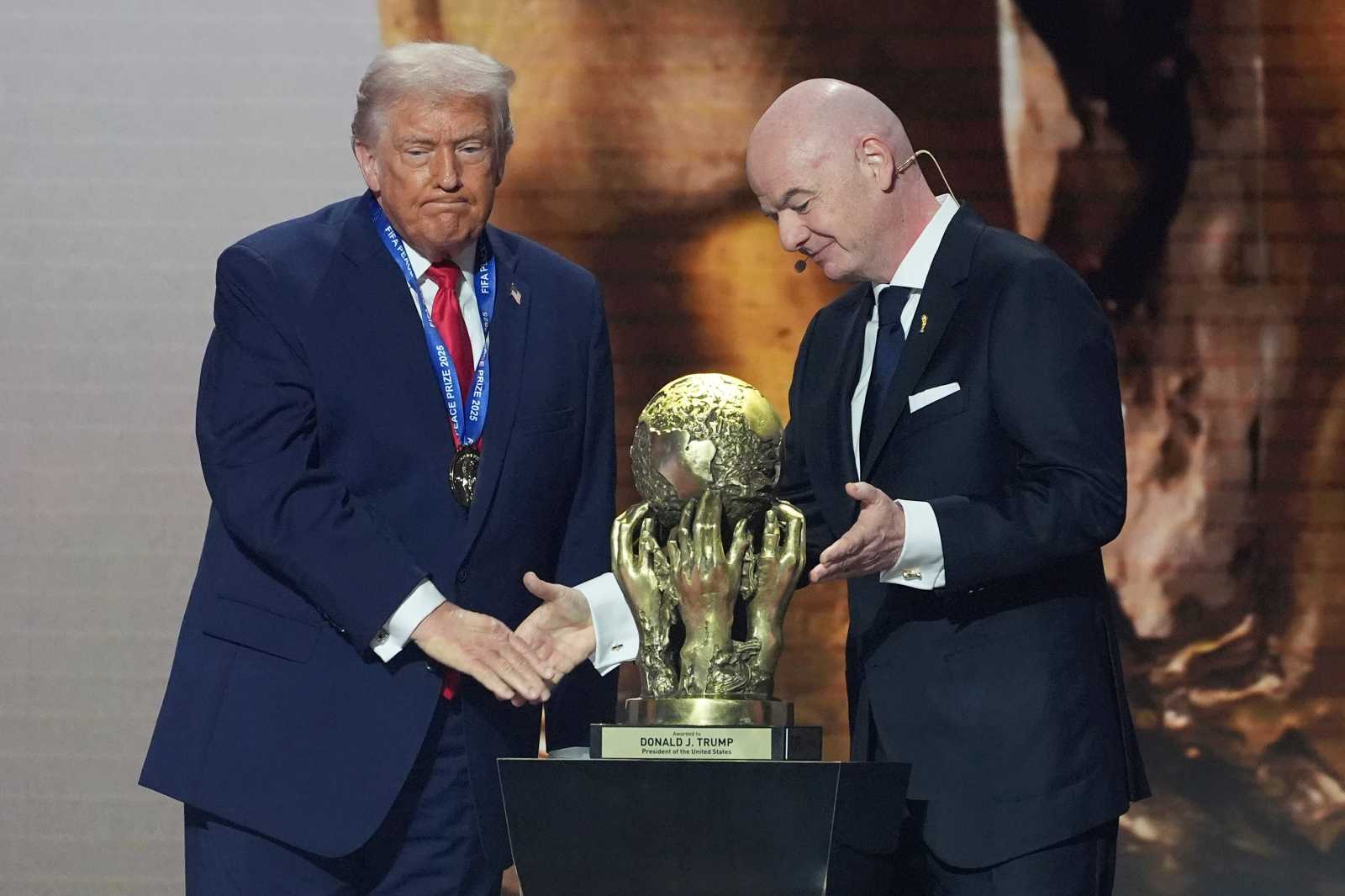
We also run “Knowledge Exchanges”, where we bring together a group of associations from the same region so they can learn from each other. Recently in Mexico, for example, we had the USA, Honduras, Guatemala, Canada, Curaçao, Spain and others participating. It is interesting for smaller associations to see that others face similar problems, just on a different scale. FIFA, in turn, brings a wealth of expertise to the table. April Heinrichs, for instance, captained the US to its first-ever Women’s World Cup victory and later won Olympic gold as a coach.
April Heinrichs is one of the more well-known names in women’s football, but men still dominate the conversation. Why does promoting women in the sport matter?
Honestly, I find it disheartening that in 2026 we’re still having this discussion. Football is for everyone, and that should be it. But we’re not quite there yet, and so targeted support is still necessary. Take the Women’s Bundesliga, for example: there simply aren’t enough female head coaches. This has a real effect: girls either give up on becoming coaches or don’t even start in the first place. You really have to want it to keep pushing through despite everything.
What was it like when you were a child?
There weren’t any girls’ clubs back then. I played with the boys and cut my hair short because all the boys had short hair. I was the only girl in my team, and none of the other teams had any girls either. There’s more access now and more role models, but still not enough. Depending on where you are, there are still a lot of prejudices.
What was it like in Botswana?
The senior women’s head coach there had been in the job for 10 years, while also working as an air conditioning installer. She barely earned anything from football – the equivalent of 10 dollars a day, and only when we were in training camp. During our time together, we had good players and qualified for the Africa Cup of Nations. That’s when some people immediately started saying: We need a man now, someone with more experience. Even though she had dedicated herself for 10 years, at the moment success came, she was supposed to step aside. Yet the man being proposed didn’t have a higher coaching licence or a stronger track record either. That assumption – that a man must be better, regardless of qualifications – is widespread in many places.
What happened in the end?
The coach wasn’t replaced straight away but was later demoted. Nevertheless, she’s still there. A lot of women have remarkable staying power, even though the conditions are so difficult. I once travelled with the U17 girls’ team to a match in Eswatini. The bus driver had never been outside Botswana before and got terribly lost; we ended up in some really dangerous areas. The nine-hour journey turned into 24, with no food and a bus that was falling apart. This kind of thing simply wouldn’t have happened to the boys’ team. These girls deserve support. It takes so much energy to see this through.
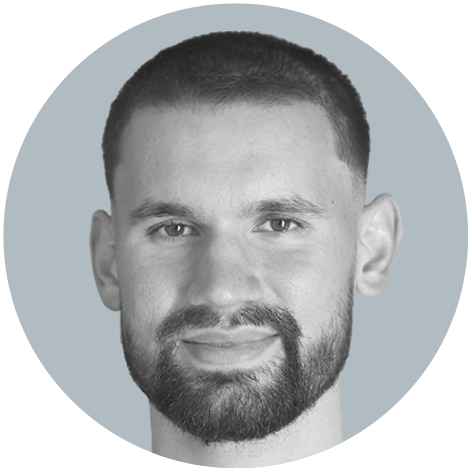
Carolin Braun leads the expertise of FIFA’s Talent Development Scheme. From 2019 to 2022, she worked for the Botswana Football Association and served, among other roles, as assistant coach to the men’s national team.
Instagram | Dr. Carolin Braun