FIFA
Does international football need to reinvent itself?


One scene from December 2025 encapsulates all that’s wrong with international football better than almost any other: FIFA President Gianni Infantino presenting US President Donald Trump with a peace prize created especially for him. “You can always count on my support and the support of the entire football community,” purred Infantino. Even some FIFA officials later let slip that this made them feel ashamed.
The prize had been conjured up at short notice and involved neither clear-cut criteria nor a jury – but it flattered the US president. Shortly afterwards, the US threatened to annex Greenland, kidnapped Venezuelan President Maduro and launched a war of aggression against Iran. Officially, FIFA is politically neutral. However, in awarding the peace prize it really threw this neutrality overboard like never before.
International football has been losing credibility for a long time. Its World Cup events generate not only global euphoria but also vehement protests and frustration. “Football is for people, FIFA is for profit” is a slogan in the protest scene. But what form might international football “for people” take?
Every tournament is overshadowed by debates about boycotts
The challenges facing international football can be viewed in two ways: from either a geostrategic or a systemic perspective. In geostrategic terms, both national and international sports associations profited hugely from the relatively peaceful era following the Second World War. This stability is increasingly crumbling, however. The Uppsala Conflict Data Program recorded more armed conflicts in 2024 than at any time since the Second World War. Though the money-printing machine that is the men’s World Cup is comparatively crisis-resistant, it is also feeling the impact of these growing international rifts: until shortly before the 2026 World Cup, for example, it wasn’t clear whether the Iranian team would be granted visas to enter the US.
What is more, FIFA itself keeps manoeuvring itself into situations that trigger debates about human rights and integrity in international football. Trust in the organisation has been eroded by its decisions to award World Cup hosting rights first and foremost to influential states willing to invest large sums of money – recent examples being Russia, Qatar, the USA and Saudi Arabia – regardless of their human rights stance. The Human Rights Framework laid down for the 2026 World Cup is de facto not being implemented. Infantino took office in 2016 to reform and modernise FIFA following the 2015 corruption scandal. The accusations of corruption persist, however. Many national associations are financially dependent on FIFA, which almost inevitably leads to manipulation and corruption when it comes to elections and the awarding of World Cup hosting rights.
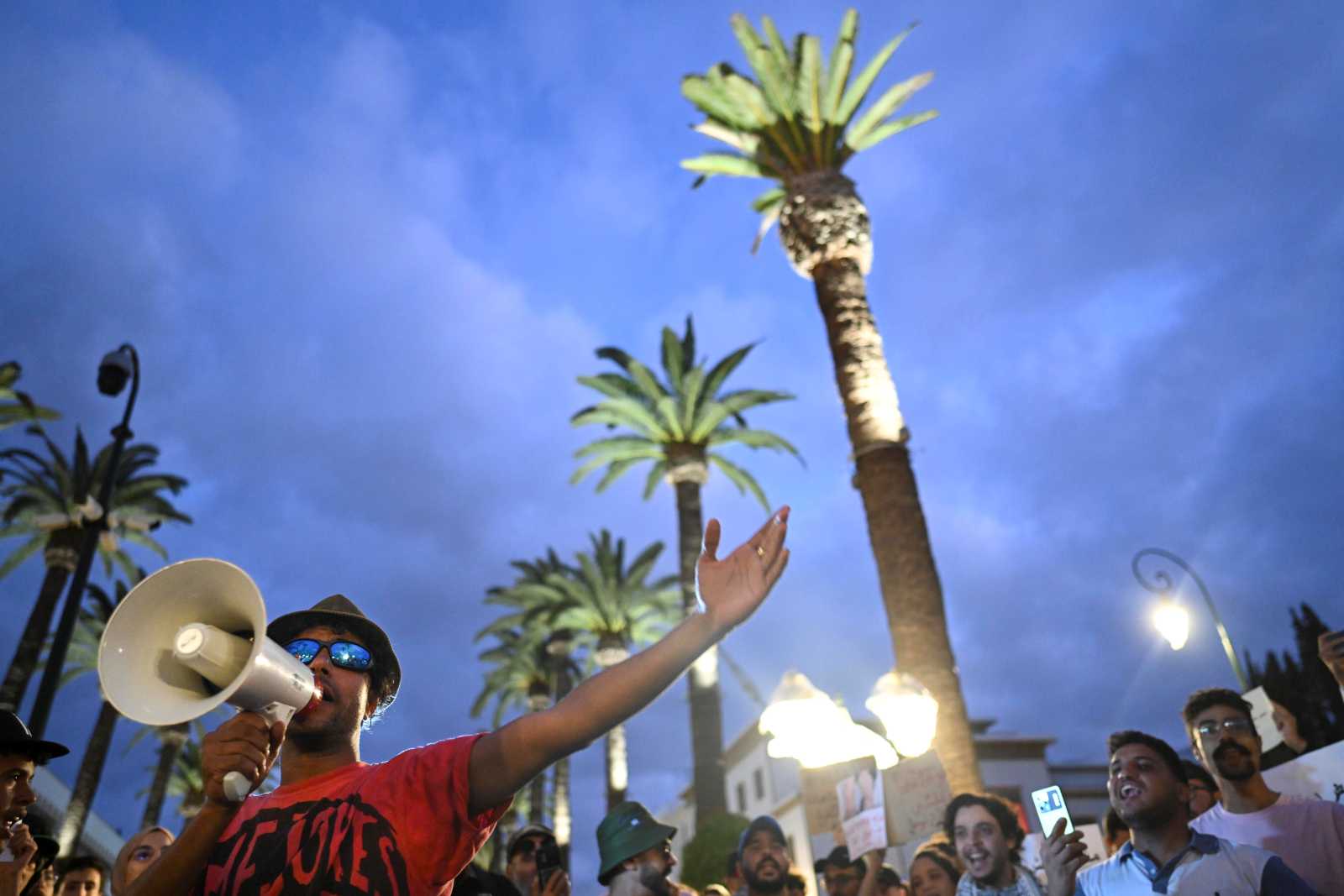
The skyrocketing costs of the tournaments have also sparked protests at the local level – most recently in Morocco and Mexico. Major infrastructure projects are in line with FIFA’s rules, yet without considering the needs of local people. They consume scant resources in regions that can ill afford to spare them. And in this era of climate change, it’s sheer madness in any case to keep staging ever more extravagant championships.
The actual business of organising the competitions can hardly progress at all these days amid the endless debates about boycotts: Should teams from Russia and Israel be allowed to take part? What should be done to prevent human rights from being violated in host countries like Qatar? What is the appropriate response if the US imposes visa restrictions? Wherever the tournaments are held, they face opposition. Football is staggering under its own gigantic weight.
Almost all the national associations bury their heads in the sand and hope the storm will pass. So, the players bear the full brunt instead, as the German team experienced in Qatar. Since homosexuality is outlawed in Qatar, the German Football Association (DFB) wanted to make a stand after coming under considerable pressure from critical fans. However, when FIFA refused to permit the German captain to wear a rainbow armband or to allow the “OneLove” logo to appear on the armband (and the DFB failed to raise any serious objection), they decided that the team would instead make a gesture: during the team photo, the players held their hands in front of their mouths to indicate that they had been gagged. Not only did this earn them criticism and mockery from many sides; it seems there were conflicts within the team, too.
Top-flight football is rich because others are left to pay the bill
The situation can also be examined in terms of the system itself, however – a perspective that has shifted somewhat out of focus in recent years. These days, nobody seems bothered any more by the fact that Cristiano Ronaldo became football’s first billionaire or that the English Premier League spent £ 3 billion on transfers in the summer of 2025.
This highlights some fundamental flaws in the capitalist system. Private equity firms, dubious sovereign wealth funds, major oil and gas companies and individual billionaires are investing more and more in football. None of this money is neutral: some of it comes from investors in the oil and arms industries and leads to workers being exploited and climate change exacerbated. Top-flight football is rich because others are left to pay the bill.
This also has consequences for football: as club ownership becomes increasingly polarised, so too do the national leagues. The top-tier clubs thrash all the other teams ever more dramatically, at both national and international level. Meanwhile, continents like South America and Africa find themselves at the back of the global race. Supplying top players seems to be their foremost purpose – extractivism exemplified, just as in the rest of the world’s markets.
The pyramid system of promotion and relegation also means clubs have to spend ever larger amounts of money just to remain at the same level. Once international tournaments reach the quarter-finals, the only teams left in the running tend to be the handful of usual suspects from Europe and a small number of South American countries. Though never exactly a poster boy for equal opportunities, football today conveys a new ideology: it’s all about watching superstars running rings around their opponents.
Such ludicrous sums of money aren’t even necessary: women’s football, which these days is absolutely on a par with the men’s game in athletic and professional terms, manages perfectly well with just a fraction of the money.
Utopian visions of football
There were already attempts over a century ago to completely rethink football: in the 1920s, international workers’ football was established in Europe. Conceived as an alternative to “middle-class” football, it even boasted its own European championships. Footballers in Germany were organised within the Workers’ Gymnastics and Sports Federation (ATSB), which had socialist and communist leanings. Sport here revolved around solidarity and international understanding. Fair play was taken seriously, and ATSB-specific rules were established to protect players against injury. When the Nazis came to power, the movement was disbanded in Germany: only the more middle-class German Football Association (DFB) was allowed to continue to operate; today it is the world’s largest sports association and the umbrella association for German football.
A more intelligent structure would also make sense today. Leagues offering different approaches to football could exist side by side: one could still be all about winning and losing, another would perhaps involve cooperative football and a third might see three teams on the pitch rather than just two. One thing is certain: association football in its current form by no means accommodates everyone with all their different needs.
The most important thing that needs to change , however, is the way football is financed. To endure, international football cannot continue to be based on growth and excessive wealth. Instead of simply watching the matches, society itself should have the chance – for example by taking part in councils – to actively negotiate the funds channelled into football. They could then decide how much funding is really necessary and at last foster all those things that don’t interest investors at all: social engagement, sustainability, inclusion and novel ideas about how the game is played.
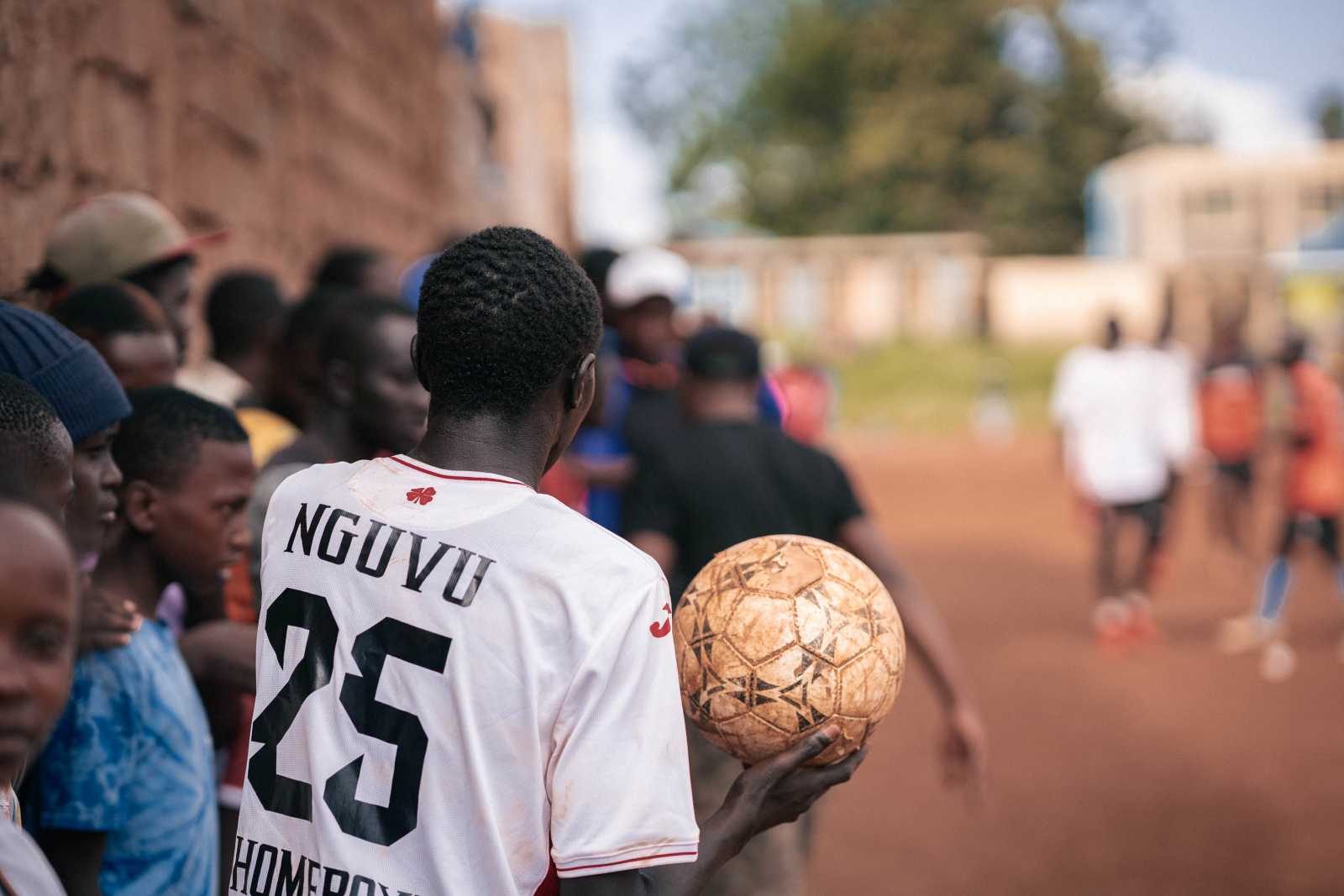
Amateur clubs are the best example that motivation doesn’t depend on money. Perhaps football doesn’t even need to involve remuneration. This would be an opportunity for the footballers themselves to embrace other spheres of activity at the same time, thereby broadening their horizons.
Football also urgently needs fixed climate budgets, with emission caps set for each individual player. After maxing out their “climate credit card” in any particular year, they would not be permitted to generate any further emissions.
Is a different type of football possible in practice?
Probably not within the confines of the existing world of Infantino, Trump and the billions spent on keeping the system up and running.
ltimately, the calls in many countries to boycott major tournaments like the World Cup are testimony to a lack of alternative options: if one has no say in how things are done, one can at least opt out of the whole business. They reflect a world that has been taught not to believe in utopia anymore.
However, another problem is that we see the key actors in international football as being the big clubs and officials. That’s why a better version of international football isn’t possible within these structures. What we can do is come up with an alternative vision – so let’s do just that.
LITERATURE
Schwermer, A., 2022: Futopia: Ideen für eine bessere Fußballwelt. Die Werkstatt. (German only)
Alina Schwermer is a freelance journalist and author, including for the German daily newspaper taz. She published Futopia, a book about utopian visions of football, in 2022.
alinaschwermer@taz.de