Press freedom
What it means to be a journalist in President Sisi’s Egypt


I grew accustomed to the sound of danger. It appears on my phone as “Unknown caller”. When that happens, my heart drops. I take a few seconds, then answer. Not answering may be worse. In Egypt, when National Security officers decide to visit a journalist’s home, they often arrive at dawn. I’m a journalist myself living in Egypt, and I have seen what that can mean for colleagues: broken doors, confiscated belongings, terrified families, insults and physical abuse.
The voice is familiar. It’s the National Security officer responsible for my file. He often sounds polite. He asks what I have written recently, why I chose a certain angle, what I meant by a specific sentence. Sometimes the call ends after a few minutes. Sometimes he asks me to come to the National Security office in Nasr City, an area in the eastern part of Cairo.
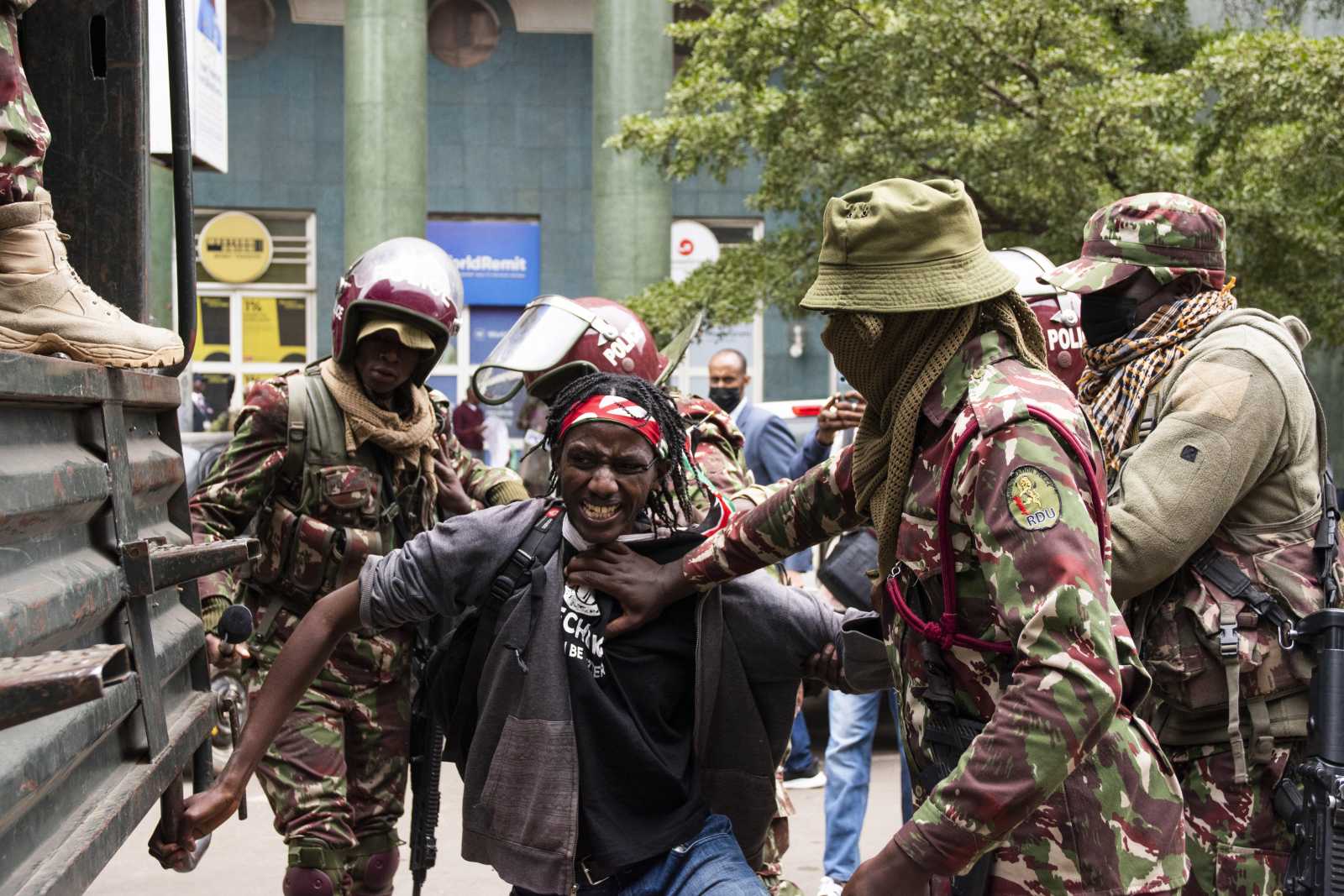
Yet a visit there is never just a visit. Many journalists and activists have disappeared after being summoned, only to reappear weeks or months later before prosecutors, accused of terrorism-related offences or “spreading false news”. They get 45 days of pre-trial detention, and then the detention is renewed again. When the legal limit of two years pre-trial detention approaches, a new case can be opened against them. Human-rights groups call this practice “rotation”.
At the gate in Nasr City, I hand over my phone. An officer takes me upstairs. The officer in charge of my file asks questions in the same calm tone. But there is usually another man sitting in the corner. He interrupts with short, sharp sentences: “You know this could be a terrorism charge.” Or: “You know this could be considered spreading false news.”
Egyptian press “under siege”
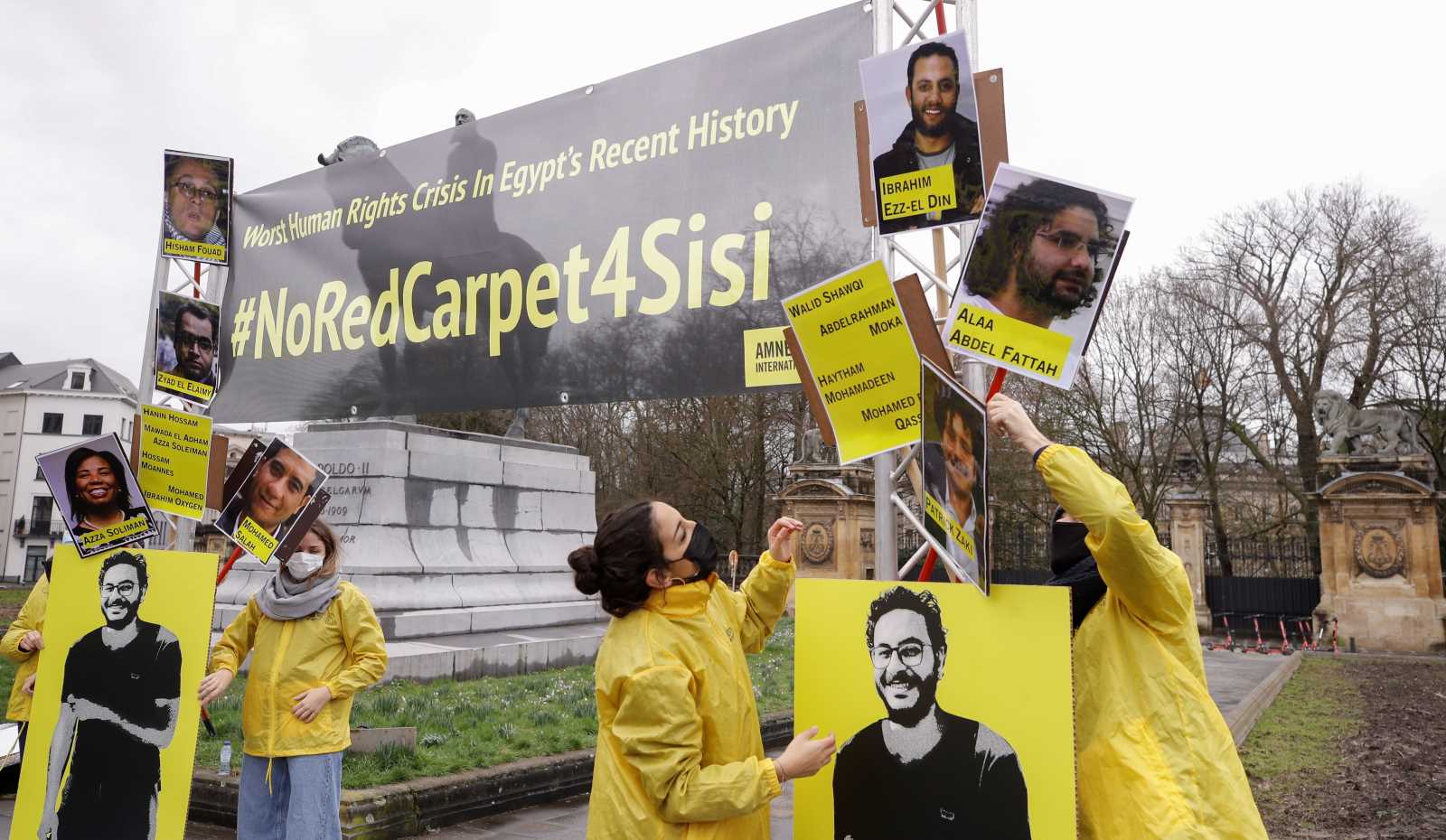
I don’t know why I’m not in prison yet. I also don’t know why many of my colleagues are. I work for an opposition newspaper, and in the newsroom, I’m surrounded by the photographs of colleagues who have spent years behind bars. What makes the pressure especially difficult is that we rarely know where the red lines are. Under Hosni Mubarak, the limits were clearer: don’t touch the president or his family. Under Abdel Fattah al-Sisi, the limits are vague, shifting and invisible.
That uncertainty is not unique to me. The think tank Tahrir Institute for Middle East Policy (TIMEP) has described the Egyptian press environment as “under siege”. Reporters Without Borders counted 18 detained journalists as of June 2026. Independent outlets are viciously targeted. Websites like those of Mada Masr, Al Manassa and Zawia3 are regularly blocked.
A jacket near the bed all the time
The pressure reaches families too. Human-rights groups have warned of “punishment by proxy”: relatives of exiled journalists and activists are arrested, harassed or banned from travel. That’s why at home, my family and I have what we call the “black night system”: there is a bag with my clothes, medications and other essentials, and a jacket and easy-to-wear shoes that stay near the bed all the time. My family has the phone numbers of lawyers, activists and journalists to call if security forces break into our apartment at dawn.
We have rehearsed what to do. My family should not argue with the officers. They should gather in one bedroom and stay silent. I should go with the officers without resistance, because resistance could bring more abuse.
Carrying on despite threats
The psychological pressure is almost unbearable. I live in fear most of the time. I dream of the police breaking down the door. Before publishing, I read my work again and again. I ask people I trust to read it too. We discuss who might be offended, how dangerous the piece might be, and what the response could be: a phone call, a summons to Nasr City, a long trip to prison. Yet these discussions do not bring certainty. Nobody really knows the red lines of journalism in Sisi’s Egypt today.
Still, I continue to work. Not because I’m brave in any heroic sense, but because documentation matters. Where prison conditions, enforced disappearances, torture allegations and political prosecutions can be hidden behind official silence, journalism preserves facts that power wants erased.
Mostafa Nabil is the pseudonym of an Egyptian journalist who wishes to remain anonymous for obvious reasons.
euz.editor@dandc.eu