Development policy and the German public
Support for development aid growing again in Germany


German development cooperation has been under pressure for several years. For one thing, the German government has cut funding significantly. Curtailing development aid budgets is a trend that is also evident in other countries. And for another thing, German DC has sparked considerable public criticism – which peaked when subsidies for cycle paths in Peru were discussed in early 2024. Though the intensity of the criticism has since diminished, German DC still faces strong headwinds in the form of everything from calls for spending cuts to fake news campaigns.
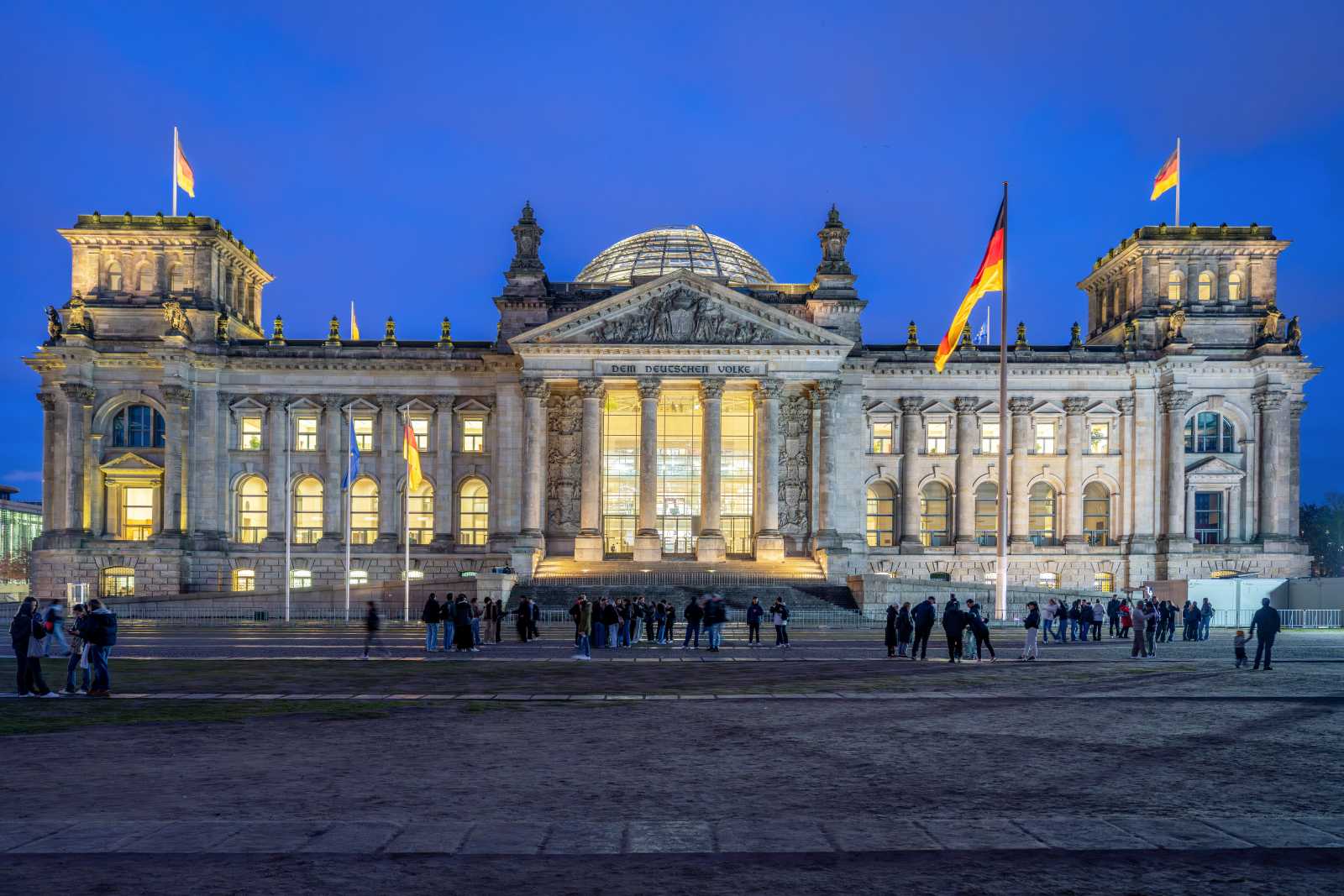
The Federal Ministry for Economic Cooperation and Development (BMZ) responded to the challenges by publishing a reform plan at the beginning of 2026. In it, the BMZ highlights Germany’s economic interests and how DC benefits Germany directly.
How does the German population view German development policy against this backdrop? More than two thirds (68 %) were in favour of it, at least in principle, in July 2025. At 76 %, support for humanitarian assistance is somewhat higher still. This is the finding of the latest Opinion Monitor for Development Policy. Since 2018, the German Institute for Development Evaluation (DEval) has been publishing its Opinion Monitor, which tracks public opinion on and knowledge of development policy and the degree to which people engage with this field of policy (see below).
Just over half of respondents (52 %) in November 2025 supported Germany’s current level of DC spending or even wanted to increase it. This percentage is slightly up on the low it reached in January 2024 (47 %), but it remains well below the broad-ranging development aid consensus seen in the years 2019-2022. During this period, around two thirds of those surveyed wanted to maintain or step up DC spending.
Doubts about the effectiveness of DC
Respondents often justify their critical stance by saying that they doubt that German DC is effective or that it reaches the intended recipients. They also suspect that corruption leads to funding getting siphoned off in partner countries.

Only a minority believes that Germany can’t afford this development aid. However, the percentage of those who do almost doubled between 2019 and 2025, from 15 % to 29 %. This reflects the conflicts that German DC is increasingly facing over the way it is allocated.
That said, the criticism that is often expressed stems from a lack of knowledge. For example, though most respondents see that progress has been made in combating infant mortality, providing girls with access to education and increasing the global vaccination rate, they significantly underestimate this progress. The majority also don’t know that extreme poverty has been slashed from 44 % to 10 % of the global population – probably the biggest achievement in development in the past 35 years. In fact, 60 % of those surveyed think that global poverty has increased since 1990.
DC expenditure overestimated by a factor of 18
For years, people have also been hugely overestimating how much of Germany’s gross national income is spent on DC. Rather than the presumed figure of around 10 %, it was actually only 0.56 % in 2025. This means that Germany once again fell short of the ODA target of 0.7 %.
If the population perceives DC as having too little effect while at the same time overestimating DC expenditure, this can fuel criticism of “inefficient” DC – especially given the funding gaps and pressure to cut costs in the German pension, health and social welfare system. By contrast, if development successes can be better communicated, this can lead to better approval ratings for spending on DC.
Altruism more convincing than national interests
One possible approach to public communication would be to emphasise the concrete benefits that DC has for Germany and to stress how it serves Germany’s economic interests. This line of argumentation is also enshrined in the BMZ’s reform concept. However, it is questionable whether this will be enough to convince the German public.
Respondents to the Opinion Monitor say they are convinced above all by altruistic motives such as the degree of need in partner countries or the possibility to do a lot of good with modest resources. Even those who oppose DC are more likely to support altruistic motives than arguments that development aid is in Germany’s own interests. DEval also randomly presented respondents with texts describing different reasons for engaging in DC. Once again, it was altruistic motives that increased DC approval ratings, whereas motives relating to national interests had no impact on the level of approval.
Improving DC and focusing on evidence-based communication
To ensure its broad acceptance among the population in the long run, further work is needed on the very substance of development cooperation. In the medium term, DC that is designed to produce maximum impact, uses taxpayers’ money even more efficiently and reduces corruption will enjoy greater public support. Honest and evidence-based communication that highlights both DC outcomes and wider global development trends is likewise important.
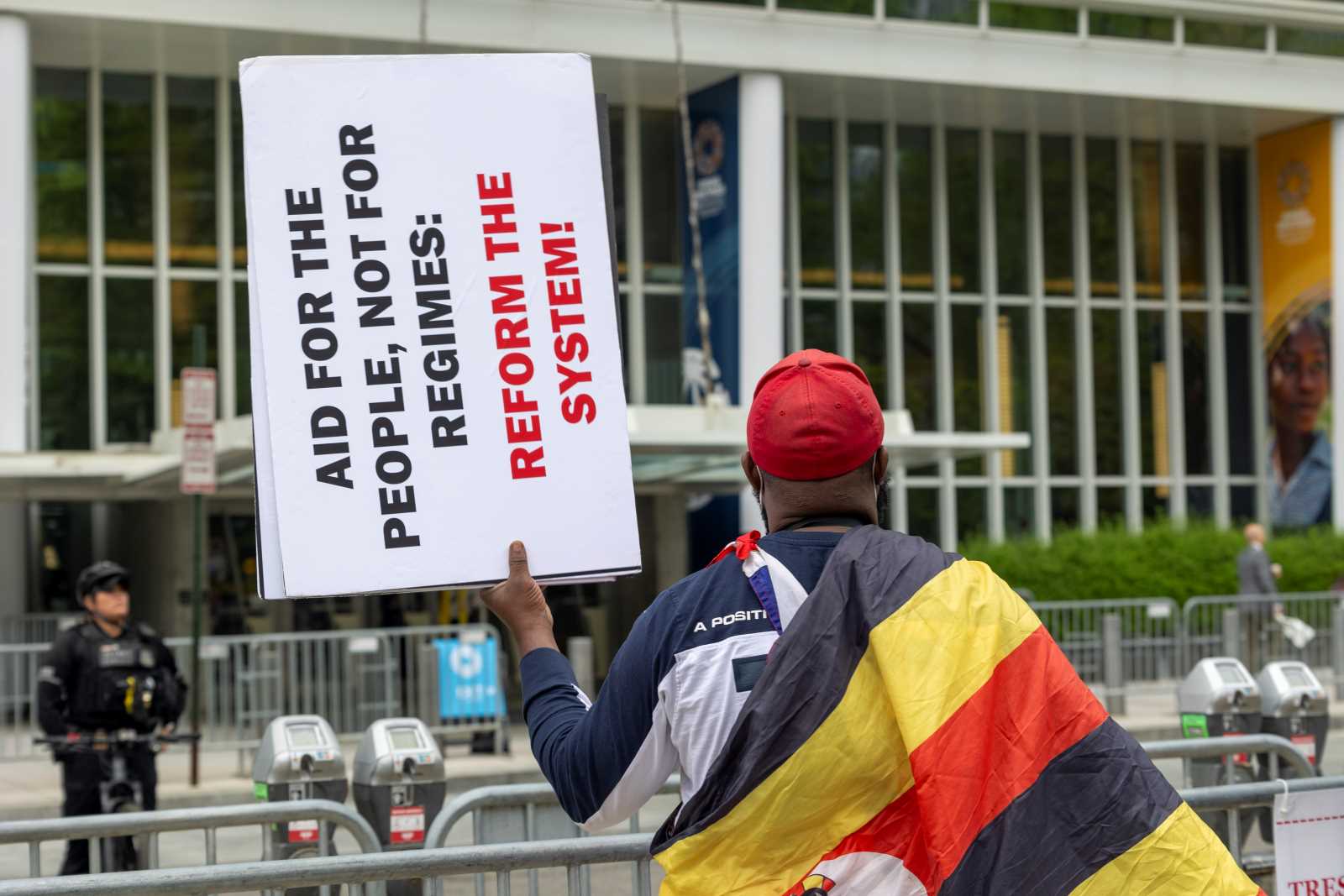
Good communication is also particularly worthwhile because nearly three quarters of those surveyed do not have firmly entrenched attitudes towards DC. On the whole, they are open to learning more about it. They are most convinced by altruistic motives and information about sectors such as water supply, education, health or food security. Effective communication will therefore reflect these preferences – without simply reproducing stereotypes.
SOURCE
Schneider, S. H., Gödderz, A., Zille, H., Gmeineder, M., Leßke, F. and Bruder, M., 2026: Opinion Monitor for Development Policy 2026. Knowledge, Motives and Reservations in Disruptive Times. German Institute for Development Evaluation (DEval), Bonn.
Data used fo the DEval Opinion Monitor for Development Policy 2026
The DEval Opinion Monitor is based on data obtained in surveys (of around 2000 respondents) that have been regularly conducted by DEval since 2023 and on data collected by the Development Engagement Lab (DEL) since 2019. The DEL publishes short surveys (of around 1000 respondents) that are carried out twice a year and a comprehensive annual panel survey (of around 6000 respondents). In addition, DEval conducts topic-specific surveys.
Helge Zille is an evaluator with the German Institute for Development Evaluation (DEval).
helge.zille@deval.org
LinkedIn | Helge Zille