Football stories
Women’s football in the Kenyan desert


“Lionel Messi”, replies Lilian Kandali, when asked to name her favourite footballer. The 14-year-old has been playing for the Desert Roses for five years and now captains her age group’s team.
It all began in 2017 in Lodwar, Turkana County’s largest town with a population of around 80,000. Having started out with just one girls’ team, the programme now has more than 3500 female members. These days, there are 18 Desert Roses teams for different age groups: training takes place after school from Monday to Friday, right across the county in northern Kenya.
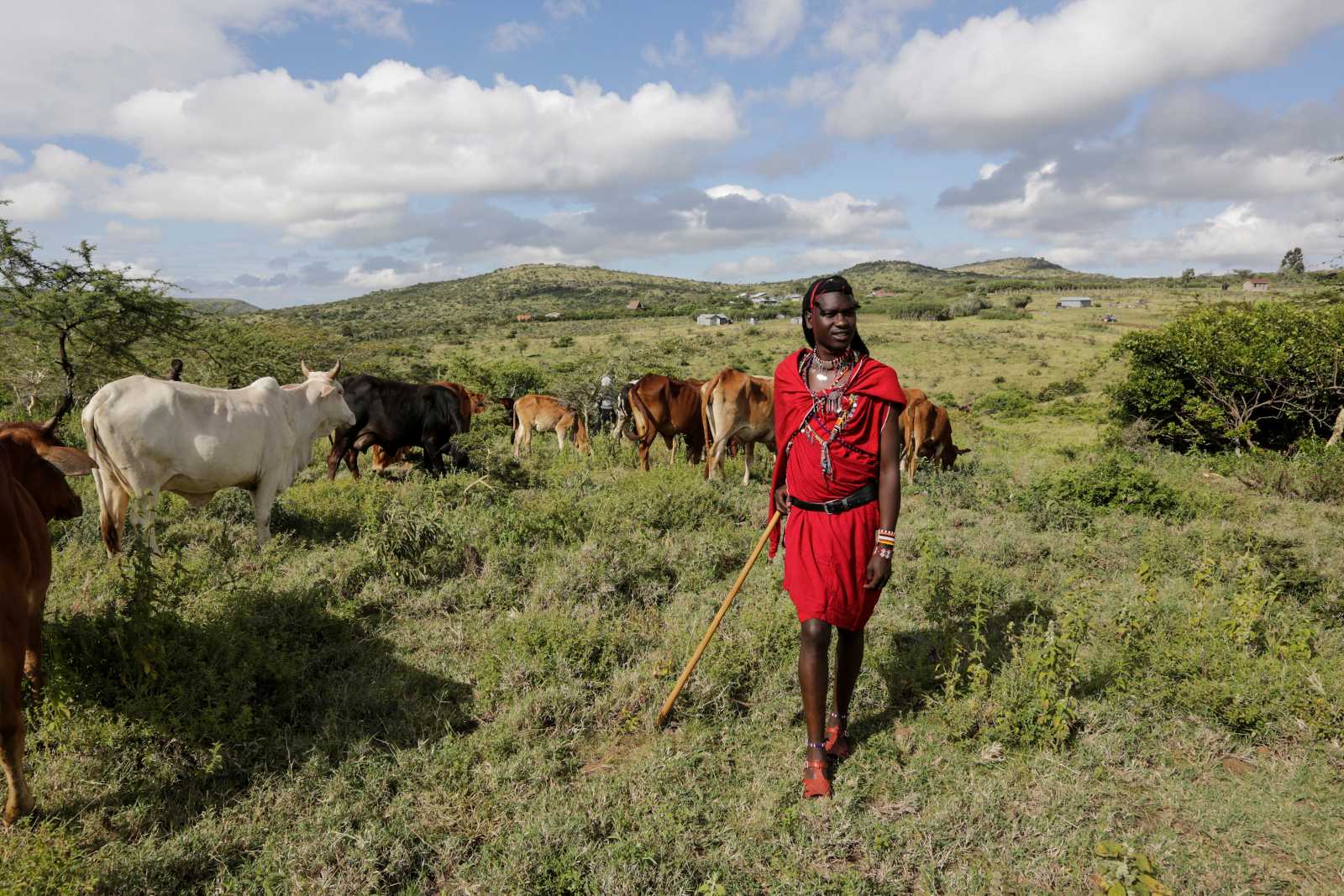
Turkana is a barren region, many swathes of which are desert-like. Farming there is extremely difficult, so the Turkana people, who have lived in the region for centuries, have for the most part remained livestock herders to this day.
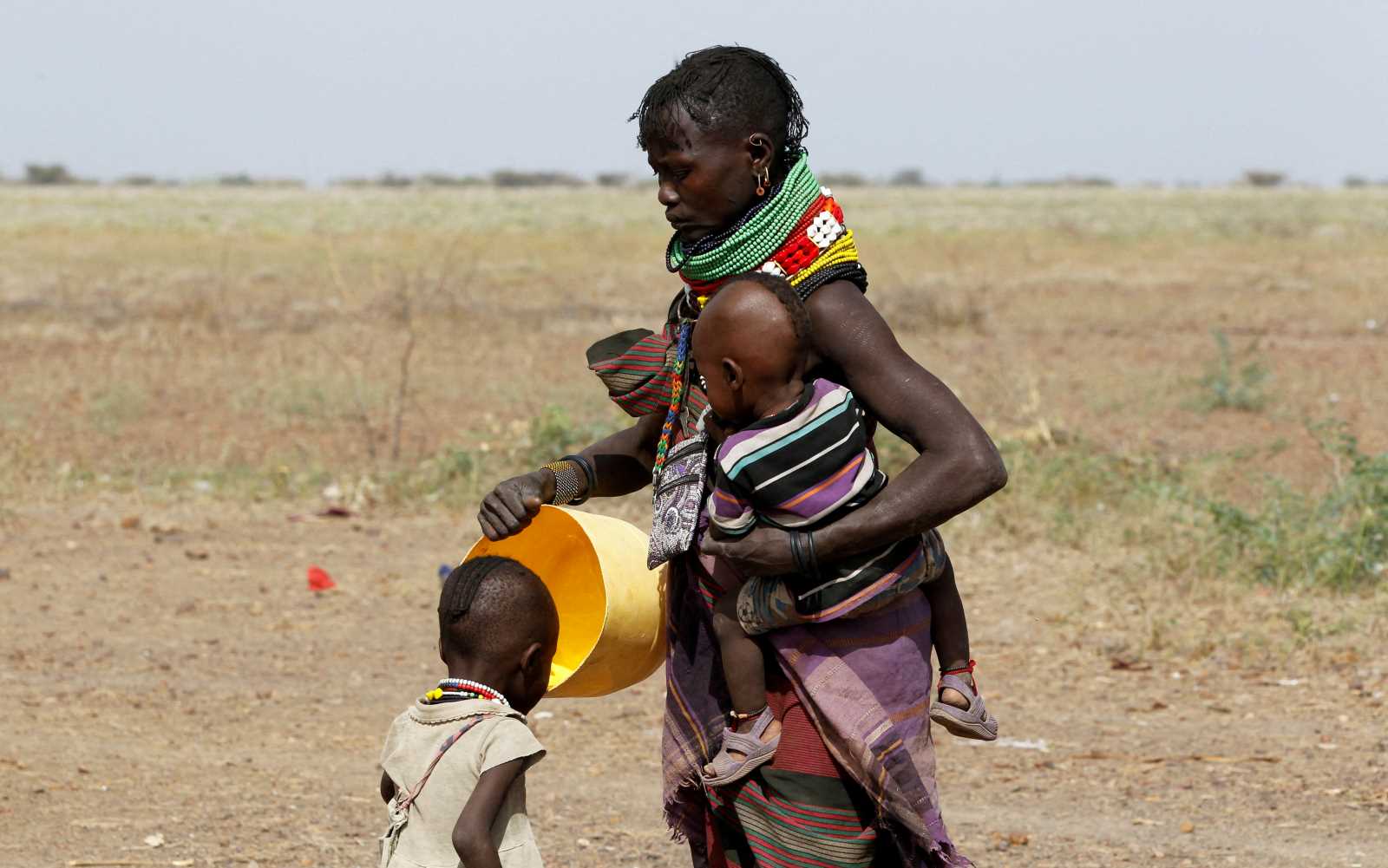
In this way of life, it is above all women and girls who shoulder the main burden, as they are expected to tend the livestock from an early age. “Girls born in a village in the Turkana Desert still have few prospects,” says Rael Lomoti, the founder of Desert Roses. She explains that many girls are married off at a very young age. The Turkana still measure a woman’s “worth” in terms of livestock – the number of animals paid to the bride’s family upon marriage.
Discovered by a nun
Lomoti, now 31, is herself a Turkana. It was by no means a carefree childhood that enabled her to embark on a different path, however. When she was just six, her parents left the Turkana region during a particularly severe drought, taking her and her four siblings with them to Nairobi in search of work. Lomoti’s mother died soon after. Her father managed to keep the family afloat by working as a day labourer – but didn’t earn enough to provide properly for the children or enable them to attend school regularly.
As Lomoti sees it, football played a crucial role in ensuring that the family did not slide completely into poverty following her mother’s death. Her talent was evident from an early age: in Juja, a town not far from Nairobi, she regularly played for the school team. This brought her to the attention of Sister Luise Radlmeier, a German nun who ran an orphanage and various social programmes there. Girls playing football was by no means the norm in late 1990s Kenya.
Radlmeier took Lomoti under her wing and became an important mentor for her. Inspired by the nun’s community work, Lomoti did a degree in social work at a university in Nairobi in 2014. When Radlmeier died nine years ago, Lomoti took a decision: “I wanted to go back to Turkana and help my own community through sport – which had also changed my life.”
Football offers educational opportunities
This decision led to the Desert Roses. At first, she encountered resistance from the Turkana’s traditional leaders. “I was told that football isn’t for girls, that these are Western practices that have no place in the world of the Turkana,” recalls the defensive midfielder. For Lomoti, however, it was always about more than just training: “Football is a means to an end, a way to bring girls together in a safe space, to teach them values and, above all, offer them educational opportunities.”
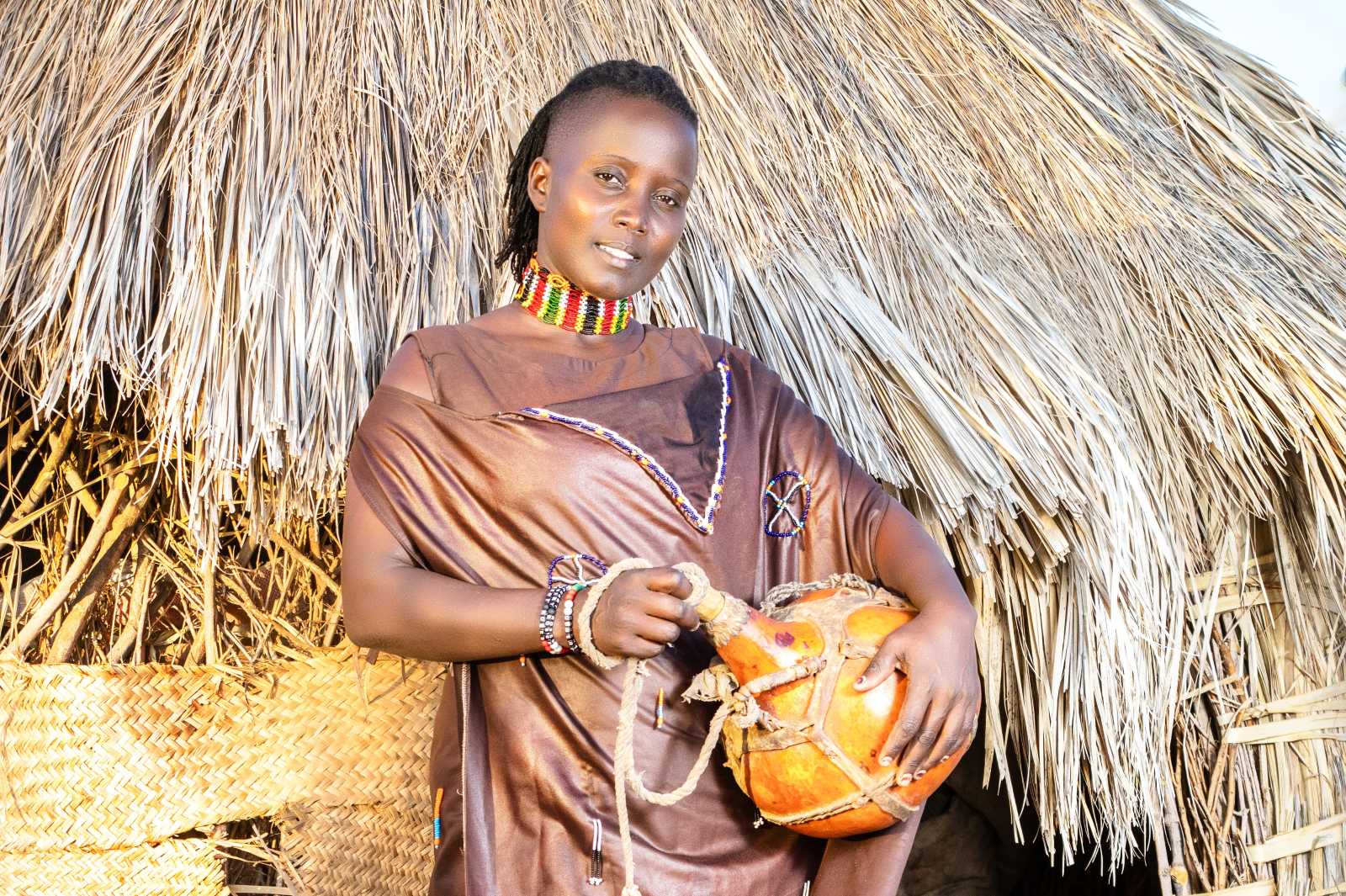
She refused to give up – and specifically sought out men who would support her idea. One of them is Loroo Esekon Emmanuel. An engineer, he describes himself as Lomoti’s “ambassador”, accompanying her even today to meetings with Turkana who hold particularly traditional views.
“She can buy the goats herself”
“We Turkana need a fundamental change of mindset. Girls are still regarded merely as a way of accumulating more livestock through bride prices – yet our entire region could be a lot better off if girls received education and could seek gainful employment and thereby support their families,” says Emmanuel. In debates, he likes to cite Lomoti as an example. “I tell people that football opened up paths to education for her, and that she is now the one who supports her elderly father – nobody has to pay a bride price for her because she can buy the goats herself.”
Meanwhile, the Football Kenya Federation has appointed Lomoti as the women’s representative for the Turkana region. In this capacity, one of her jobs is to organise the youth teams for boys and girls.
There are also success stories among the players: 56 girls from the programme have been awarded sports scholarships to attend a prestigious school in Kenya. Talent scouts regularly drop by during training sessions, on the lookout for gifted players.
One of the families that have benefited is Iyanae Martha’s: her daughter was granted a scholarship. “I’ve got five children and would never have been able to send any of them to such an expensive school,” she says, adding that she’s particularly proud that one of her girls was picked for this honour. Initially, there was some scepticism about the project in the community, she explains – but most people now have realised how far football can also take girls. “I wish the project had already existed during my childhood,” says Martha. “What Rael is doing is giving hope to all Turkana women.”
Team members receive sanitary towels
Even those who don’t end up with a scholarship get support with their education. “All our team members receive learning materials, sanitary towels – which still pose a major challenge, as thousands of girls and women find it difficult to get hold of sanitary products, clean water and information about menstrual hygiene – and jerseys. In addition, 120 particularly vulnerable girls are supported by our feeding programme,” reports Lomoti.
Aside from providing football training, the teams’ 18 coaches also run workshops – on subjects such as women’s rights or political education – and discussion sessions. As frequently as she can, Lomoti organises Saturday tournaments in Lodwar that give the various Desert Roses teams the chance to compete against each other. Boys can play too: in each age group (13-, 15- and 17-year-olds) there are now also Desert Roses teams for boys.
Donations have declined
At the same time, the financial side of things has become more difficult. Lomoti says that donations have declined sharply as a result of the global crises – meaning that not all girls can be provided with books this year. “I would also really like to be able to distribute sanitary towels, but there’s just not enough money at the moment.”
Many of the girls – including Mary Lokaale Ewoi – hope to become footballers or coaches themselves one day. “Football gives me a sense of purpose and something I can focus all my attention on,” says the 17-year-old. Captain Lilian, meanwhile, has other goals. What she really values about Desert Roses is the reliable access to school books the team gives her – she wants to go to university and perhaps become a doctor.
Links
Turkana Desert Roses
Rael Lomoti's book "Roses Will Rise" is available from the civil-society organisation Vice Versa.
Katharina Wilhelm Otieno belongs to the editorial team of D+C and works partly in Nairobi.
euz.editor@dandc.eu
This is the second article of our football stories. You can find more stories here.