Slavery
Humanity’s gravest crime: “Recognition creates responsibility”


The declaration that slavery constitutes the gravest crime against humanity and its adoption by the UN General Assembly are based on a simple but powerful truth: slavery is not only a historical tragedy but has also shaped the modern world.
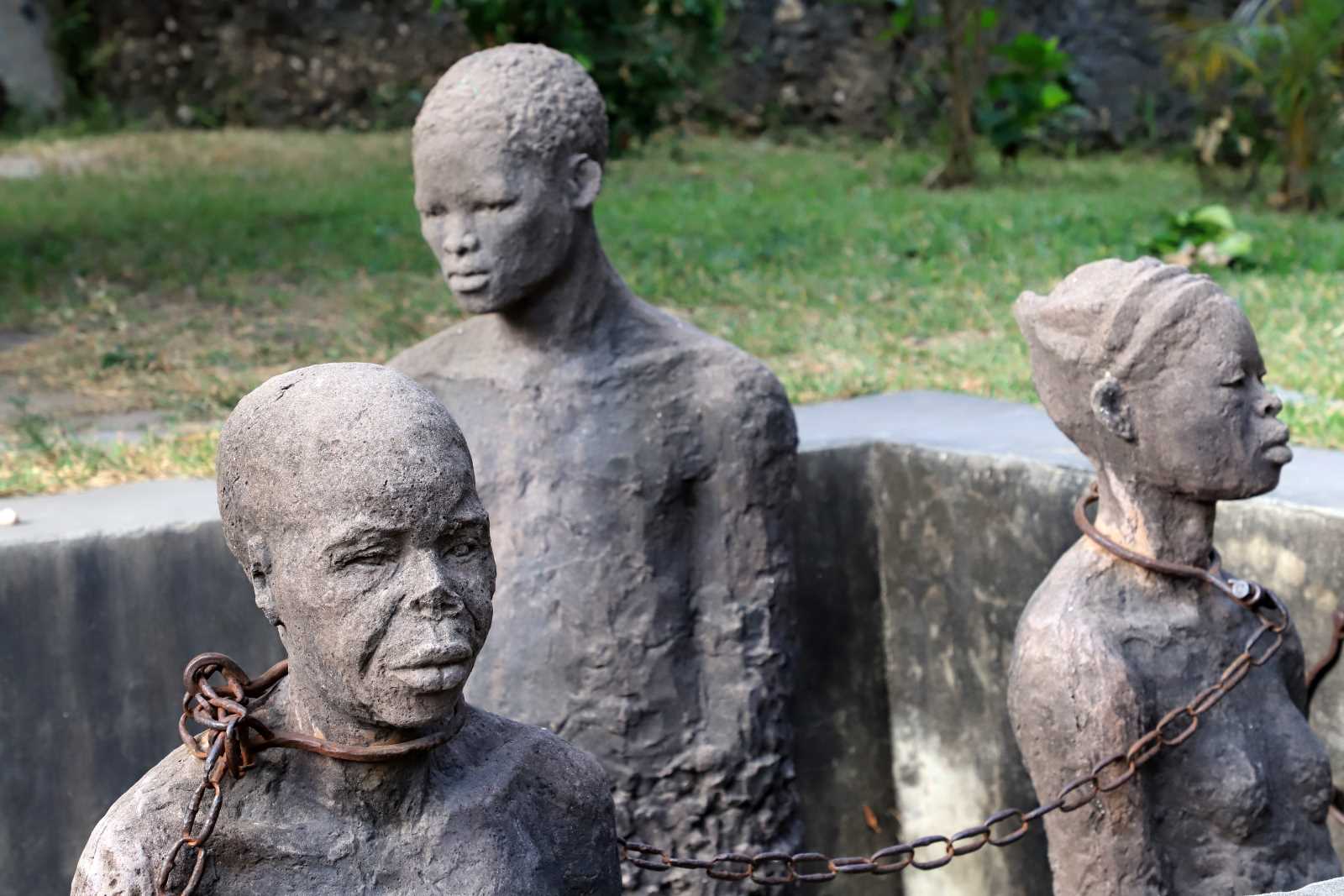
According to the “SlaveVoyages” database, between the 16th and 19th centuries, some 12.5 million Africans were forced onto transatlantic slave ships, with around 10.7 million surviving the journey from Africa to the Americas. Millions more died whilst being captured, on forced marches or in captivity. Behind these figures lie torn families, destroyed communities and shattered cultures.
The slave trade generated immense wealth, which fuelled industrialisation in Europe and America, whilst many African societies were weakened by population decline, political fragmentation and economic exploitation. These legacies continue to shape development outcomes and inequalities to this day. Although slavery was officially abolished in the 19th century, its consequences remain deeply embedded in political, economic and social systems.
Ghana’s President John Dramani Mahama, who presented the historic resolution on slave trade to the UN, emphasised that coming to terms with this past requires a forward-looking perspective: “History does not ask us to inherit guilt. It asks us to inherit responsibility.” Reparatory justice, he argued, is not about reopening old wounds but about creating a more just future while seeking reconciliation grounded in truth.
Beyond recognition
Less than three months after the UN General Assembly adopted Resolution A/RES/80/250, Accra has emerged as a focal point of this debate. The message from the High-Level Consultative Conference held there in June under the theme “Next Steps” was unambiguous: recognition must lead to implementation.
For decades, advocacy work has focused on securing formal recognition of slavery as a crime against humanity. In Accra, the focus went well beyond mere recognition. Participants argued that restorative justice must evolve into a development framework that strengthens institutions and promotes equitable global partnerships.
The UN resolution of 25 March 2026 marked a diplomatic milestone, but the heads of state and government in Accra emphasised that recognition alone could not make amends for centuries of injustice. As Mahama put it: “The adoption of the resolution was never intended to mark the end of the journey. It was intended to provide the foundation for a more meaningful process of engagement, reflection and action.” The delegates agreed that recognition is of limited value unless it leads to tangible improvements in people’s lives.
The Accra Next Steps Commitments
The conference therefore focused on translating this recognition by the UN into concrete policy measures. The outcome of the conference, the “Accra Next Steps Commitments on Reparatory Justice”, extends the concept of reparation beyond financial compensation.
It links historical accountability with legal reforms, education, public health, cultural reparations, debt justice and technology transfer. Its aim is clear: to eliminate structural inequalities rooted in slavery and colonialism. Mahama, whose initiative was supported by 123 UN member states, whilst all Western states abstained and the US, Israel and Argentina voted against it, succinctly summed up the central premise: “Recognition creates responsibility.”
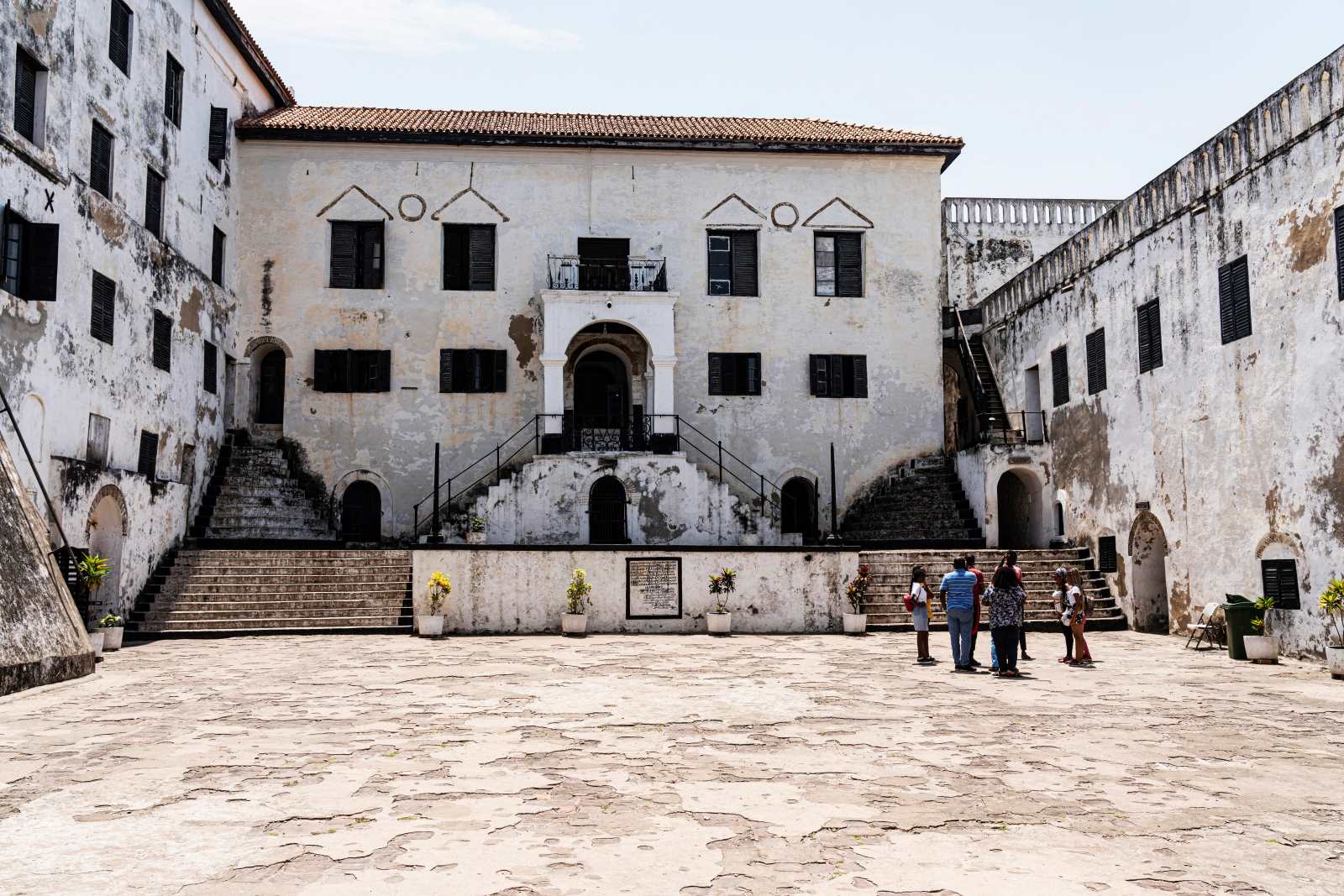
He also emphasised the importance of remembrance: “A few places in the world bear such vivid physical testimony to this history as our country. From Elmina in the Central Region and Cape Coast to Assin Manso and Osu, our land holds some of the most visible reminders of a system that uprooted millions.”
The Nigerian Nobel laureate Wole Soyinka reiterated this view and warned against regarding slavery as a closed chapter. Contemporary forms of exploitation, including human trafficking and forced labour, show that “the slave trade is not over.”
The Accra Next Steps Commitments redefine reparations justice as a long-term development agenda. Mahama called for a practical international roadmap based on “truth-telling, research, education, memorialisation, restitution of cultural heritage and legal pathways”, emphasising the need for cooperation between governments, academia, civil society, religious organisations and international organisations.
What reparations might include
Barbados’ prime minister, Mia Amor Mottley,+ described the moment as historic. For her, reparations include stronger education systems, improved healthcare, debt relief and monetary compensation. She referred to the Caribbean Community and Common Market’s (CARICOM) revised ten-point plan as a basis for coordinated action between Africa and the Caribbean and urged both regions to pursue a joint development agenda.
Building on this call to action, Liberian President Joseph Boakai called for a coordinated African implementation framework to be developed in collaboration with CARICOM and diaspora organisations, as well as an expansion of research, education and cultural restitution.
The role of the African diaspora was a key focus of the discussions. Mahama described the descendants of enslaved Africans as “rights holders” whose knowledge and experiences must shape the path ahead. The participants called for closer cooperation between African states, CARICOM, the African Union, the United Nations and diaspora organisations.
Compensation for gender-based violence in slavery
The conference also highlighted the need to address gender-specific experiences of slavery, which are also included in CARICOM’s new ten-point plan as a specific demand for compensation for gender-based violence. Mahama pointed out that enslaved women had to endure sexual violence, reproductive exploitation and family separation, yet their stories remain underrepresented. The Accra Commitments therefore emphasise gender-responsive approaches and recognise that effective measures must reflect these different historical realities.
To maintain momentum, three international panels have been announced: a Global Advisory Panel on Reparatory Justice, an Expert Panel on the Restitution of Cultural Artefacts and a Global Legal Panel on Reparatory Justice to explore pathways under international law. These bodies are expected to support implementation through policy guidance, legal expertise and technical coordination.
Recognition is only the starting point
The Accra conference did not set out to redress centuries of injustice. Instead, it established a framework for tackling their ongoing consequences. The message was clear: recognition is only the starting point.
The implications extend beyond Africa and the Caribbean and raise wider questions regarding historical accountability and global inequality. Whether this framework will be successful depends on political commitment, adequate resources and long-term cooperation between governments, multilateral institutions and civil society.
The UN’s recognition has reshaped the global debate. In Accra, work began on defining the response to this. The task now is to assess whether this momentum is leading to measurable progress for the societies that are still suffering the consequences of the gravest crime in history.
Dasmani Laary is a journalist in Ghana.
laarygna@gmail.com