Fandom
Gor Mahia and AFC Leopards: From football rivalry to kinship
blend indigenous cultural systems and popular culture.


The Luo and the Luhya are two of Kenya’s larger ethnic communities. Though both are originally rooted in neighbouring regions in western Kenya, they belong to different linguistic and cultural groupings: the Luo are Nilotic, while the Luhya are Bantu. Among other things, this means that their languages differ fundamentally. In earlier periods, relations between the communities associated with these larger groupings were sometimes marked by conflict. To this day, some of their members prefer to deal with people from groups within their own extended ethnic family, for example in social, political or professional contexts.
Nowadays, both the Luo and the Luhya live in Nairobi and other urban areas. In the 1950s and early 1960s, many young people from western Kenya – most of them men – moved to Nairobi to look for work in the growing city. The colonial state restricted African political organisation, so many migrants formed welfare and community associations instead. These groups often reflected their shared language, region or origin. Football became one of the main public arenas in which such communities could organise themselves and gain visibility.
It was in this setting that the football clubs later associated with Gor Mahia FC (the Luo team) and AFC Leopards (the Luhya team) first emerged. On the Luo side, one club, Luo Union, quickly became the main focal point. On the Luhya side, the picture was more fragmented because the Luhya are not a single homogeneous group but a broader cluster of communities. Several clubs existed initially, including Marama FC, Bunyore FC and Samia United.
How ethnic belonging shaped Kenya’s football history
That difference mattered. When the first Kenyan National League was founded in 1963, seven of its 10 teams were based in Nairobi and were made up of members of the Luo and Luhya tribes. While the Luo largely rallied behind one club, the Luhya were spread across several smaller teams. Luhya leaders therefore pushed for a merger in order to create a stronger team that could compete more successfully. This led to the formation of Abaluhya United FC, later AFC Leopards. The club was meant to bring together different Luhya sub-groups within one shared sporting institution.
Despite being the main Luo club, however, Luo Union was not without internal tensions. Political rivalry between the two major Luo leaders of the time, Jaramogi Oginga Odinga and Tom Mboya, briefly spilled over into football and caused divisions. In time, these tensions were overcome and the club re-emerged as Gor Mahia. The name has deep cultural significance, as it derives from the nickname of a legendary medicine man from Luo mythology.
The stadium as a ritual space
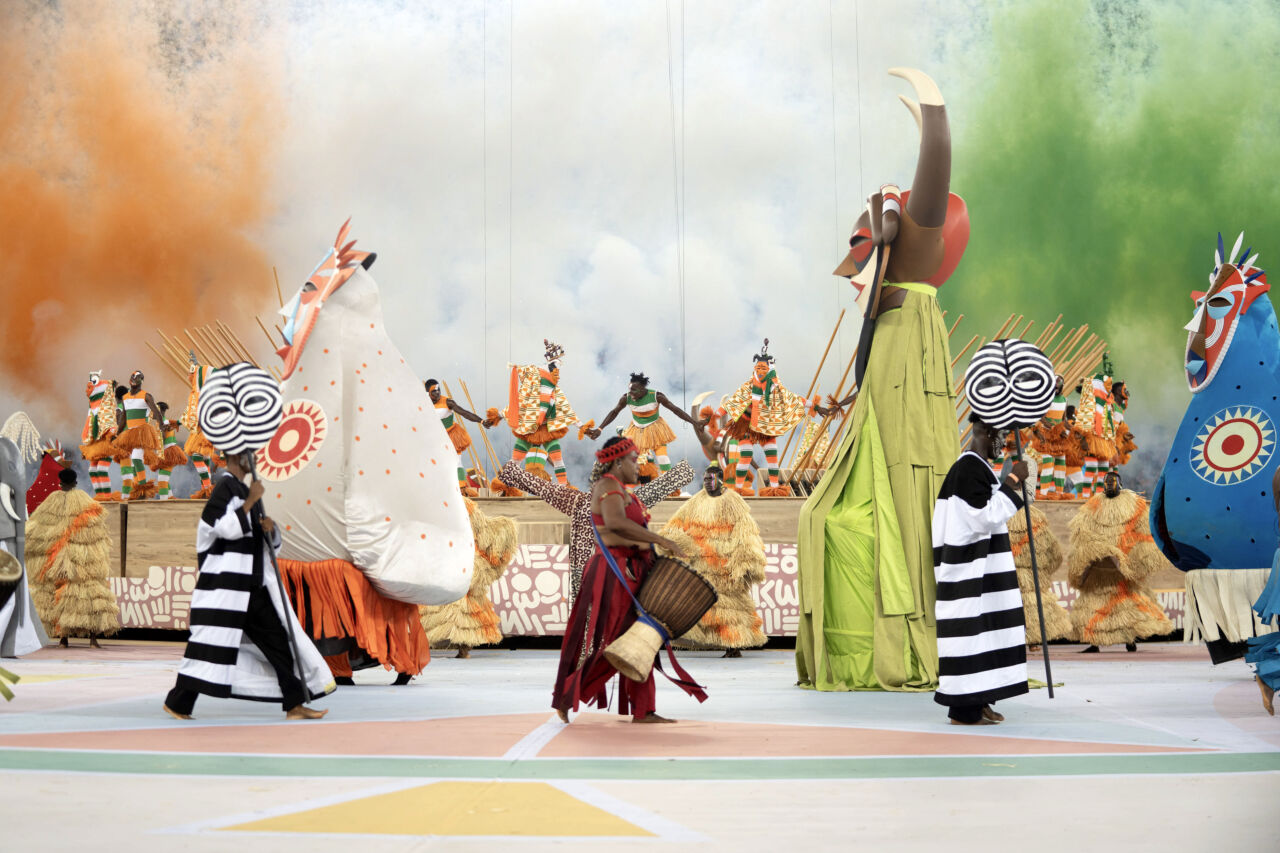
Both clubs went on to dominate Kenyan football and became famous across East Africa. They also came to symbolise larger communities. Matches between Gor Mahia and AFC Leopards transformed stadiums into ritual spaces. The deep-seated rivalry between the two teams played out against a backdrop of carnival-like, ritualistic fan culture characterised by singing, dancing and the proud display of ethnic identity through symbols and mythology. The fans integrated the global cultural phenomenon of football into the politics of ethnic identity in a relatively young, independent country that was also in the midst of state-building and a struggle for political power.
In the era of Kenya’s second president Daniel Arap Moi (1978-2002), both clubs depended heavily on political patrons from their ethnic communities. Because football was not yet fully professional, players often needed jobs outside the game, and influential supporters helped them secure employment in the civil service, parastatals and private companies. Though such patronage served the clubs, it also benefited politicians, who gained visibility and support through association with popular teams.
Yet rivalry served not only to divide; it also connected. Each side needed the other as an opponent. Social identity was expressed as distinct from that of the rival team through fandom, as well as through songs, dancing, verbal sparring and provocative banter. This is where football assumed a socially unifying role. It provided a common stage on which differences could be expressed without necessarily breaking broader social rules.
Furthermore, Luo and Luhya met in the stadium not only as distinct ethnic groups but also as direct participants in the same ritual performance of identity. This sometimes sparked tension and provocation, but it also created certain bonds of familiarity.
Political alliances and global sports TV
Since the 1990s, their relationship has further developed in this direction. The return of multiparty politics opened new channels for ethnically shaped political mobilisation. At the same time, structural adjustment programmes reduced state employment and weakened the patronage networks on which many clubs had relied. Gor Mahia and AFC Leopards became more professional in formal terms, but they also became more financially unstable.
Two further developments around the turn of the millennium also reshaped fandom. One was the emergence of new political alliances that brought Luo and Luhya into closer cooperation. From the early 2000s, they rallied behind the same person: opposition leader Raila Odinga from western Kenya.
The other was the spread of global sports television, which broadened the horizons of Kenyan fans. Many young people began to support European clubs alongside local ones. As a result, football fandom became less narrowly tied to ethnicity and more open to multiple influences. This mirrors the fact that many younger fans have grown up in mixed-ethnicity urban and suburban areas and developed a broader understanding of ethnic identity.
“In-laws”
All of this is visible in the relationship between the supporters of Gor Mahia and AFC Leopards today. The antagonism of earlier decades has softened. It is now common to see Gor Mahia fans dance to the signature Isukuti rhythms associated with AFC Leopards supporters, or to find supporters of one club standing in sections traditionally linked to the other.
One telling sign is the name the fans often use for one another nowadays: mashemeji, meaning “in-laws” in Kiswahili, one of Kenya’s official languages. On the one hand, the word reflects the long actual history of intermarriage between the Luo and Luhya communities in western Kenya. On the other, it expresses a form of social solidarity that has emerged from decades of shared football culture and the more recent political circumstances.
Gor Mahia and AFC Leopards are about more than just famous football rivalry, in other words. They illustrate how sport can highlight social differences whilst simultaneously keeping them within a shared public framework. Football doesn’t make ethnic identity disappear and can sometimes even reinforce it. Yet, by embedding differences within shared rituals, familiar roles and repeated encounters, it can also transform rivalry into solidarity. This is precisely why football can act as an integrative force: it creates emotional bonds and a broader sense of belonging that even rivals ultimately share.
References
Nasong’o, W. S., 2022: The politics of soccer management in Kenya: The rise and decline of a popular pport. In: Ayuk, A. E. (eds): Football (Soccer) in Africa. Global culture and sport series. Palgrave Macmillan, Cham.
Siundu, G., 2011: European football worlds and youth identifications in Kenya. African identities 9.3 (2011): 337-348.
Waliaula, S., and Okong’o, J. B., 2014: Performing Luo identity in Kenya: Songs of Gor Mahia. In: Identity and nation in African football: Fans, community, and clubs. London: Palgrave Macmillan UK, 83-98.
Solomon Waliaula is an associate professor of literature and cultural studies at Maasai Mara University, Kenya.
solomonwaliaula@gmail.com