China in Latin America
An unexpected boost for democracy


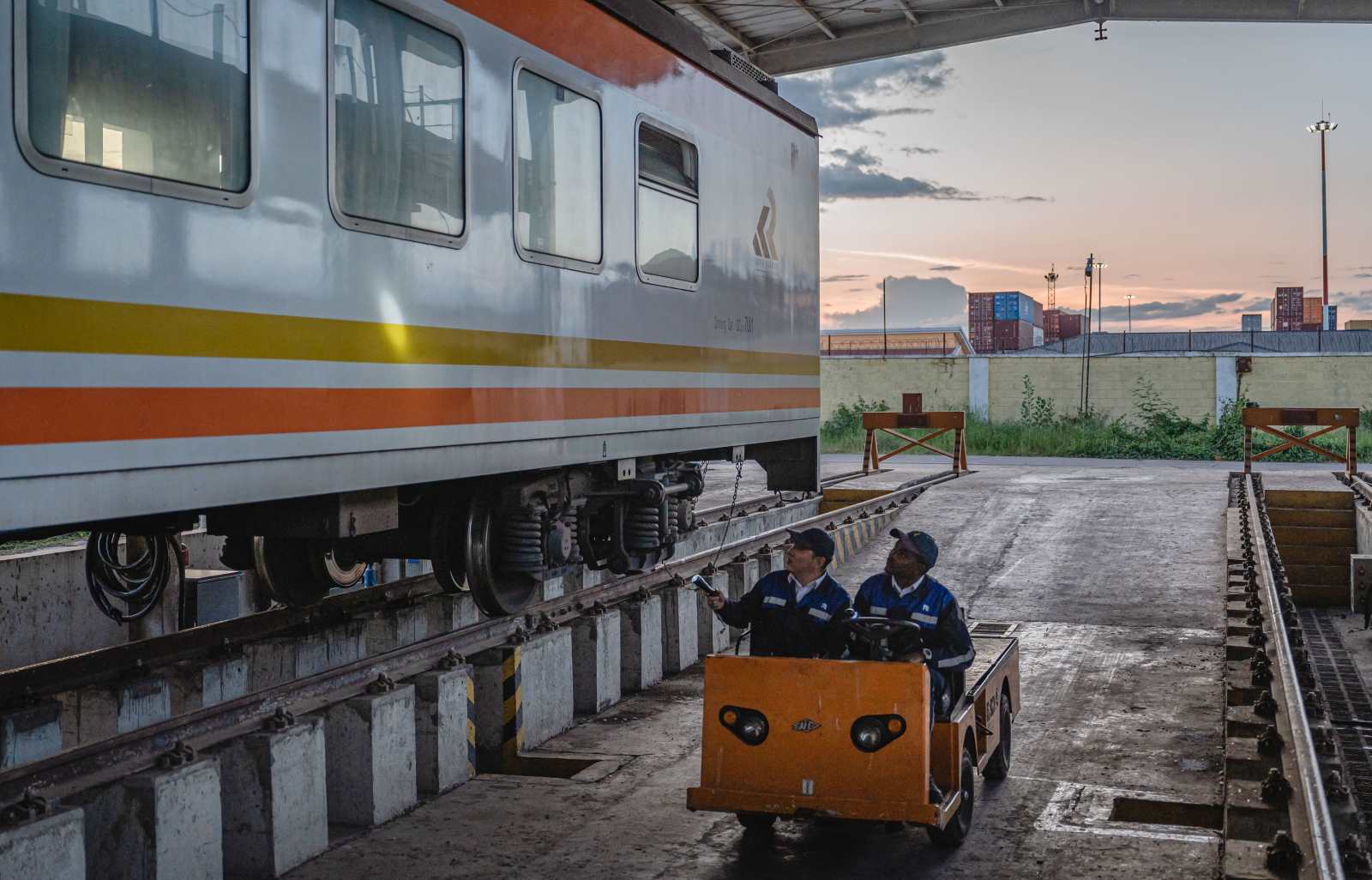
Ports, dams, highways, power lines: over two decades, Chinese firms and finance have reshaped a region long treated as “Washington’s backyard”. By 2025, as the US cut aid across Latin America, Beijing was pledging a nine-billion-dollar credit line and steadily taking its place.
The economic record is mixed: Ecuador’s Coca Codo Sinclair dam ended in costly legal disputes over defects, while Peru’s Chancay megaport moved $ 2 billion in trade in its first year and cut sailing times to Asia by almost two weeks. But beyond the balance sheet, these projects share something else. They are visible, attributable and politically legible to the people living near them. That is what drew our attention.
There is widespread concern that sustained engagement with an authoritarian donor like China normalises authoritarian practice and corrodes democratic values. However, when we dug into the data, we found that in Latin America the relationship runs in the opposite direction.
Increasing support for democracy
We combined data on the location of Chinese development projects with nearly two decades of Latinobarómetro surveys across 18 countries. In total, we analysed 940 subnational regions, of which 16 % received at least one Chinese development project during the study period. For each subnational region, we compared democratic attitudes before and after a Chinese project arrived against regions that never received one. The design lets us isolate the local political effect of exposure from broader national trends.
The result was clear: support for democracy increased shortly after projects arrived and remained higher even a decade later. No other donor produced anything similar. American aid, World Bank lending and European development finance produced no comparable movement in democratic attitudes.
What mechanism creates this response? We tested the hypothesis that Chinese projects might have raised local incomes, and more prosperous people tend to be more democratic. They did not: exposure produced no improvement in respondents’ assessments of their financial situation or their life satisfaction. Nor were people reacting against China as a geopolitical threat and pivoting toward the United States. Opinions of China and the United States did not change.
The metro and the mirror
To better understand this response, we held focus groups in Bogotá, home to one of the largest Chinese infrastructure projects currently underway in Latin America. The Colombian capital had tried to build a metro since the 1940s, a promise broken by one administration after another, lost to corruption and political turnover. The line now taking shape, an elevated viaduct curving above the city’s avenues, is being built by a Chinese consortium and is roughly three-quarters complete. What do people living alongside it think?
Nearly all participants knew that the metro was being built by a Chinese consortium, and their assessment of the project was generally favourable. As one respondent put it, “In China they put up a bridge in a week.” People pointed to the visible progress of construction and described the builders as “serious people” who “come to do what they are supposed to do.”
At the same time, the participants were well aware that China was politically different from Colombia. One participant described China as “a communist state” that “decides for you even whether you can have children or not” and spoke of the “coercion of people’s freedom.”
Yet what stood out most was how quickly discussion of the Chinese project became a discussion of Colombia itself. Rather than focusing on China, respondents used the metro as a lens through which to evaluate their own government. As one participant remarked, “If it weren’t for the Chinese, we would still be talking about corruption surrounding the metro, or about how it never got built.”
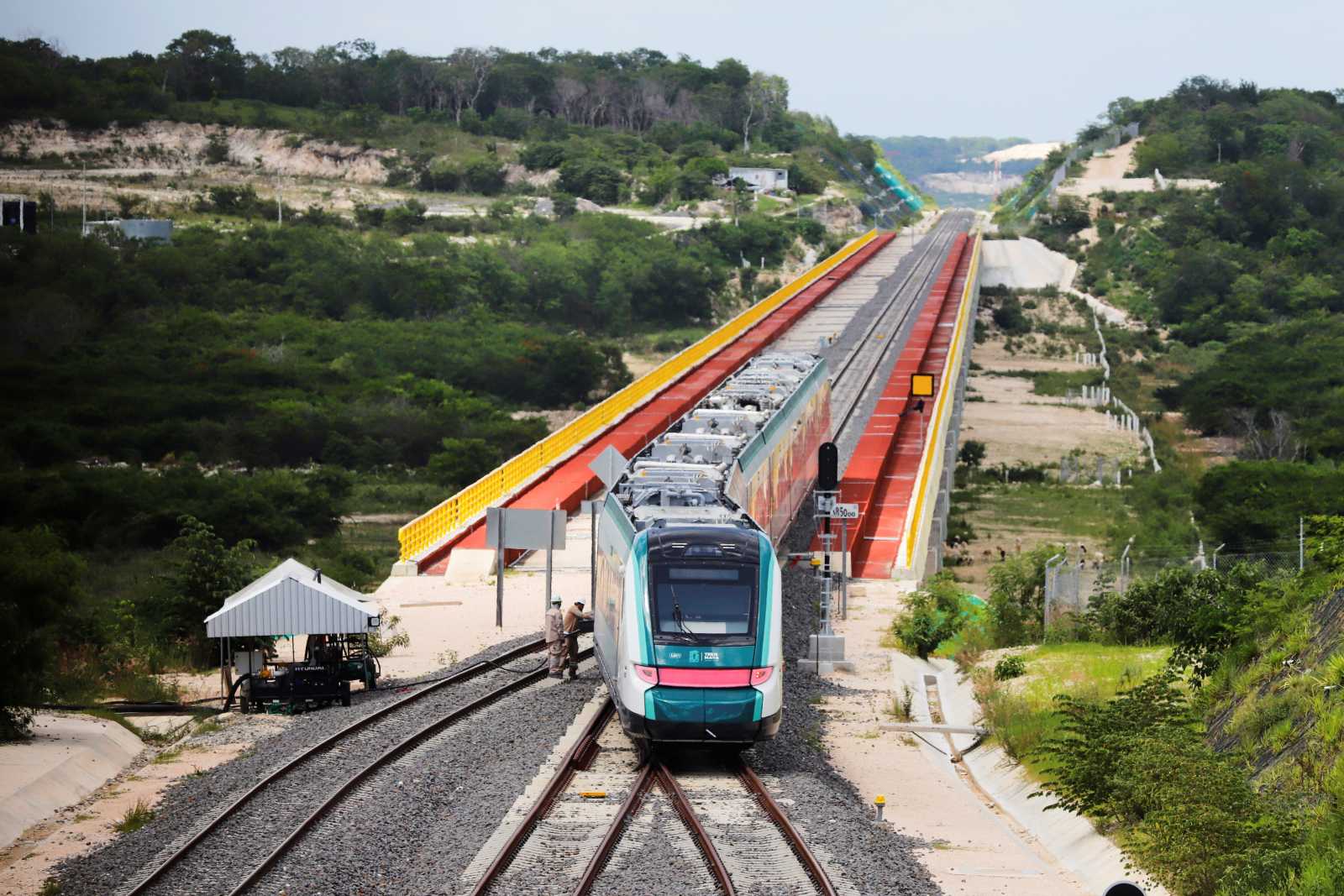
Chinese projects become a mirror for domestic politics. Their visibility, together with China’s authoritarian political model, encourages citizens to reflect on the character of the governments that brought them in. In Colombia, where democratic institutions are relatively robust, that reflection centred on corruption and government competence. But what happens when the government itself has authoritarian tendencies? Does the comparison shift from competence to democracy itself?
A marker, not a model
This is exactly what we find. The pro-democratic effect is strongest in electoral autocracies such as Venezuela under Hugo Chávez and Nicolás Maduro or Nicaragua under Daniel Ortega, where governments pair authoritarian rule with close ties to Beijing. There, Chinese projects are followed by roughly a five-percentage-point increase in agreement that democracy is preferable to any other form of government, alongside declining confidence in state institutions including the presidency, congress, the courts, the police and the army.
The effect is smaller in electoral democracies, where support for democracy increases by just over two percentage points, and it is absent in consolidated ones. The more authoritarian the incumbent, the stronger the democratic reaction. Where the government brands itself as socialist, the backlash extends to economics as well. Respondents express higher support for free markets and private enterprise.

Unlike trade or financial flows, infrastructure projects are visible. Citizens know who built them and who brought them to their country. As a result, projects become a way of judging governments. In Colombia, that judgment is mainly about competence and corruption. In more authoritarian settings, it increasingly becomes a judgment about the political system itself.
The conventional worry is that money from Beijing quietly normalises the idea that democracy is optional. Our findings suggest a more complicated picture. Chinese projects are highly visible, and because they are associated with an authoritarian state, they invite citizens to reflect not only on what their governments deliver but also on the political model those governments choose to embrace. In Latin America, that reflection appears to have strengthened rather than weakened democratic attitudes.
Marcela Ibáñez is a political scientist at the University of Zurich.
ibanez@ipz.uzh.ch
Alain Schläpfer is a research scholar at the Center on Democracy, Development and the Rule of Law at Stanford University.
alainsch@stanford.edu