Media criticism
“Gaza is not a black box”


Fabian Goldmann in an interview with Björn Cremer
You have analysed the sources that leading German media use when reporting on the war in Gaza. What motivated you to do this?
I’ve been reporting on the Middle East for years, and media criticism has always been part of my work. This issue really became more pressing after 7 October 2023, however. Though things had already been far from perfect in German media beforehand, it seemed to me that almost all reporting on the Middle East was now failing dismally.
So how exactly did you proceed?
I examined the reports published in leading German media such as the Tagesschau television news, Spiegel magazine and Zeit, taz and Bild newspapers and checked them against journalistic standards – things like factual accuracy, balance, the use of language and images. I then conducted an analysis to discover which sources newsrooms were using. To this end, I analysed nearly 5000 headlines relating to the Middle East that appeared in the Tagesschau, Bild, Zeit and Spiegel between 7 October 2023 and 19 January 2025.
One thing I found was that Israeli state sources predominated to an extreme extent. Information provided by the Israeli government and army accounted for between 33 % and 38 % of headlines in all media. US sources came in second place and international organisations such as the UN in third, closely followed by the German federal government. Just five and three percent of headlines were based on Palestinian and Lebanese sources respectively, while NGOs like Amnesty International and Médecins Sans Frontières accounted for only one percent.
Why is this a problem in your view?
It’s a problem because journalists have a duty to give factually accurate reports. As most newsworthy events in the last two years have been taking place in Gaza, one would expect Palestinian sources to be cited for the most part – not only Hamas itself, but also eyewitnesses, emergency crews, family members, reporters and so on. Furthermore, what these groups report often tallies with the accounts given by NGOs and international organisations. And yet they feature hardly at all in German news media. Instead, the headlines I examined often cite the Israeli military, whose information tends to lack any independent corroboration. Consequently, one ends up accepting not only frequently inaccurate information about a specific event but also the Israeli army’s narratives – that the fighting is directed solely against Hamas, for instance. By contrast, the International Association of Genocide Scholars, United Nations experts and leading human-rights organisations have concluded that Israel is committing a genocide in Gaza.
Don’t non-Western sources find it hard to get taken seriously in Western media in any case?
In my opinion, yes. If the Israeli army makes some claim or another, people initially assume that it’s true – until the opposite is proven. The same applies to US sources, whereas people tend to be fundamentally sceptical about Middle Eastern sources. Palestinians from Gaza are suspected of being at least influenced by Hamas, regardless of whether they are eyewitnesses or possibly even members of the Fatah party.
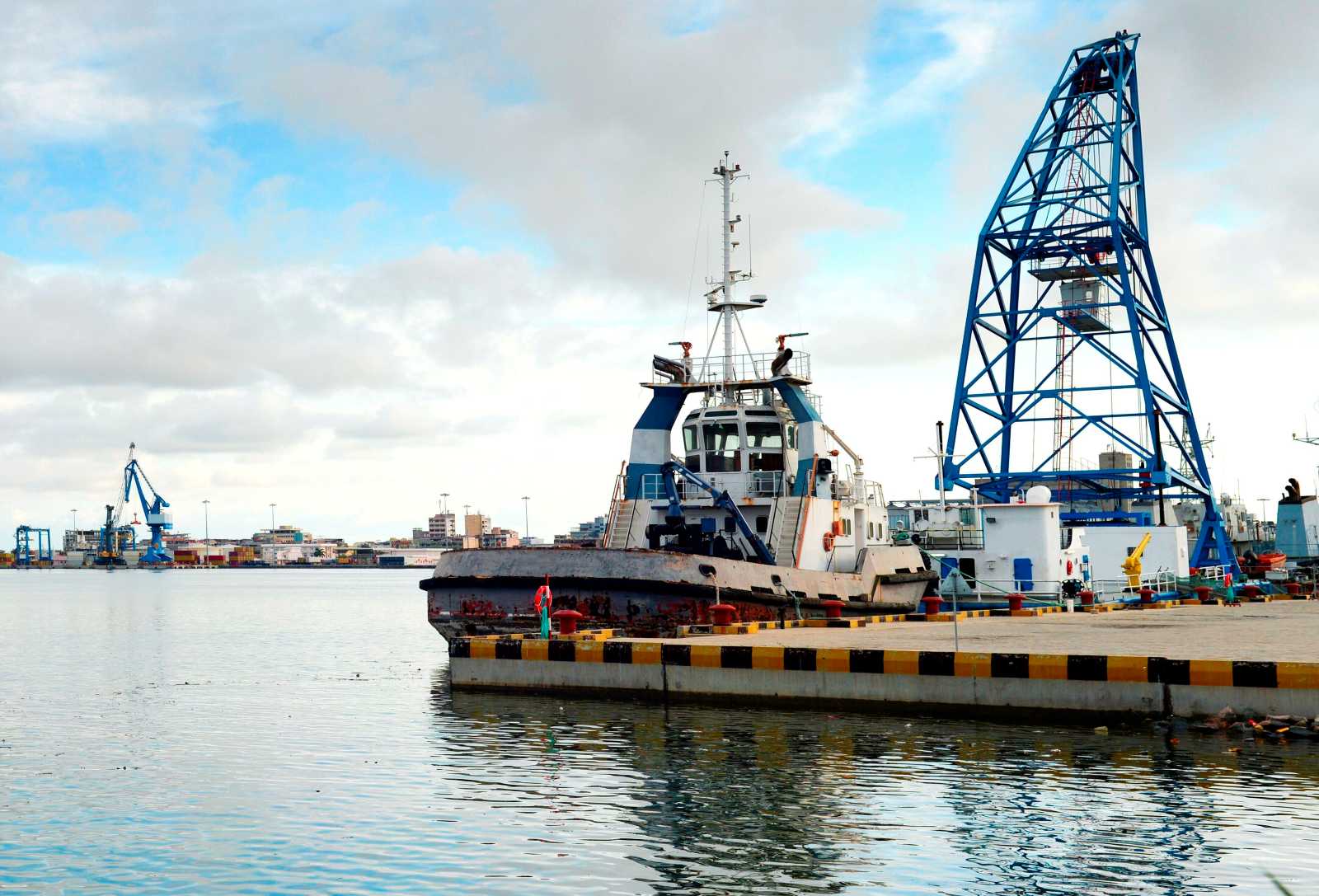
The lack of balance was even more pronounced in reports about Yemen. When a cargo ship is attacked or the US bomb targets in Yemen, German headlines depict events based almost solely on US sources. Virtually nothing is heard from Yemeni sources.
Isn’t this scepticism understandable to some extent? After all, civilian sources are under considerable political pressure in places such as Gaza and countries like Yemen.
Palestinian eyewitness statements – about Israeli massacres for instance – have been corroborated time and again by independent sources such as international organisations or humanitarian civil-society organisations, as well as by journalistic research. Media like the Arab broadcaster Al-Jazeera, the Israeli newspaper Haaretz and the UK’s BBC regularly publish extensive investigative reports. By analysing satellite images and mobile-phone recordings or reconstructing projectile paths, they are often able to refute claims made by the Israeli army. Sadly, there’s a distinct lack of such research in German media.
Please explain in a bit more detail how media can successfully engage in investigative journalism in a sealed-off area like Gaza.
There are various options. First, a few Palestinian journalists are fortunately still able to conduct research on the ground. Many work for Al-Jazeera, though some also work for German media. Second, journalists can use contacts in Gaza even if they can’t be there in person. I myself know people there, and most journalists reporting on Gaza are of course likely to have a much bigger network. Third, loads of publicly accessible information is available: satellite images, mobile-phone recordings, reports from NGOs and international organisations that journalists can compare against the official claims made by the warring parties. There are many opportunities to carry out research, in other words.
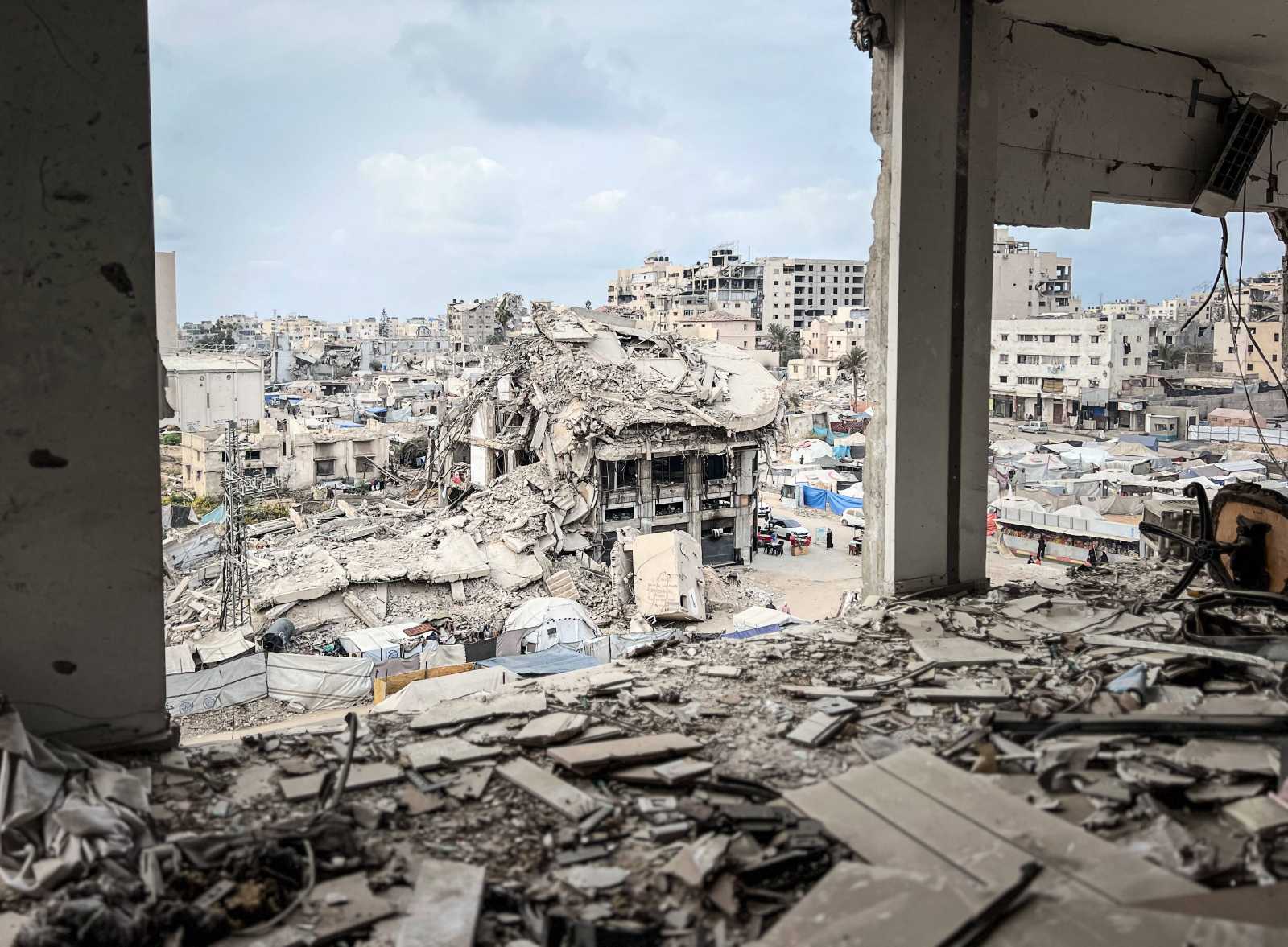
Many media professionals excuse their deficient reporting by saying that Israel’s lockdown of Gaza makes it extremely difficult to report on it and that it’s impossible to know what’s true or not. They portray Gaza as a kind of black box. However, the main problem with German reporting on the Middle East is not a lack of information but the fact that the information that is available is not used.
Fabian Goldmann is a freelance journalist specialised in the Middle East.
euz.editor@dandc.eu