Labour
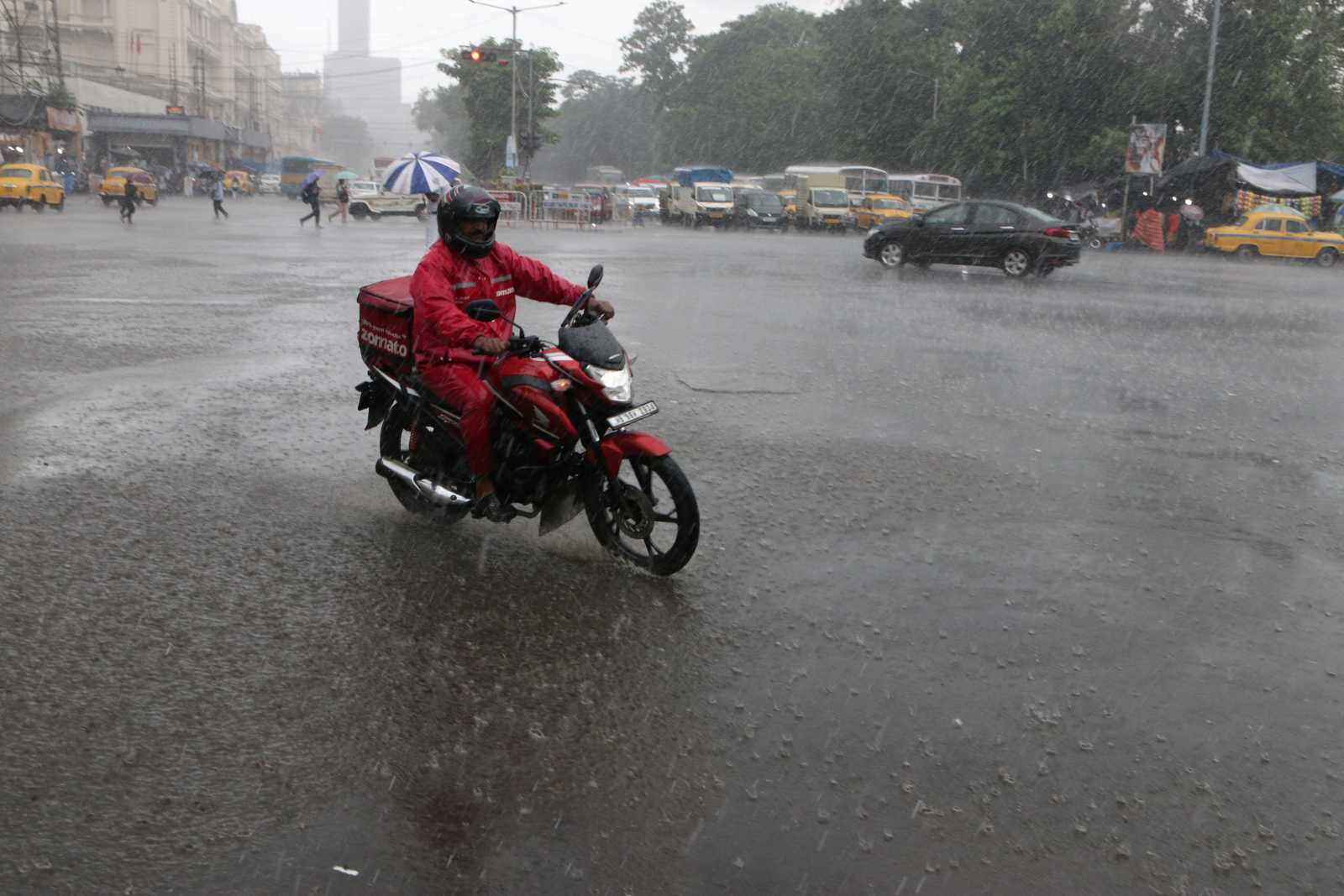
India’s food-delivery workers are going hungry


Anjani Kumar, 26, a father of two who lives in Delhi, works from around 9 a.m. to 10 p.m. and calls the shift routine. How much he eats depends on how much he earns. “Sometimes what we make in a day is so little that I can only eat once. Eating twice would mean less money saved for my family,” he says. If an order gets cancelled, he eats it himself, he says – but that rarely happens.
India’s gig and platform economy has grown at an extraordinary speed. NITI Aayog, the government’s policy think tank, estimated in a 2022 report that the gig workforce would stand at around 10 million in 2024/25 and more than double to 23.5 million by 2029/30. Food delivery, dominated by quick-commerce platforms Swiggy and Zomato, is one of the sector’s largest segments, part of an online market valued at over $ 43 billion in 2024 and growing at more than 20 % a year.
Riders are classified as “delivery partners”, not employees, a distinction that has kept them outside Indian labour law. They receive no fixed salary, no paid leave, no medical coverage and no meal allowance. Earnings depend on the number of deliveries completed and on ratings determined by rider punctuality and customer acceptance rates. An idle half hour, whether spent eating lunch or waiting out a delay, can lower a rider’s standing on the platform’s algorithm and jeopardise future assignments.
A single meal ordered through a delivery app in a city like Delhi frequently costs more than a rider earns for an hour’s work. Delivery drivers who eat whilst working often resort to cheap takeaways, whilst the pressure to remain available during peak hours can disrupt their regular eating patterns. A 2025 study of 425 app-based food-delivery riders in Tamil Nadu found that 66.8 % reported skipping meals whilst on duty, whilst 63.3 % complained of dehydration. A separate qualitative study of delivery riders in Indian cities documented limited access to basic facilities such as water and toilets.

Long shifts like the ones Anjani Kumar works are typical as well. A 2025 study of 255 platform workers – whose employment is based on online apps or digital platforms – in Tamil Nadu found that more than 45 % of respondents worked over 10 hours a day, and most earned about four to ten dollars per day, before deductions for platform commissions, fuel, vehicle maintenance and other expenses. The study traces this to platform design: pay tied to speed and volume gives riders little incentive to pause, since every unpaid minute off the road is a minute of lost income.
A workforce without a safety net – until now
For years, India had no legal category for gig and platform workers at all. That changed with the Code on Social Security, 2020, one of four labour codes that consolidate dozens of older laws. The Code formally defines “gig workers” and “platform workers” for the first time and creates a Social Security Fund, financed partly by contributions from companies such as Swiggy, Zomato and Uber, to pay for benefits including accident insurance, health coverage, maternity benefits and old-age protection.

The Code came into force in November 2025, after years of delay, but implementation remains patchy. By mid-2026, most Indian states had notified rules detailing how at least one of the four codes would be implemented, though a uniform national start date has still not been set. Before the Code came into force, the government was already registering gig and platform workers through its e-Shram portal to become eligible for future benefits. As of August 2025, only around 337,000 gig and platform workers nationwide had done so, a small fraction of the estimated workforce. Contribution rates for platform companies and the design of benefit schemes are still being finalised.
Some states have moved faster than the central government. Rajasthan passed the country’s first dedicated gig workers’ welfare law in 2023, Karnataka has followed with its own legislation, and Tamil Nadu has set up a Platform-Based Gig Workers’ Welfare Board. None of these frameworks, state or central, addresses meal breaks or on-shift nutrition directly. Social security in its current form insures workers against accidents and sickness; it does not yet touch the daily question of whether a rider eats between 9 a.m. and closing time, nor does it tackle the algorithms and the rating systems behind the businesses that force workers to make the most of every minute.
The gap has not gone unnoticed by workers. On New Year’s Eve 2025, an estimated 200,000 gig workers across India went on strike, demanding minimum earnings guarantees and a rollback of ultra-fast, 10-minute delivery targets that leave riders even less time to pause. The government subsequently asked e-commerce platforms to scale back the 10-minute model, though the practice has not been fully phased out.
Dharmendra Kumar, founder-secretary of the workers’ rights group Janpahal, has argued publicly that heatwaves should be officially classed as disasters and that riders have a “right to cool”: they should be given shorter login periods, guaranteed rest breaks and shaded rest areas, none of which currently exist even at platforms’ small neighbourhood warehouses. Basic provisions such as drinking water, oral rehydration salts and ventilated rooms to rest, he told Indian media, would cost platforms little but improve riders’ daily working conditions substantially.
Platform companies point to accident insurance and, in some cases, subsidised meal schemes as evidence of progress. Worker advocates counter that such measures remain optional and unevenly applied.
India’s food-delivery boom has made restaurant meals available within minutes to tens of millions of urban households. It has done so by building a workforce whose own food security depends on how quickly they can move from one order to the next. As the Code on Social Security is rolled out over the coming years, the test will be whether its provisions – which are still being defined – will reach far enough to include something as basic as the right to a meal break.
Rishabh Jain is a freelance journalist and documentary filmmaker covering topics such as climate change, health, human rights and migration.
rish.jain8899@gmail.com