Football stories
Egypt’s Ultras as part of the revolution


Football is political. Many leaders use sporting events to burnish their image and demonstrate power and unity. The Ultras fan scene, however, often sees the stadium as an autonomous zone that eludes state control.
In 2011, in the middle of the Arab Spring, the organised fan scene of Egypt’s record-holding football champions, Al Ahly, became a pillar of the Egyptian revolution. When pro-Mubarak militias on horses and camels attacked demonstrators in Tahrir Square on 2 February, the Ultras stood in their way. The ensuing street fights lasted for days; around 150 active football fans lost their lives in the course of the 2011 revolution. Mubarak resigned on 11 February. The revolution was briefly victorious.
Almost a year to the day later, the Ultras’ political influence in Egypt came to a sudden end. On 1 February 2012, at a match between Al Ahly and Al Masry in Port Said, armed men pushed into the block of Al Ahly supporters. The floodlights were turned off. The police did not intervene. 72 people lost their lives in the violence and mass panic, most of whom were Al Ahly fans.
Following the Port Said disaster, football matches were played in empty stadiums for several years, and the Ministry of Interior took control over entry to the stadiums. The Ultras scene experienced a decline and many factions dissolved. To this day, there are allegations that the former military council allowed or even instigated the violence in order to crush the Ultras’ participation in the resistance. Many Ultras were sent to Egypt’s notorious prisons.
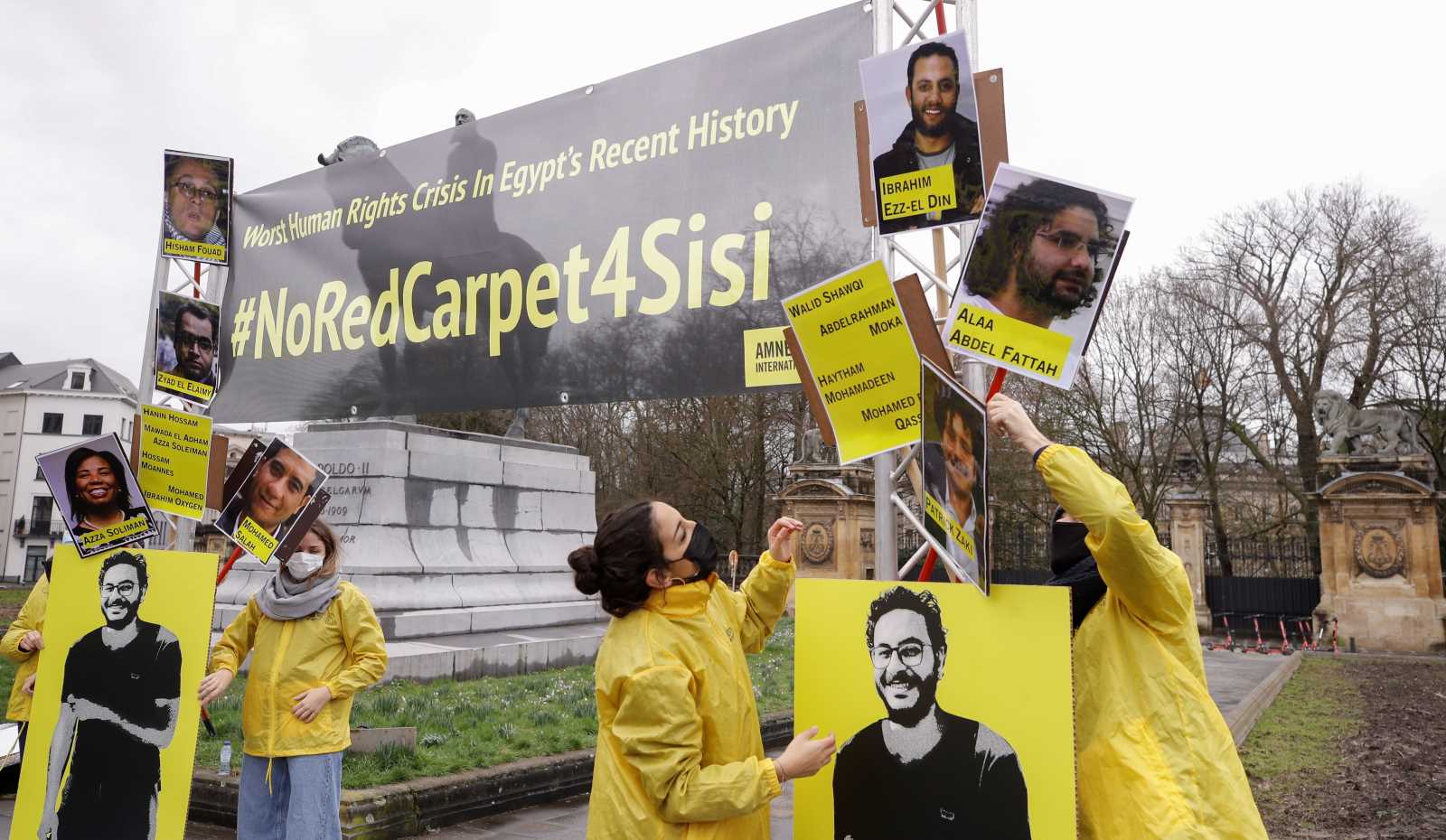
Under the current head of state, Abdel Fattah el-Sisi, Egyptian football is once again supposed to serve as a spectacle and offer no room for resistance. But politics has not disappeared entirely from football. In the 2018 presidential elections, over five percent of voters cast symbolic votes for football star Mohamed Salah – who wasn’t even on the ballot.
Egypt isn’t an isolated case: active fan scenes also became conspicuous political actors during the Maidan protests in Ukraine in 2013-2014 and the uprisings against Brazil’s former president, Jair Bolsonaro, in the stadiums of São Paulo.
Marius Moniak studies political science and medicine. He wrote this article as an intern at D+C’s editorial office.
euz.editor@dandc.eu
This is the fifth article of our football stories. You can find more stories here.