Development assistance
Malawi’s health sector has seen good progress – now it’s falling apart


For years, Steve Maston worked as a Peer Educator Supervisor at a health clinic in Malawi that offered HIV testing, treatment and counselling to some of the country’s most vulnerable communities, including female sex workers and members of the LGBTQI community.
Yet today, the clinic is closed.
For a long time, the facility was funded through the USAID-supported Protect Peer Solution for Epidemic Control (PROTECT) programme. But when US funding was cut, the services stopped almost overnight. “The closure of the clinic has left many LGBTQI community members in limbo,” Maston says. “They can’t get these services from a government-run health facility because of their sexual orientation.”
His clinic is one example of a much wider crisis unfolding across Malawi’s health sector as international donors reduce their support. Hospitals have long struggled with medicine shortages, broken equipment and underfunding. Doctors routinely ask patients to buy medicines from private pharmacies because public facilities have run out of stock. Now, aid reductions are placing even greater pressure on an already fragile system.
According to provisional OECD data, development aid fell globally by 23.1 % in 2025 – a historic decline. The biggest blow came from the United States. Malawi has been severely affected by the cuts: a large proportion of the more than $ 350 million that USAID had spent annually in Malawi – including on programmes targeting HIV/AIDS, malaria and tuberculosis – was cut.
Setbacks after years of progress
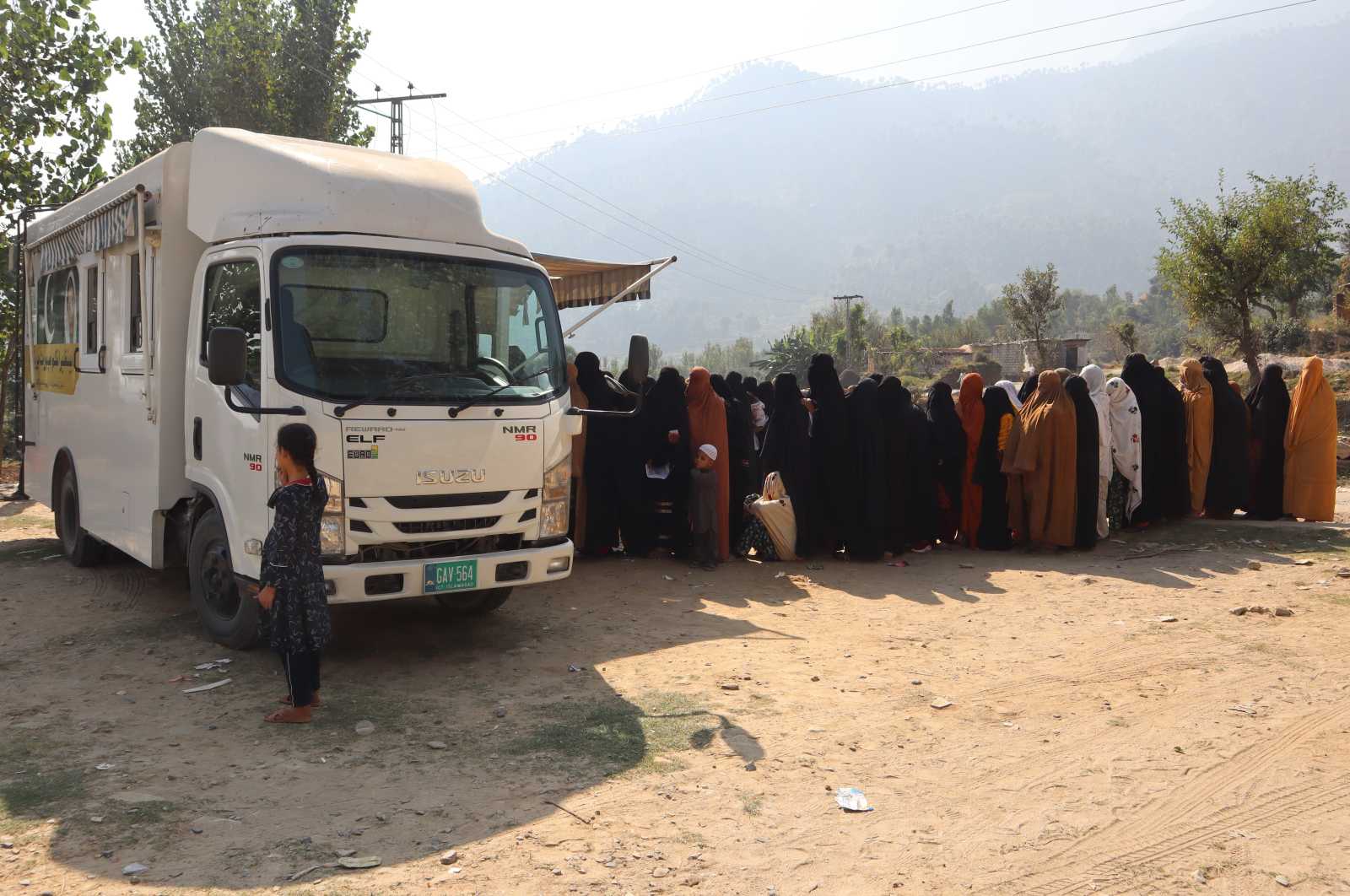
Donald Makwakwa, Executive Director of the Family Planning Association of Malawi (FPAM), describes the situation as “a health crisis.” Many mobile clinics run by FPAM, which provide crucial access to family planning, antenatal and postnatal care, especially in rural areas, were forced to halt. More than a quarter of the organisation’s health workers have lost their jobs. “The result is that we are already seeing more unwanted pregnancies because women cannot access contraceptives,” Makwakwa says.
The consequences extend beyond reproductive healthcare. According to Maston, interruptions to HIV services are leading to rising treatment default rates because many people can no longer access antiretroviral drugs or HIV testing.
These setbacks come after years of progress. According to the US Centers for Disease Control and Prevention (CDC), Malawi had made significant advances. HIV prevalence among adults has fallen dramatically since the late 1990s, while AIDS-related deaths have also declined substantially. “With aid withdrawal, all these gains we are talking about are at risk of disappearing,” Kamkwamba warns. “We need to find a way out of this crisis.”
But how? Health assistant Joseph Nsanyama, based in Lilongwe, believes the current crisis should serve as a wake-up call. “The reduction in support from donors has really affected healthcare services,” he says. “We need to diversify our sources of funding if we want to sustain the gains we have made over the years.” Malawi has long struggled to finance its own healthcare system. Although African governments pledged under the 2001 Abuja Declaration to allocate 15 % of national budgets to health, Malawi consistently fails to meet this target.
According to Makwakwa, one step in the right direction could also be to tackle corruption. “Most of the health problems we face are due to corruption,” he says. “Officials don’t care about solving the problems the country is going through.”
Raphael Mweninguwe is a freelance journalist based in Malawi.
raphael.mweninguwe@hotmail.com