Supply chains
Tracking cocoa from tree to trade


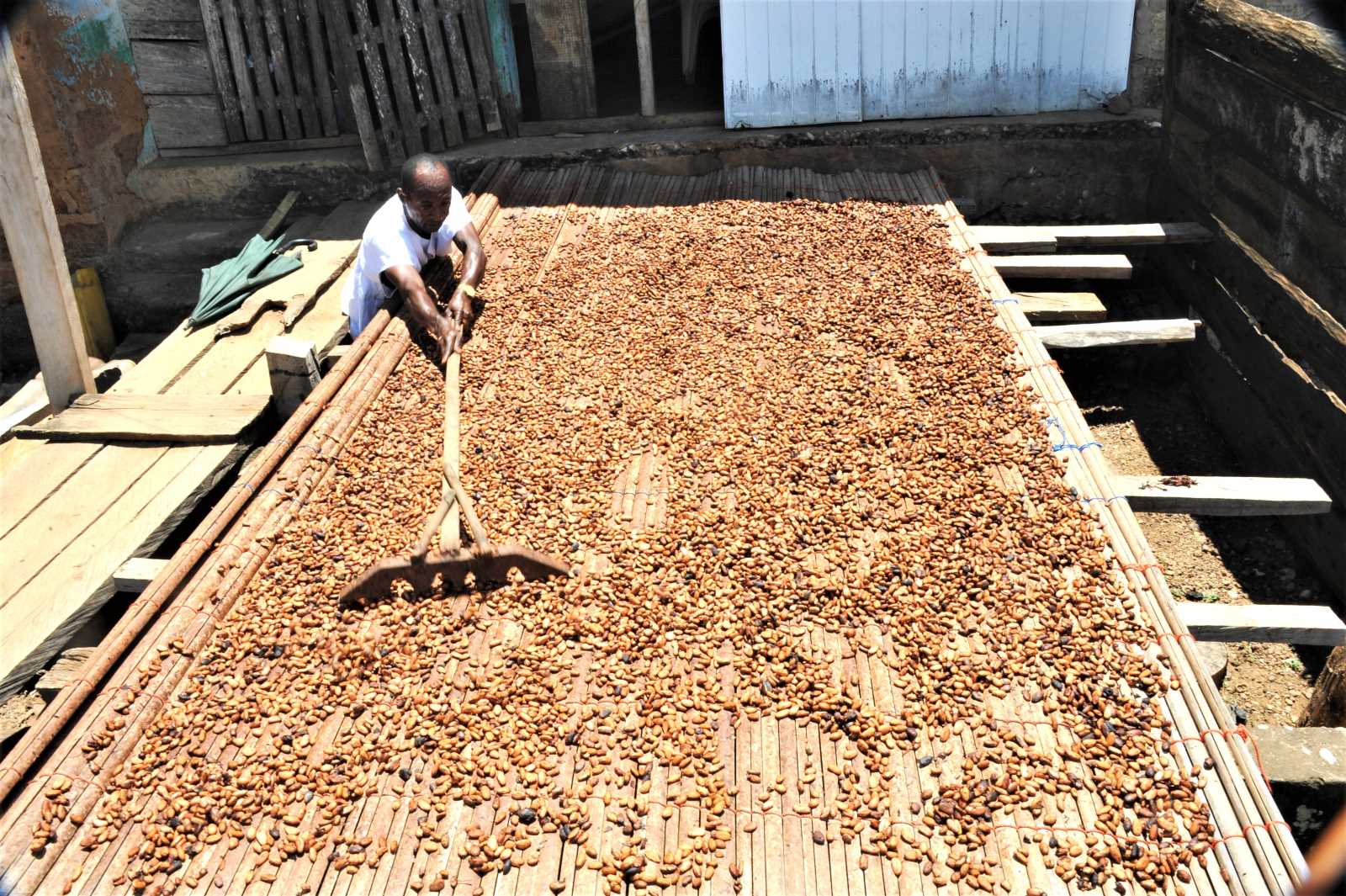
When you pick up a bar of chocolate in Europe, the story behind its cocoa is rarely visible. Yet the cocoa sector is at the centre of urgent global conversations about sustainability, fairness and transparency. This is especially true for West Africa, where around two thirds of the world’s cocoa is produced. Issues such as deforestation, child labour and the struggle of smallholder farmers to earn a living income have long plagued the industry.
Efforts to address these challenges are intensifying. In 2023, the European Union enacted the EU Deforestation Regulation (EUDR), which is set to come into full effect from January 2027 on. The regulation requires companies to prove that key commodities, including cocoa, are not linked to deforestation and that human-rights standards are being upheld. This puts direct pressure on producing countries, especially Ghana and Côte d’Ivoire, to make their cocoa supply chains more transparent.
A digital breakthrough
In response, Ghana has launched a digital solution that could mark a turning point for the cocoa industry. The Ghana Cocoa Traceability System (GCTS), developed by the Ghana Cocoa Board (COCOBOD) and piloted with support from Deutsche Gesellschaft für Internationale Zusammenarbeit (GIZ) GmbH, is designed to trace every bag of cocoa beans from the farm plot where it was harvested to the port where it leaves the country.
This project is part of the EU Sustainable Cocoa Initiative, a programme launched in 2020 that promotes fairer and more environmentally sound cocoa production. Funding comes from the European Union and Germany’s Federal Ministry for Economic Cooperation and Development (BMZ), while COCOBOD leads the implementation in Ghana.
The GCTS collects and links detailed data on cocoa farms, farmers, production volumes and transport routes. Using digital tools such as GPS mapping, barcode-labelling and mobile data capture, the system enables the documentation and verification that cocoa production meets EUDR requirements. This helps export companies and regulatory authorities to demonstrate compliance with EU regulations.
In the pilot phase conducted in the Assin Fosu district, more than 40,000 farms were mapped, and over 20,000 farmers – 40 % of them women – were registered. During the 2023/2024 lean season, over 1230 bags (about 77 tonnes) of sustainably grown cocoa were sold and shipped through the system.
“The system has already proven that full traceability is achievable,” says Faruk Nyame, technical lead on the GCTS Implementation Committee at COCOBOD. “Every bag of cocoa can be linked to a farm, a farmer and a specific plot of land. This is crucial not just for compliance, but for creating accountability across the entire supply chain.”
Farmers are benefiting
One of the most transformative aspects of GCTS is how it impacts the lives of farmers. Traditionally, cocoa farmers in Ghana have had limited visibility over how their cocoa is valued and sold, often leaving them vulnerable to unfair pricing and middlemen. With GCTS, farmers are registered with unique digital IDs and can be more directly connected to purchasing and support systems. This creates transparency in the cocoa supply chain and opens opportunities for a fairer distribution of payments and farming inputs such as fertiliser and cocoa seedlings as well as access to pension schemes and agricultural advisory services.
“This is not just a technical upgrade,” explains Nana Kwasi Ofori, the Central Regional Chief Farmer. “It’s about recognising the farmer as a key actor in a global chain, not just a supplier at the margins.”
The GCTS comes at a critical time. As European markets gear up to enforce stricter import standards under the EUDR, systems like this will play a key role in enabling companies to fulfill the necessary due diligence requirements for the EU market. Swiss and Dutch embassy officials, who recently visited the pilot sites, stressed that companies in their countries are depending on such traceability to meet their ethical sourcing targets.
“Traceability is no longer a nice-to-have; it’s a must-have,” says Celine Prud’homme Madsen, Programme Manager for Sustainable Agriculture and Cocoa at the EU Delegation to Ghana. “Ghana is showing that it can be a leader in sustainable sourcing – and that’s good news for farmers and consumers alike.”

Preparing for national rollout
As the pilot project has been deemed a success, the next steps are underway. Planning workshops have been held in Kumasi to evaluate the lessons from the pilot and prepare for a countrywide implementation. A “dry run”, which involves eight Licensed Buying Companies (LBCs), which together account for 60 % of internal cocoa purchases, is being rolled out. A final round of data collection ensured that all remaining farmers are registered before the full rollout in the 2025/2026 cocoa season.
However, the full rollout was confronted with technical difficulties such as the unavailability of internet access in some communities and a lack of technical expertise among some purchasers. Therefore, GIZ supported COCOBOD to assist the LBCs in addressing these challenges.
Claudia Maier, Country Coordinator for the Sustainable Cocoa Initiative at GIZ Ghana, emphasises the importance of interoperability. “The traceability system must work seamlessly with payment systems and logistics chains. That requires ongoing collaboration with the private sector,” she says.
Ghana’s finance minister Cassiel Ato Forson emphasises that the GCTS “will ensure that Ghana is in full compliance with the due diligence requirements of the European Union Deforestation Regulations.” The system places Ghana in a better position to supply cocoa that is traceable, deforestation-free, child labour-free and compliant with EU regulations, he says.
The Ghana Cocoa Traceability System is a model that could shape the future of the global cocoa trade. It shows how digital tools, when combined with policy pressure and farmer-focused design, can create meaningful change. For industry stakeholders – including chocolate manufacturers, consumer brands, regulators and NGOs – the system offers a reliable way to verify sustainability claims. For governments, it supports better monitoring of environmental impacts. And for the cocoa farmers who are too often overlooked, it may be the beginning of a more transparent and dignified participation in a billion-euro global trade.
Nastaran Zarnegari works for GIZ in Germany as a communications specialist with a focus on development policy. She is responsible for the strategic and political communication of the Sustainable Agricultural Supply Chains Initiative (SASI).
nastaran.zarnegari@giz.de
Francis Dadzie Mintah is an advisor for monitoring, evaluation and communication for the GIZ – Sustainable Cocoa Programme in Ghana. He has worked in the fields of agriculture, environment and mining and specialises in sustainability, data analysis and project management.
francis.mintah@giz.de