Conflict
The long aftermath of the war in northern Ethiopia


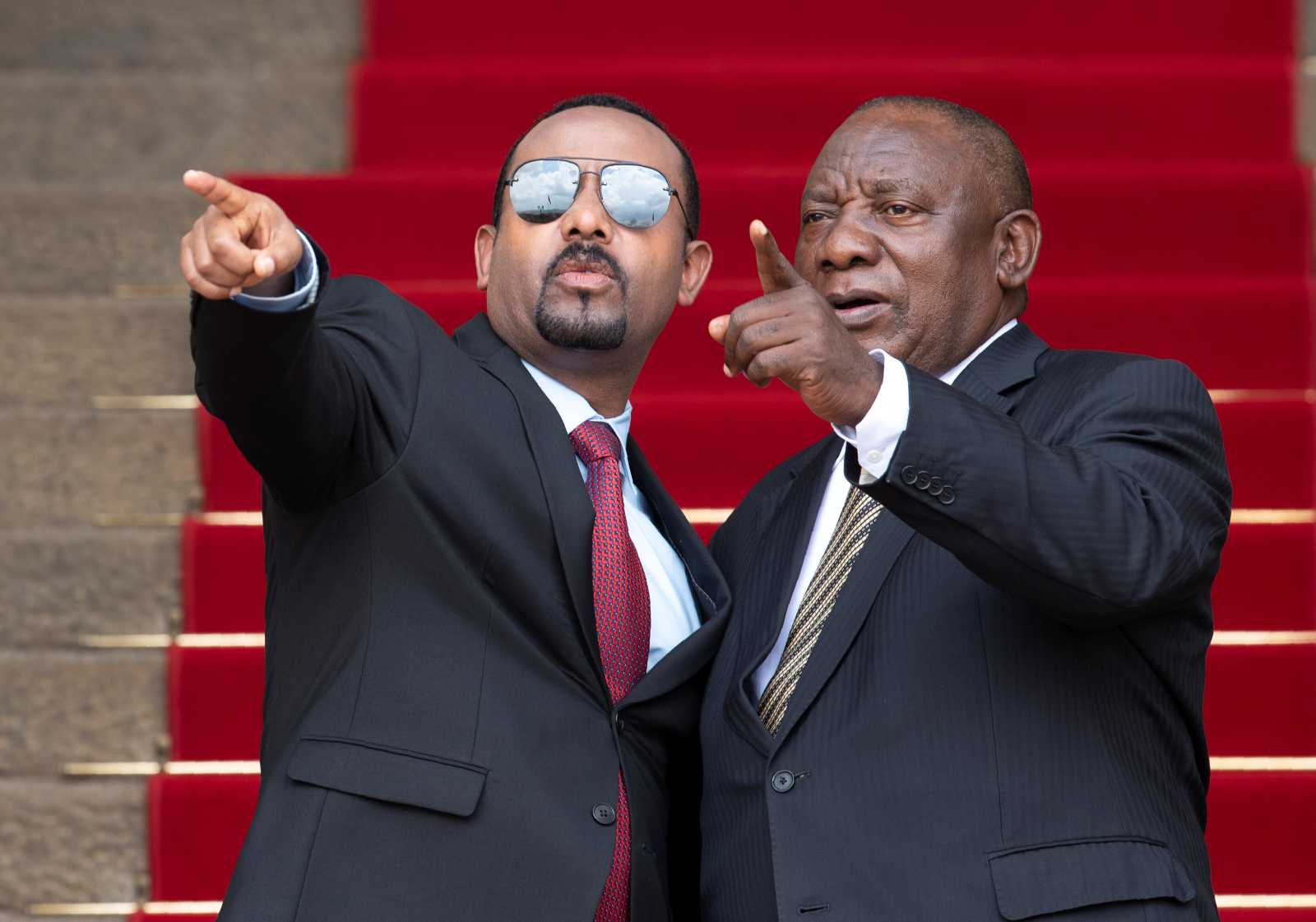
When large-scale fighting in northern Ethiopia ended in November 2022, many observers treated the Pretoria Agreement (or the “Cessation of Hostilities Agreement”) as a turning point. The agreement, signed on 2 November 2022 in the South African capital, officially brought an end to the two-year war between the Ethiopian federal government and its allies – including Eritrean forces and regional militias – and the Tigray People’s Liberation Front (TPLF), Tigray’s dominant political party.
The conflict erupted in November 2020 after tensions escalated between the federal authorities in Addis Ababa and the Tigray regional government in Mekelle. The hostilities date back decades and have been exacerbated in recent years by the Tigray leadership’s view that Ethiopian President Abiy Ahmed’s reforms were an attempt to centralise power and destroy Ethiopia’s federal system.
After two years of devastating war, one of the world’s deadliest armed conflicts of the 21st century that claimed more than 600,000 lives, the ceasefire raised hopes that the country could begin rebuilding its political and administrative foundations. International partners gradually shifted from emergency response to recovery. Development organisations resumed programmes. Diplomatic engagement focused on stabilisation.
Four years later, nothing is certain anymore. Relations between Ethiopia and Eritrea have steadily deteriorated since the cessation of hostilities in Tigray. Although Eritrean forces fought alongside Ethiopian federal troops during the war, Eritrea was not an official signatory to the Pretoria Agreement. While the agreement brought the military operation against the TPLF to an end, it failed to achieve Eritrea’s objective of completely dismantling the TPLF politically and thereby eliminating it as a future security threat. This has contributed to tensions between the two governments.

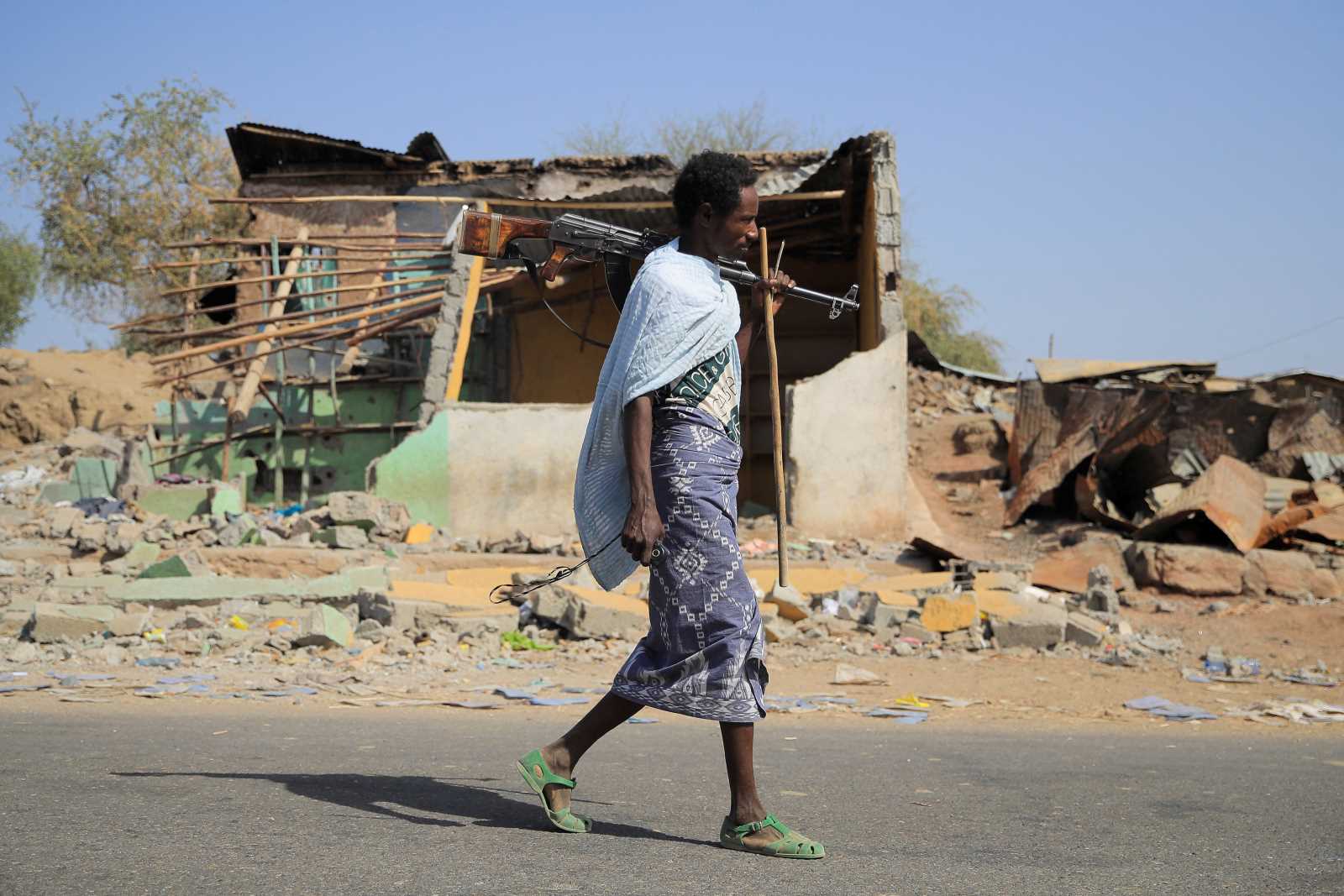
The situation in Tigray remains fragile. Many displaced people have still not been able to return to their homes, and some areas remain under the control of forces from the neighbouring Ethiopian region of Amhara. These unresolved issues have led to a tense standstill rather than a stable peace. At the same time, instability in neighbouring Sudan and the shifting geopolitical constellations in the Horn of Africa have further complicated the security situation in the region.
But it is not only the immediate threat of a new war that shows that the Pretoria Agreement has failed to create the institutional foundations necessary for lasting peace. In large parts of Tigray, state authority remains fragmented. Administrative structures function inconsistently. Judicial mechanisms lack credibility. Political divisions within the Tigray leadership have deepened. Security measures continue to be guided by political interests. For many citizens, the state still appears less as a reliable guarantor of rights and services than as a selective instrument of political control. This failure of effective governance lies at the heart of Ethiopia’s current political challenges.
Failed implementation
The Pretoria Agreement was presented as a framework for restoring constitutional order. Its provisions covered humanitarian access, territorial administration, security reform, political reintegration and transitional justice. These elements were intended to rebuild state authority in Tigray and reconnect the region to federal governance.
In principle, the agreement reflected widely accepted peacebuilding standards. Disarmament was linked to civilian protection. Political normalisation was tied to administrative and territorial restoration. Justice mechanisms were meant to support reconciliation. Monitoring structures were established to oversee compliance.
If implemented consistently, these measures could have paved the way for peace and functioning institutions. However, Ethiopia failed to take this path, mainly due to five factors:
1. Unresolved territorial jurisdiction. Western Tigray remains de facto outside the authority of the Tigray regional government. Forces of the Amhara region, which took control of the area during the war, continue to administer and secure the territory. Approximately one third of Tigray’s administrative territories are under the control of Amhara or Eritrean forces. Without territorial clarity, lawful administration cannot function reliably.
2. Fragmented security governance. Disarmament began before civilian protection and political guarantees were firmly established. And while Tigray’s forces were required to disarm, Eritrean forces and Amhara militias remained present in parts of the region. This asymmetry has weakened the ability of Tigray’s security institutions to function as neutral guarantors of public order. Instead, security structures remain entangled in unresolved political conflicts.
3. Lack of transparency. Important decisions in the areas of security, administration and political participation are being made through informal negotiations rather than transparent institutional procedures. This weakens the autonomy of the administration and limits the ability of public institutions to apply rules consistently.
4. Limited supranational enforcement. The African Union’s monitoring mechanism documents compliance with commitments but lacks the authority to enforce them. International partners have prioritised dialogue and technical assistance over policy conditions. This has reduced the incentives for full compliance with institutional commitments.
5. Unequal political reintegration. Legal and administrative obstacles combined with pressure to move ahead with elections before key political questions have been resolved have limited political space. The legal status of the TPLF remains contested. Under such conditions, political institutions risk contributing to exclusion rather than reconciliation.
Those factors have produced a pattern of fragility. Stability so far has been maintained through ad hoc arrangements and informal compromises. Institutions remain weak because political stability is pursued without adequate institutional autonomy.
Deficits in governance reinforce each other
The effects of limited institutional reconstruction are visible in several areas. Many people continue to live in prolonged displacement. Without functioning land administration, local courts and security guarantees, long-term return remains difficult.
The provision of services remains politicised. Banking, telecommunications, aviation and education are subject to varying degrees of political influence. Access depends on decisions taken by the federal government. Recent federal decisions to suspend budget transfers and restrict fuel and cash flows to Tigray illustrate how administrative control over essential services can be used as a political instrument. This undermines public trust.
The legitimacy of elections has been weakened. The next elections are scheduled to take place later this year despite unresolved territorial disputes. In the affected areas, residents are expected to participate only in federal elections, but not in regional elections, which raises constitutional concerns. Representation in the House of Peoples’ Representatives, the lower chamber of Ethiopia’s Federal Parliamentary Assembly, is based on territorial criteria, and Tigray has a fixed allocation of seats. Holding elections before the legal status of these areas has been clarified risks distorting representation.
Transitional justice initiatives operate without strong legal protection from political interference. Investigations and prosecutions remain limited. Many victims perceive the prosecution process as inconsistent.
The space for civil society remains limited. Independent media, professional associations and interest groups operate in a restrictive regulatory environment. Without a strong civil society space, institutional reforms lack social anchoring.
These governance deficits reinforce one another. Weak justice undermines trust. Low trust reduces cooperation. Limited cooperation weakens administration.
Regional pressures and governance trade-offs
Ethiopia’s institutional development is shaped by its regional environment. Increasing tensions with Eritrea and renewed debates over access to the Red Sea have shifted political attention to external security priorities.
Under such conditions, governments are reluctant to tolerate institutional independence that could hinder rapid decision-making. Security concerns justify centralisation, and external uncertainties legitimise internal control.
This dynamic is not an isolated case. In many fragile contexts, geopolitical pressures weaken domestic institutions by strengthening the influence of the executive branch. In the case of Ethiopia, this has led to control taking precedence over reconstruction.
Peace beyond ceasefires
The Pretoria Agreement ended a devastating war. That achievement remains significant. Yet peace without strong institutions remains fragile, as current developments show.
In Ethiopia, public authority is still negotiated rather than exercised by authorised representatives of institutions. Rights remain conditional. Accountability remains selective. These conditions harbour an ongoing risk of renewed conflict.
Sustainable peace does not emerge from the absence of fighting alone. It emerges from predictable rules, autonomous institutions and credible justice. Ethiopia’s experience offers an important lesson for conflict-affected societies and their international partners. Ending violence is only the first step. Rebuilding institutions is the crucial one. Until this task receives sustained political and international commitment, peace will remain a pause rather than genuine transformation.
Hafte Gebreselassie Gebrihet is an associate professor at the Western Norway University of Applied Sciences and Honorary Research Affiliate at the Nelson Mandela School of Public Governance, University of Cape Town (UCT). His research focuses on poverty, conflict and building of democratic governance and resilient institutions in Africa.
hafte.gebrihet@uct.ac.za