Authoritarianism
The chainsaw men


Strong men in politics appear to be back in fashion. They present themselves as conquering heroes on television and in magazines and newspapers – and, above all, on social media. After years of progress towards gender equality in society and politics, and despite a not insignificant number of women holding leadership positions in politics, statehood is all too visibly back in “male hands”.
This overtly male version of statesmanship often bears a somewhat tragic or ridiculous hallmark – like US President Donald Trump’s buffoonish grimaces, for instance. Or it comes across all muscular and manly, à la Russian President Vladimir Putin posing bare-chested on a horse. It places demands on ideal bodies, on male standards of physical strength. Pete Hegseth, who recently appointed himself Minister of War, said in a speech to American generals in September: “An entire generation of generals and admirals were told that they must parrot the insane fallacy that ‘our diversity is our strength’. (…) They were told females and males are the same thing, or that males who think they’re females is (sic) totally normal.” Or indeed it can simply be brutal and destructive, as exemplified by Argentinian President Javier Milei’s brandishing of a chainsaw.
What these “strongmen” in the uppermost echelons of power have in common is a penchant for exaggerated masculinism and authoritarianism, for right-wing notions of natural inequality and hierarchy and for exerting power over other people – and of course over other states. The way they see it, relationships involve discipline, subjugation and (the threat of) violence. Political strongmen make masculine authoritarian gestures to demonstrate their physical and national strength, as well as the strength of the state. The risk is that war then ends up being used as political leverage: not only Putin and Trump, but also Turkish President Recep Tayyip Erdoğan and Israeli Prime Minister Benjamin Netanyahu like to flex their military muscle in a bid to consolidate and expand their positions of authoritarian power at home.
In Germany, it is mainly representatives of the far-right Alternative for Germany (AfD) party, which came second in the country’s 2025 general elections, who share such views. Björn Höcke and Maximilian Krah are prominent members of the party and provide numerous examples. In his book, Höcke accuses German men of having become “wimps”. Ten years ago, he was already urging them to rediscover their “masculinity” by becoming “ready to defend themselves”. Much like Hegseth, he advocates the military as a training ground for masculinity. Krah claimed on TikTok that “softies” won’t find a girlfriend and that what he wants to see is “real men” who are “patriots” and “right-wing”.
Weak women as the counterpoint
This authoritarian masculinism – experts call it “protective masculinity” – requires a counterpoint: a weak woman worthy of protection who, in traditional patriarchal and heterosexual relationships, serves the man and of course can be sexually subjugated by him. Those of a right-wing authoritarian leaning thus seek to mobilise opposition to the neoliberal notion of women taking up employment, propagating instead traditional roles such as mother and housewife. It’s not only men who do this: female influencers who dub themselves “tradwives” (short for “traditional wife”) make their money from this latter model.
For some men, subjugating women doesn’t go far enough. Tech billionaires such as Elon Musk and Peter Thiel harbour fantasies of all-powerful masculinity. Some experts and activists see a risk that this could lead to new population control or even eugenic projects (Rumberger and Darnovsky, 2023) – which could possibly end up rendering women entirely superfluous.
Authoritarian masculinism also cannot bear gender ambiguity. It styles itself as the antithesis of the blurring of the clear boundaries between two distinct genders. It seems almost needless to stress that trans* people’s right to exist is challenged in all countries ruled by this type of man. In some, they are all but hunted down and have no chance of a life in safety.
Portraying men as the victims
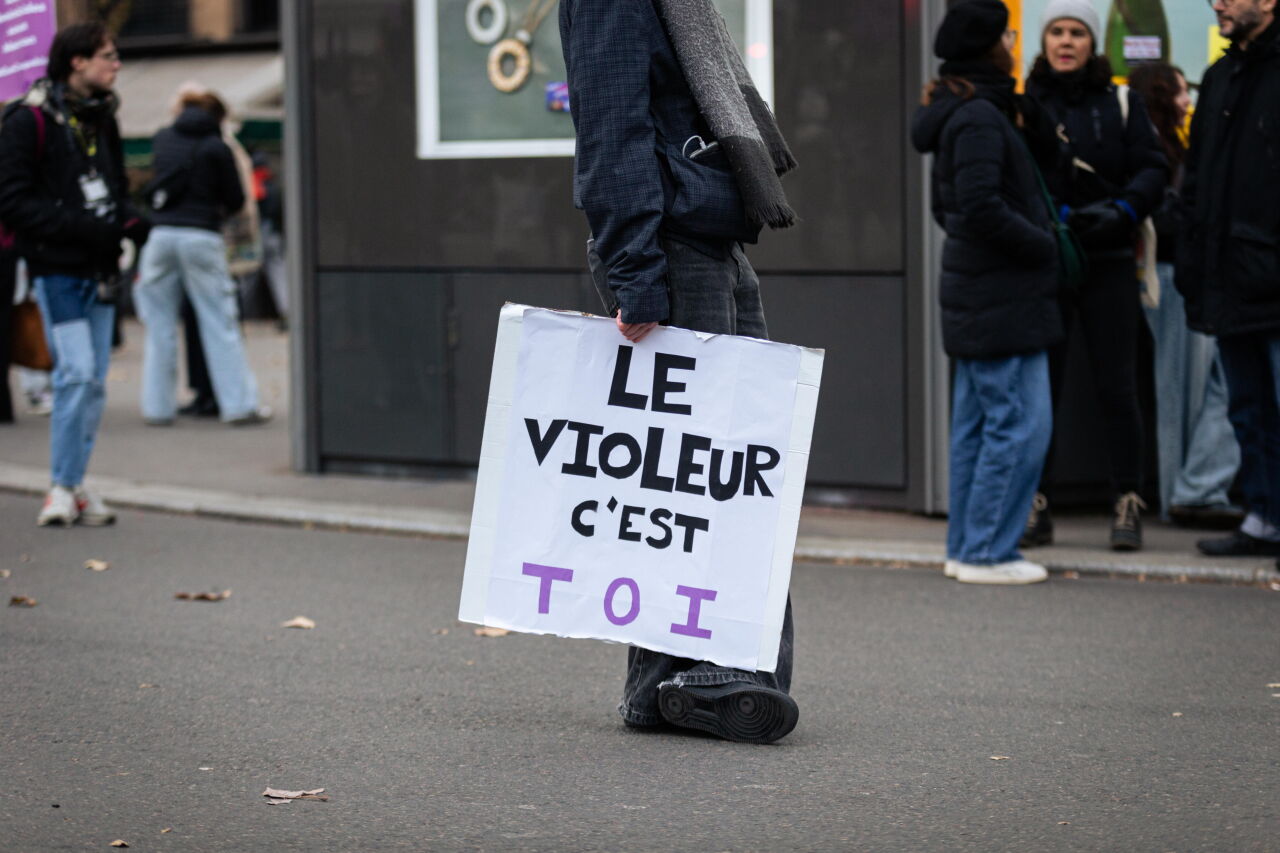
Such right-wing authoritarian ideas of what it means to be a man don’t come out of nowhere; they are the result of an active policy of “masculinist identity”. Right-wing discourse not only calls for traditional gender constellations to be restored but also portrays men as victims of the endeavours to achieve equality, as victims who need to be rescued. Because men in this narrative are in a desperate plight and at risk of losing their social status, they have a legitimate right to defend themselves – with aggression and violence, if need be. In their political communication, the far right thus pledge that a charismatic and masculinised leader will elevate the status of the “man in the street” and give him a new sense of self-assurance.
This requires subordination, however. Authoritarian right-wing actors exploit the contradictory situations created by neoliberalism, such as the precarious nature of male employment and the simultaneous encouragement of women to enter the workforce. These social shifts cause some men to feel persistently anxious, overburdened and disenfranchised. The response of the authoritarian right is to offer these men reassurance in the form of leadership, discipline, hierarchy, but also subordination, control and marginalisation.
Reversing democratisation through masculinism
How do these images of masculinity reflect global trends towards authoritarianism and de-democratisation? Though national contexts obviously differ, some common patterns can be identified, nonetheless. Stressing a muscular and “soldier-like” male image is one weapon in the fight for new forms of “hegemonic masculinity” (Connell and Messerschmidt, 2005) – and thus for new gender relationships. This masculinity is relational and needs to set itself apart from and assert its dominance over femininity. It claims that efforts in recent decades to bring about equality should be reversed in order to establish authoritarian stability, for example in hierarchical gender relations.

At the same time, the fight for new images of maleness is a central aspect of conflicts over cultural hegemony, political authority and power at a time when the neoliberal era is fraught with crises, the global economy is faltering, and the world order is being redefined. The economic conflict between the US and China is one prime example. Masculinist identity politics is being combined with nationalist identity politics. Neoliberal globalisation is at an end, and national identity is being emphasised: “Make America Great Again”. This promises an exclusive sense of belonging rooted in nationality or gender. It advocates a masculinist community in which (strong) men are in charge and that no longer requires any state structures or rules.
Political masculinity in its overly masculinised form isn’t just about individual – and often narcissistic – representation, it is part of a targeted strategy in the current quest for new models of society and political regulation against the backdrop of the deep crisis in neoliberalism. Such debates aim to find authoritarian “solutions” to the neoliberal transformation crises – solutions that bring discipline and are hierarchical and leader-centred – and establish them in people’s everyday lives.
Liberal democratic processes pose an obstacle to such attempts to restructure society and the state. The order that has been in place since the Second World War is being dissolved and democratic statehood sawn apart – ready to be replaced by masculinist leadership. This could lead to a global anarchy of individual states at the international level where the rule of might supersedes transnational and international cooperation. The weakening of the UN is being driven not least by the US government. But it is not only the US that is preparing itself for the war that seems increasingly probable in such a world.
Are there alternatives to these masculine authoritarian dystopias? Discussions of a new global order and of new national ways of regulating economies that involve more or less state intervention are far from over, so there is still time to take action. This will require a renewed effort to wage a feminist cultural war against the far right, against masculinism and authoritarianism. Feminist movements are still thriving all over the world, not least in Latin America and Europe. They still have the potential to counter such destructive masculinism.
Literature
Brown, W., 2019: In the ruins of neoliberalism. The rise of antidemocratic politics in the West. New York, Columbia University Press.
Connell, R., and Messerschmidt, J. W., 2005: Hegemonic masculinity. Rethinking the concept. In: Gender & Society, 6, 829–859.
Birgit Sauer is a retired professor of political science at the University of Vienna.
birgit.sauer@univie.ac.at