International development
ODA under attack


One question that worries Imme Scholz of the Heinrich Böll Foundation is: How are we supposed to cooperate internationally to promote the common good when discussions regarding official development assistance (ODA) at the national level are becoming increasingly difficult? She is dismayed by anti-democratic parties demanding that high-income countries should focus more on their own needs.
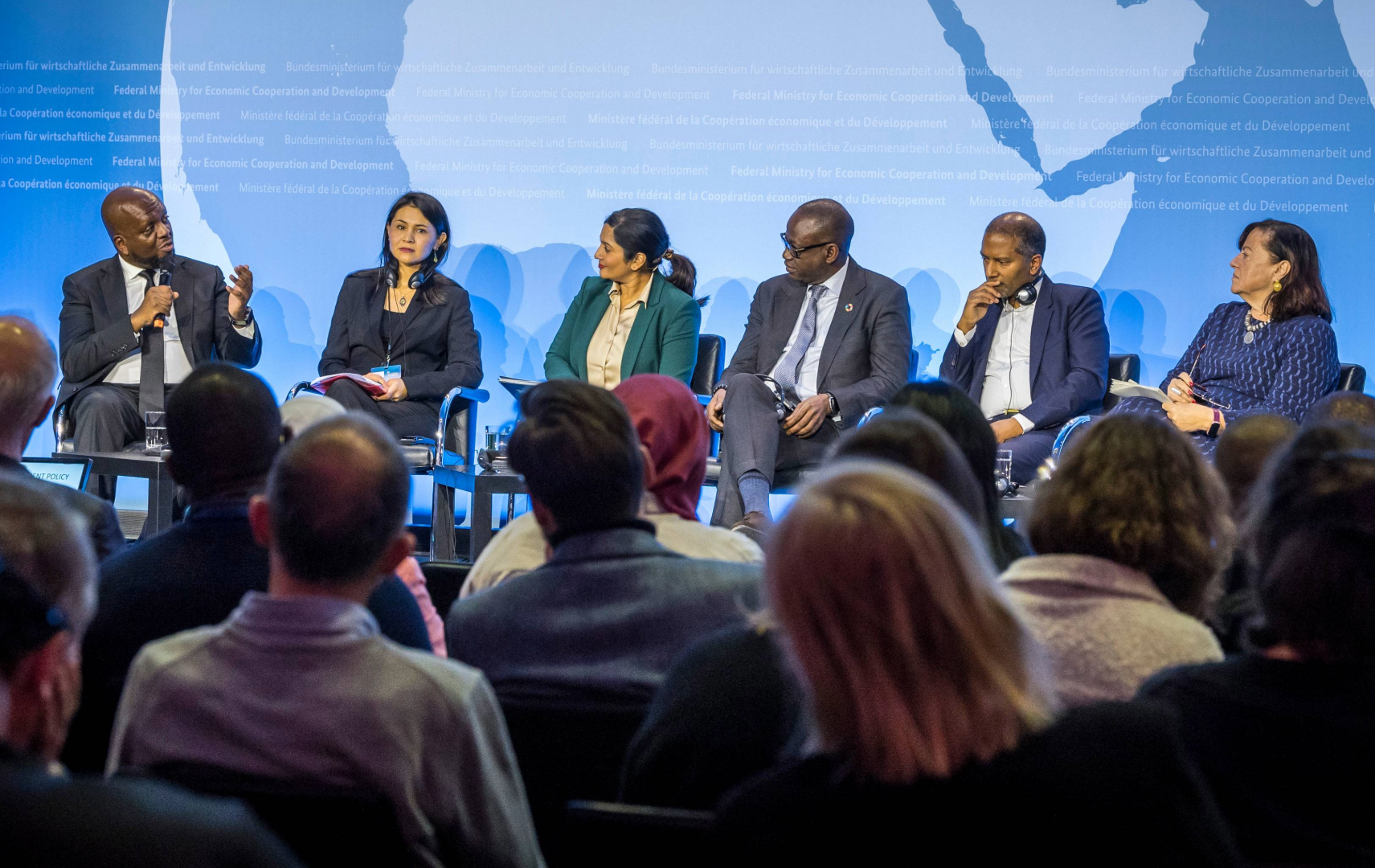
The concern that ODA is increasingly at risk due to the global rise of anti-democratic forces permeated all discussions at the conference to mark the 60th anniversary of the German Institute of Development and Sustainability (IDOS) in Bonn in July.
Current events reinforce these fears: The new Dutch government not only wants to drastically cut ODA – the new Minister for Foreign Trade and Development, Reinette Klever, even called for the complete abolition of development aid a few years ago.
In Germany too, a dispute is raging over ODA cuts with regard to the 2025 federal budget. Organisations from all sectors are vehemently protesting against this, but Finance Minister Christian Lindner is planning to cut funds significantly. Communicative debacles such as the bogus debate promoted by populist forces about the alleged fact that German ODA is spending € 315 million on cycle paths in Peru are of little help in view of the current situation.
Jochen Steinhilber of Germany’s Federal Ministry for Economic Cooperation and Development (BMZ) agrees that ODA is under pressure. In his experience, populist forces are discrediting development funding in general. Due to a dangerously low level of public awareness of how international institutions work, they often manage to defame projects. He hopes that a set of measures can restore public trust. They include:
- fighting fake news, addressing scepticism, promoting knowledge about institutions and transparency – with the help of IDOS and other partners,
- strengthening the accountability of institutions,
- leaving no one behind, promoting solidarity,
- making attractive offers in geopolitical contexts and
- emphasising and communicating the effectiveness of development projects in the public debate.
Katharina Wilhelm Otieno belongs to the editorial team of D+C/E+Z.
euz.editor@dandc.eu