Rare earths
Myanmar: A hidden source of China’s most critical minerals


When President Donald Trump declared his intention to acquire Greenland a few months ago, he brought the US to the brink of conflict with its European NATO partners. His ambitions are widely seen as driven by one key concern: reducing American dependence on China for rare earth elements – metals that have become indispensable to modern technology and the green energy transition.
Rare earth elements – a group of 17 metals essential for permanent magnets used in wind turbines, electric vehicles (EVs), electronics and defence systems – have moved to the centre of the geopolitical race for resources. Unlike their name suggests, these elements are not particularly rare compared to minerals like tantalum. Yet they often occur in low concentrations and are only extracted in a few places worldwide. Market concentration, especially in the refining industry, is huge. More than 90 % of rare earths are currently processed in China and enter the global market from there. This creates huge market power. When China restricted exports of seven heavy rare earth elements including terbium and dysprosium in April 2025 – elements indispensable for permanent magnets used in wind turbines and EVs, for example – the EU and US faced immediate pressure to secure alternative sources.
What remains less prominently discussed is where China sources these elements. According to Chinese customs data, two thirds of the heavy rare earth elements terbium and dysprosium processed in China originate from war-torn Myanmar. Particularly after China had raised its environmental mining standards, Myanmar became an important territory for rare earth extraction where Chinese standards do not apply. This has severe impacts on the environment, people’s health, social structures, criminal activities and conflict dynamics.
At the same time, the fragile political situation in Myanmar poses supply chain risks to China as well as to importers of heavy rare earths and permanent magnets worldwide. Yet despite the country’s crucial role in a critical supply chain, there is hardly any reporting on Myanmar. Even the International Energy Agency’s 2026 report on rare earth elements excludes Myanmar from central charts “due to lack of reliable data on reserves”.
Kachin State: China’s role in the Myanmar conflict
Rare earth mining in Myanmar began in the early 2010s along the China–Myanmar border in northern Kachin State and accelerated sharply after Myanmar’s 2021 military coup. According to a Global Witness report (2024), the number of mining sites reached 300 in 2023, representing a 40 % increase from 2021.
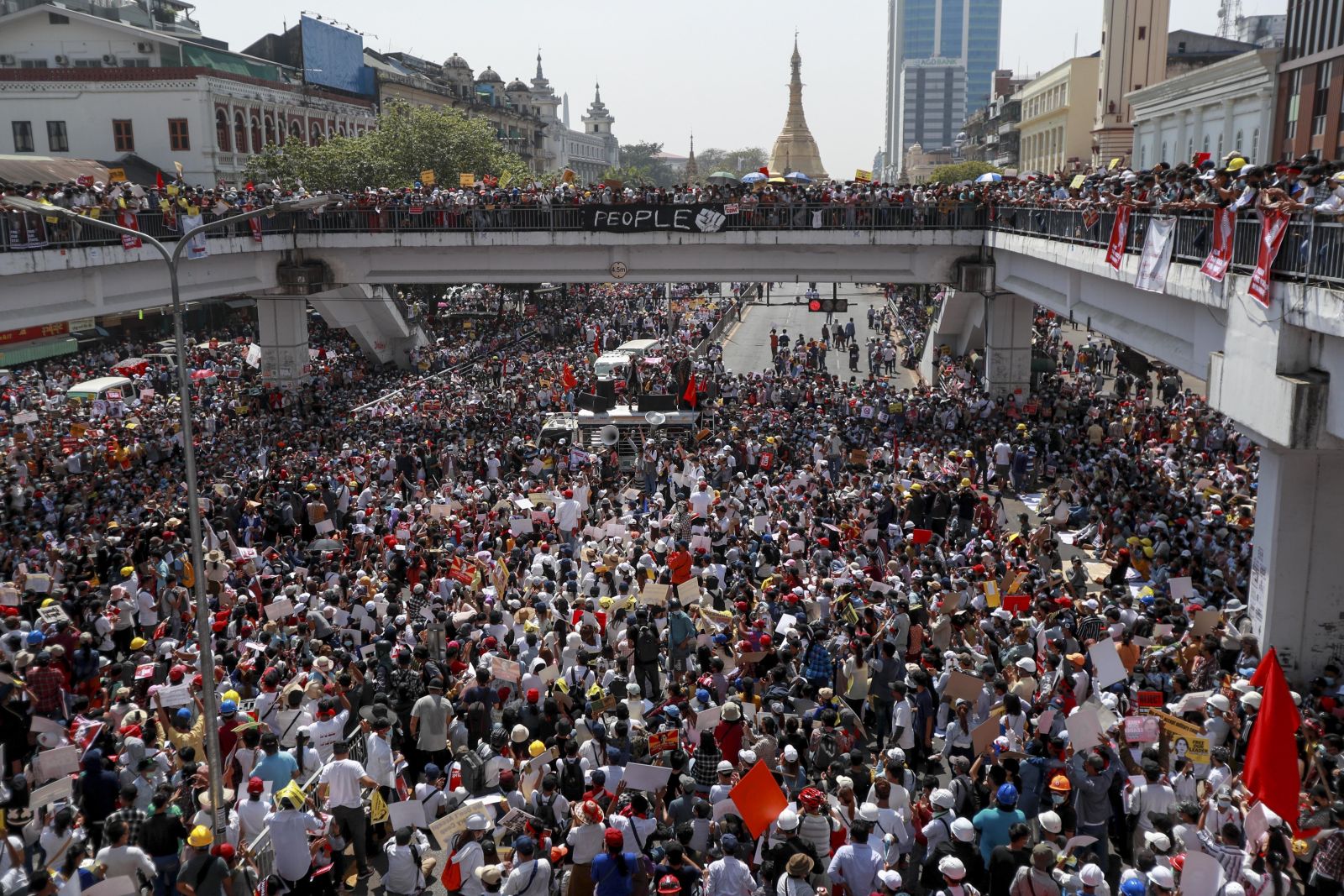
After the 2021 coup, armed conflict has intensified. Widespread clashes have erupted between ethnic armed organisations, their allied resistance forces known as people’s defence forces and the Myanmar military with its allied militia groups nationwide. Control over mining areas brings substantial economic benefits and provides leverage when dealing with external political and economic pressure.
Since 2021, Chinese companies have taken advantage of the power vacuum in the region and unregulated rare earth mining has expanded. Chinese companies cooperate with different actors to secure their access to rare earth reserves. In the Kachin region, these have long been mainly the military and militia groups. China’s role in the conflict became more visible in 2023, when ethnic armed organisations gained control over the resource-rich territories. Reports indicate that China applied immense pressure to protect its interests, forcing several ethnic armed organisations to return central mining areas to the Myanmar military regime. For example, China detained the leader of the armed resistance group MNDAA after they seized the city of Lashio in Shan State and refused to withdraw.
In September 2024, the Kachin Independence Army (KIA) – an ethnic armed organisation and the armed wing of the Kachin Independence Organization (KIO) – captured several key border areas, including the towns of Chipwi and Pangwa. This region contains the country’s most extensive rare earth mining sites and had previously been controlled by the Border Guard Forces, a militia aligned with the Myanmar military regime. Mining activities were largely backed by Chinese capital and investment.
Shortly after the KIA seized these key trade towns, China closed all border crossings and suspended trade with Kachin State. This put significant political and economic pressure on the KIO/A, as the border communities depend on China for basic goods and services. However, China also has an interest in continued access to resources. In December 2024, negotiations between Chinese authorities and the KIO/A took place and trade resumed. In return, the KIO/A permitted Chinese investors to continue rare earth mining operations in the newly captured region.
Mining boom, social and ecological decline
The rapid expansion of mining operations in Myanmar’s border regions has come at a high cost. Environmental degradation and social disruption have intensified. Forests have declined, mountains are scarred by excavation, and once-clear streams now run discoloured from chemical runoff. The once quiet border landscape has transformed into a crowded, chaotic mining zone.
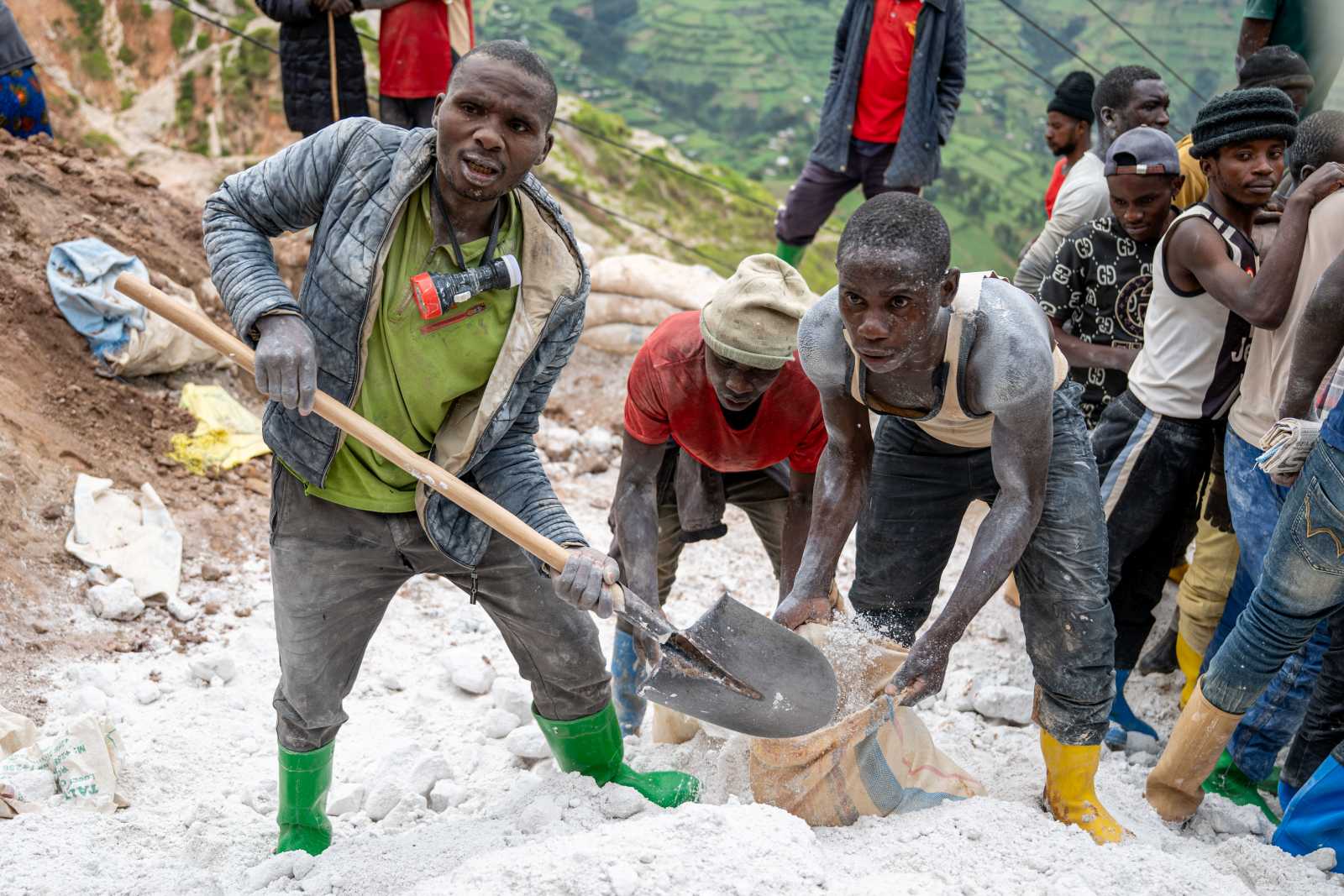
Myanmar’s economic situation is dire, and the mining industry in Kachin State has attracted thousands of people from across the country in search of job opportunities. The influx of workers has brought a sharp increase in gambling, drug use and trafficking and criminal activities. Local residents in the mining towns of Chipwi and Pangwa report feeling increasingly unsafe in their own communities.
Environmental damage has also grown more severe. The extraction process relies heavily on chemical substances such as ammonium carbonate and oxalic acid. Their widespread use has largely contributed to deforestation, water contamination and land degradation. In 2024, landslides at rare earth mining sites in Pangwa killed around 50 people and left many others missing.
Improper disposal of chemical waste has further compounded the damage. Toxic runoff has entered nearby streams and water systems, affecting communities in the Chipwi district and the Mai Ja Yang area. Residents who rely on these water sources for bathing and drinking have developed skin diseases and eye illnesses.
Labour exploitation and local conflict
Inside the mining sites, Chinese operators oversee and manage operations while local workers carry out dangerous and low-paid jobs. According to the Myanmar Mining Watch Report 2023, wage exploitation is widespread. Women in particular face significant constraints on employment, with reports indicating that some have been forced into exploitative relationships with supervisors or investors. Those who refuse have, in some cases, lost their jobs without reasonable justification.
In some places, the local communities therefore oppose further rare earth extraction. In villages such as N’Ba Pa and Ding Sing Pa, protests over environmental and health issues emerged after the Kachin Independence Organization (KIO) initiated mining operations in 2023. Due to strong resistance, the KIO eventually suspended mining activities in these areas.
Today, the impact of rare earth mining extends beyond Kachin State. Mining activities have also been reported in areas such as Namtu, Namkham and Mong Wi in northern Shan State, causing environmental degradation, dust pollution from heavy transport trucks and declining agricultural productivity. In eastern Shan State, rare earth mining has also spread along the Lwe and Kok river basins. Pollution flows through the river systems and eventually into the Mekong River, raising concerns about cross-border impacts on downstream communities in Chiang Rai, Thailand.
Efforts to improve the situation in Kachin State
The environmental and social damage caused by rare earth mining in Kachin and Shan states is enormous. However, the KIO authorities in Kachin State are undertaking efforts to improve the governance of rare earth mining.
Ying, a local businessman, reports that after the KIO seized control of the rare earth mining towns of Chipwi and Pangwa, the KIO designated both as special administrative villages and placed them under the direct authority of the KIO’s central Department of General Administration. A recent report by Ta-Wei Chu, an assistant professor at Chiang Mai University in Thailand, and Seng Li, founder of the Shaba Foundation, indicates that due to the KIO’s administrative efforts, drug trafficking, gambling and criminal activities have largely declined in both villages.
Additionally, the KIO introduced a rare earth mining management regulation in October 2025 to formalise the industry. It addresses key areas including permit applications, the responsibilities of investors, environmental protection, the use of chemicals, labour standards and enforcement mechanisms.
Investors, both domestic and international, must now meet stricter financial requirements. They must provide a guarantee of 500,000 Chinese yuan (about $ 73,000) to ensure land rehabilitation and ecological restoration. Additionally, they must pay a concession fee of 100,000 yuan (about $ 15,000) per acre of mining land and a royalty of 40,000 yuan (about $ 6,000) per ton of extracted minerals. All revenues and financial guarantees are collected by the KIO’s Central Department of Commerce. Business operators who violate the provisions will have their mining permits revoked and will be subject to legal action.
To support implementation, the KIO has established a rare earth mining monitoring committee tasked with overseeing mining operations. Nor Nor, a mining worker, says that the committee conducts regular inspections of mining sites. During a recent visit, it instructed operators and workers to minimise environmental harm.
However, while governance of rare earth mining is improving, enforcement remains uneven. Recent reports from the local news outlet Kachin News Group indicate that in some areas, particularly in Mai Ja Yang, workers did not receive their salaries for up to five months. Female workers continue to face barriers to employment unless they comply with exploitative demands from supervisors, highlighting persistent labour and human rights abuses.
Regional conflict affects international supply chains
Myanmar’s rare earth crisis reveals the hidden costs of the global green energy transition and the production of communication technologies, among others. The minerals that power electric vehicles and wind turbines can fuel armed conflict, environmental destruction and labour exploitation. When European manufacturers source terbium and dysprosium from China, chances are high that these minerals originate from war-torn Kachin or Shan State. The social and political crisis in these regions poses a serious risk for a reliable supply of these minerals. Moreover, according to international norms such as the UN Guiding Principles for Business and Human Rights and supply chain legislation, companies have a responsibility to act.
Several steps can be taken: Firstly, European companies should team up with local civil society to find allies in the region and identify ways in which they can contribute to improving the conditions of extraction and remediation. This would also help to secure supply. According to the UN Guiding Principles for Business and Human Rights and the OECD due diligence requirements, building such relationships is key. Secondly, finding alternative sources and technological solutions could help to reduce reliance on Chinese suppliers. Efforts in rare earth recycling must be stepped up. The upcoming EU circular economy act should tackle this with more rigorous measures. It is also key to build smaller cars and invest in good and attractive public transport. In the end, all of this would help reduce demand for the “conflict minerals” dysprosium and terbium.
Seng Li is a Kachin researcher, development practitioner and a founder of Shaba Foundation. In his research he examines land rights, displacement, resistance to large-scale agricultural investments and natural resource governance in Myanmar’s northern Kachin State.
senglisumlut@gmail.com
Johanna Sydow heads the International Environmental Policy Division at Heinrich Böll Foundation in Germany. She was a senior policy advisor with Germanwatch and has investigated and worked on issues relating to resource extraction, the circular economy and corporate accountability in Ghana, Ecuador, Peru, Colombia and the EU.
sydow@boell.de