Motorcycle taxis
The dark side of Malawi’s motorcycle boom


When Covid-19 struck a few years ago and schools closed, Noel Frodrick – now 22 years old – wanted to support his family. He grew up in a household of 10 children. After his father died in 2008, his mother struggled to provide for them before remarrying.
Family tensions eventually led some siblings to move out. His older sister Memory learned salon work, while their eldest brother became a mechanic. Noel eventually saw an opportunity and decided to earn money transporting passengers on a motorbike, employed by a community member paying him daily 3000 Malawian Kwacha (about $ 1.75).
Then, one evening, while dropping off a passenger, he was attacked.
“A woman stopped me and we talked along the way,” Noel recalls. “When we arrived, people emerged from the darkness and hit me on the head with a metal bar. That’s the last thing I remember.”
The attackers, he believes, wanted to steal the motorbike – a crime that has become increasingly common in Malawi. Riders are often lured at night and assaulted along the way. The attack left Noel partially paralysed. His left arm and leg no longer function properly. “Life is unbearable now. I can only use one hand, but I still do piece work, like selling slippers, to survive,” he says. “I want to live a normal life again and go back to school.”
Noel spent more than a year bedridden in hospital. His family now takes him for regular check-ups, including brain scans and physiotherapy. Although there has been some improvement, his struggles continue. “He was a normal boy who could do any work,” his sister Memory says. “Now he sometimes faints suddenly. We have to find transport to take him to hospital. It has affected the whole family.”
A “public health challenge”
Noel’s case reflects a wider crisis. Police have repeatedly warned about rising motorbike thefts and accidents. Hospitals report growing numbers of victims with severe injuries and potential long-term disabilities.
Media reports citing the Department of Road Traffic and Safety Services show that between 2020 and 2023, Malawi recorded 4566 kabaza-related accidents, claiming 472 lives – about 118 deaths per year. Kabaza is the local colloquial term for motorcycle-taxi operators. In the first quarter of 2025 alone, the police recorded 227 such accidents, up from 200 in the same period of the previous year.
A retrospective study conducted at Queen Elizabeth Central Hospital in Blantyre found that in 2021, 63.4 % of all road traffic accident cases involved motorcycles. Collisions with cars were the most common cause, and most of the injured riders were not wearing helmets. Researchers described the situation as a “public health challenge” that places long-term strain on Malawi’s health system.
The Directorate of Road Traffic and Safety Services says addressing the kabaza problem requires a multi-sectoral approach. “Among other things, we run campaigns in which we distribute a wide range of information, educational and communication materials aimed at reinforcing important safety messages and promoting compliance with traffic regulations,” said spokesperson Angellina Makwecha.
Other strategies, she says, include making licensing and training more accessible, registering kabaza riders in their systems, encouraging riders to enrol in driving schools and periodic enforcement and surveillance on kabaza operators on loading capacity, helmet wearing and adherence to road traffic rules and regulation.
For Noel, those interventions come too late. His life has been permanently altered by a system that offers young people some income but little protection. Noel’s case strikingly underscores the growing human cost behind Malawi’s motorcycle economy: a lifeline for many, but at the same time a deadly risk.
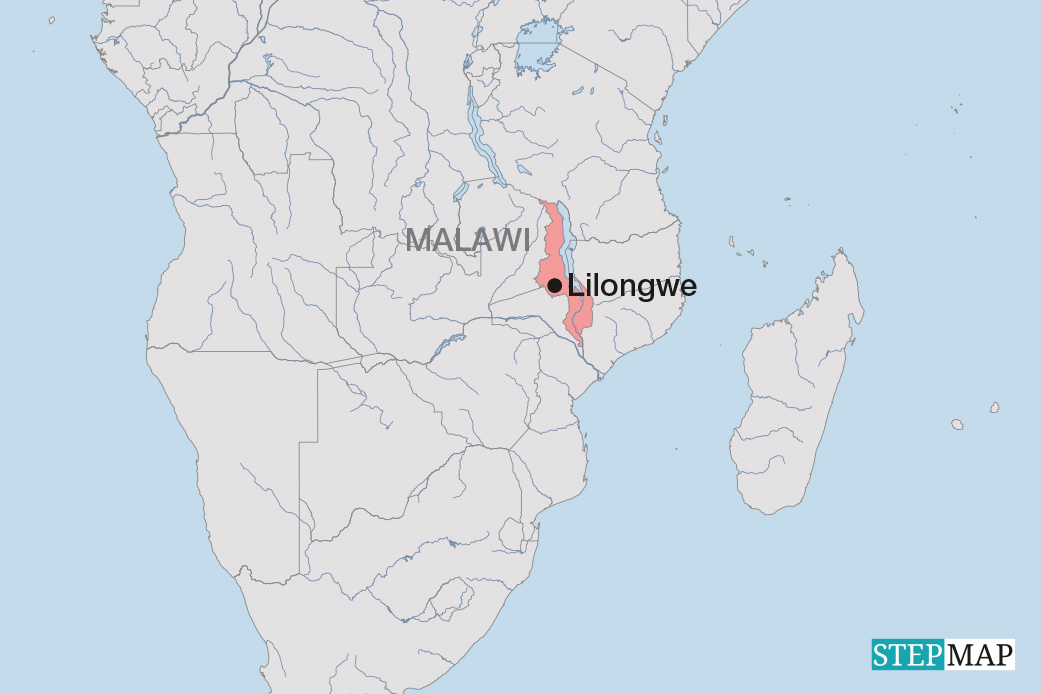
Charles Pensulo is a freelance journalist based in Lilongwe, Malawi.
charlespensulo@gmail.com