Resource conflicts
Can India withhold Pakistan’s water?


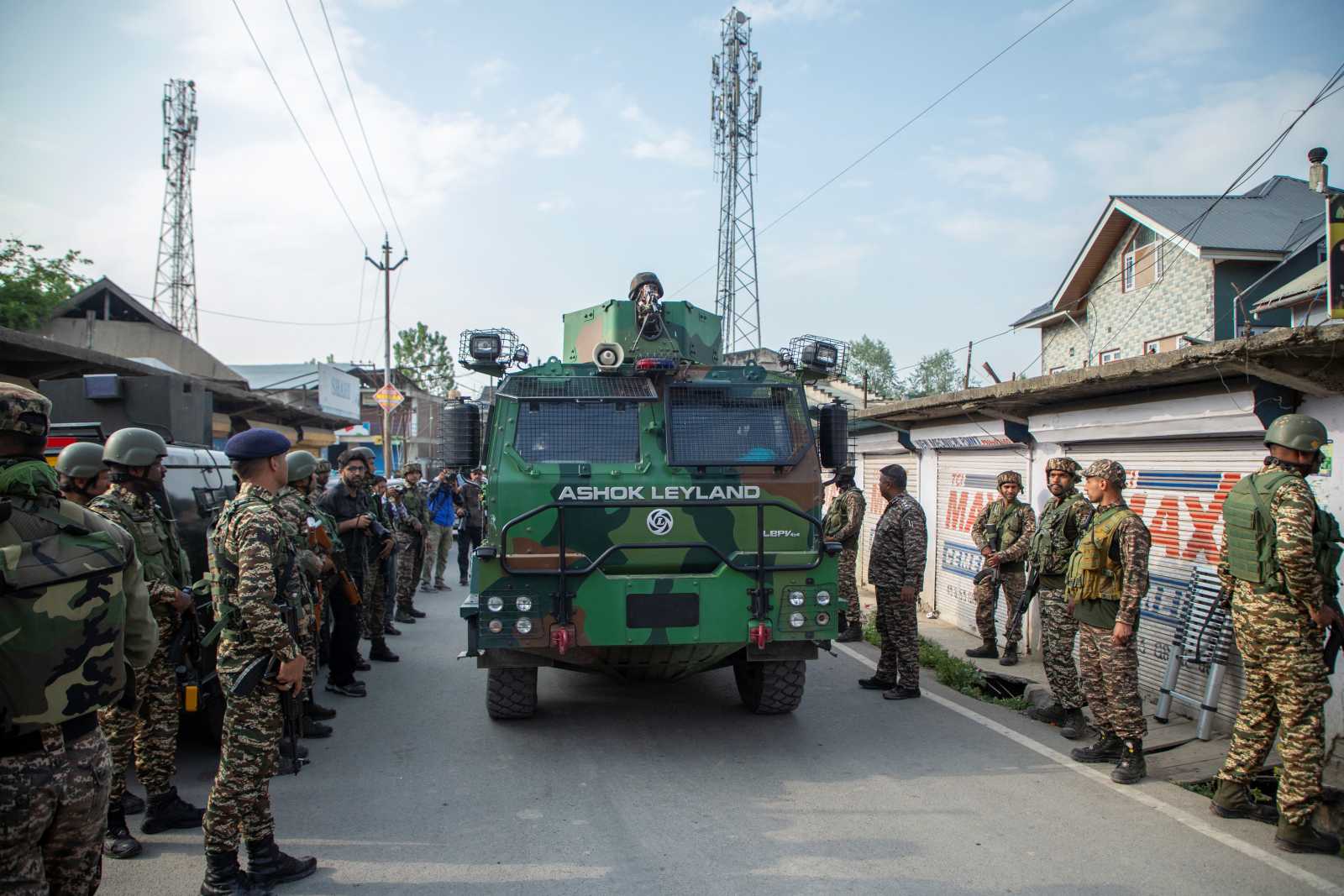
On 23 April 2025, following a terrorist attack in the Indian-administered part of the Kashmir region that killed 26 people and wounded several others, New Delhi announced that it had unilaterally decided to suspend its decades-old water-sharing agreement with Pakistan until the latter “credibly and irrevocably abjures its support for cross-border terrorism”. Pakistan vehemently denied any involvement in the incident, which brought the two nations to the brink of war.
Following the decision, Indian officials announced plans to construct new water reservoirs on the three western rivers in the Indus system that are designated primarily for Pakistan’s use under the Indus Waters Treaty. Nearly 80 % of Pakistan’s irrigated agriculture rely on water from these rivers. India has also stopped sharing hydrological data with Pakistan, which is crucial for flood forecasting, irrigation planning, hydropower, and drinking water management.
Pakistan responded by declaring that any attempt to stop or divert the flow of its share of water would be considered “an act of war”, noting that the accord “contains no provision for unilateral suspension”. At a meeting on 24 April, Prime Minister Shehbaz Sharif and his National Security Committee emphasised that water is “a lifeline” for Pakistan’s 240 million people and that “its availability will be safeguarded at all costs.”
Pakistan’s geographic vulnerability
The Indus is a major trans-boundary river that originates in Tibet and flows through the disputed Kashmir region before entering Pakistan and ultimately emptying into the Arabian Sea. Some of the river’s important tributaries enter Pakistan from India.
About 95 % of Pakistan’s total renewable water resources come from the Indus Basin or the Indus system. “This high dependency on a single river system makes Pakistan’s water environment one of relatively high risk,” states the Interactive Country Fiches, an online platform that provides environmental profiles of countries. Water is becoming increasingly scarce in Pakistan; climate change is impacting the glacial melt and monsoon rains that feed the river system, and population growth and increased economic activity are putting the country’s resources under additional stress.
According to Pakistan’s first Biennial Update Report to the United Nations Framework Convention on Climate Change, as of 2022, 93 % of the country’s water resources were being used in agriculture. Agriculture forms the backbone of Pakistan’s economy, contributing around 24 % to the GDP and employing over 37 % of the labour force according to the latest national economic survey. Any disruption in the flow of water would put the sector at risk and increase food insecurity for the fifth most populous country in the world.
The Indus Waters Treaty
When the Indian Subcontinent was partitioned following independence from Britain in 1947, the Indus Basin was divided as well. The upper riparian, or upstream river system, now belonged to India and the lower riparian to Pakistan. After over a decade of disagreement, the two countries signed the World Bank-brokered Indus Waters Treaty (IWT) in 1960. Under the treaty, India has the right to use the three eastern rivers in the Indus system – the Ravi, Beas and Sutlej – while Pakistan has rights to the three western ones – the Indus, Jhelum and Chenab.
As the upper riparian state, India is allowed to use water from the western rivers, too, for hydropower projects and limited irrigation, but it cannot divert their flows in a way that harms Pakistan. India is also required to share hydrological data with its neighbour.
Moreover, the IWT includes no provision for unilateral suspension by either side. The treaty can only be modified by mutual agreement.
Disputes have arisen since the IWT’s inception – for instance, Pakistan has accused India of building hydropower and water infrastructure projects that violate its terms – but despite all odds, the IWT has survived all previous conflicts between the two nuclear-armed rivals. Until today.

Implications of the IWT’s suspension
Practically speaking, India’s decision may not cause Pakistan much harm, at least in the short term. According to water management experts, New Delhi actually has very limited capacity to stop or divert water that flows from India to Pakistan.
It’s true that in May, India restricted flows from its Baglihar and Salal dams on the Chenab, one of the rivers that Pakistan has rights to; downstream residents could walk on the riverbed for the first time in recent memory. The move disrupted Pakistan’s Punjab farmers’ ability to sow vital crops like rice, sugarcane, maize and cotton. Under the IWT, India would have had to inform Pakistan before altering the flow of water so dramatically.
Still, neither of those dams can store large amounts of water long-term. Mohsin Leghari, the former minister for irrigation of Pakistan’s populous Punjab province, said that India was using less water storage capacity on the western rivers than the treaty allows. “India has not yet touched the threshold of its allowed water-storage capacity in the 65 years since the accord was signed,” he said, adding that geographic constraints and prohibitive costs are stopping India from building more dams and canals. “It is also a time-intensive process,” he stressed.
Hassan Abbas, an expert in hydrology and water resources, agrees that India has already constructed as much infrastructure and diverted as much water as its capacity and the ground realities permit. But he also believes that the IWT was never ideal for Pakistan and that India’s suspension presents an opportunity to, for example, address the issue of upstream pollution, which he claims the treaty does not adequately protect against.
Leghari feels the treaty is worth saving, however, calling it “a legal and diplomatic cornerstone, not only for South Asia but for global water governance”. He points out that India’s suspension sets a dangerous precedent: After all, India itself depends on rivers that originate in China, and there are hundreds of trans-boundary rivers in the world the use of which is governed by similar agreements. Ending those agreements would threaten water security in places that, like Pakistan, are already facing water scarcity.
Link
Interactive Country Fiches, Pakistan
Imran Mukhtar is a journalist based in Islamabad, Pakistan.
imranmukhtar@live.com