Malnutrition
Why the treatment of malnourished children needs to be simplified


When Fada noticed that her 12-month-old twins, Hawa and Adama, weren’t getting better after several episodes of diarrhoea, she was extremely worried. Shortly after, Mamadou, a community health worker who visits her village regularly, came to her house, measured the children’s arms and confirmed that they were both acutely malnourished and needed treatment. The family lives in Laourou in the centre of Mali, a village with 1400 inhabitants. The nearest health centre is 10 kilometres away and only reachable by an unmotorised wooden boat that connects Laourou’s inhabitants to the nearest town once a week. Fada can rarely afford the cost of the boat ride.
Mali faces multiple overlapping crises that are worsening the acute malnutrition situation. Conflict and insecurity have intensified over the past five years, forcing families from their homes, disrupting livelihoods and markets and cutting off access to essential services in many areas. Climate shocks, food shortages, a fragile health system and recurring disease outbreaks have further increased the risk of acute malnutrition.
Children are especially affected. More than 1 million children under five are estimated to have suffered from acute malnutrition between November 2025 and October 2026, many of whom have limited access to quality healthcare services. Several areas are experiencing critical or serious malnutrition levels according to the Integrated Food Security Phase Classification (IPC), meaning that many families are struggling to meet their basic food needs and require urgent support.
Immediate risk to survival
When children suffer from acute malnutrition, it means that they are too thin for their height and their immune systems are weak, leaving them vulnerable to diseases, developmental issues and premature death. Children with acute malnutrition are three to nine times more likely to die than well-nourished children if treatment is delayed. Beyond the immediate risk to survival, acute malnutrition can impair growth and development, limiting children’s opportunities to learn, thrive and reach their full potential throughout life.
While significant progress has been made in the treatment of acutely malnourished children over the past few decades – including the introduction of community-based outpatient care using a simple, sachet-packaged, peanut-based therapeutic food that can be consumed at home – only about one in five children worldwide receives the treatment they need. This is particularly concerning given that a majority of children who receive treatment fully recover within a few weeks.
A more uniform solution
In low- and middle-income countries or emergency situations, children with severe and moderate acute malnutrition have traditionally been treated through separate programmes. Different nutrition products are used, supplied through different supply chains, delivered at different service points and often supported by different UN agencies. While recent global recommendations have sought to address these challenges by developing a simplified and more uniform solution, many countries still struggle with the complexity of their application. Although based on solid medical evidence, these recommendations are often not feasible to implement in many contexts, where limited resources, infrastructure and workforce capacity make full adoption difficult.
In addition, children are often diagnosed and treated using complex weight and height measurements that can be difficult to apply consistently at the community level. As a result, many countries struggle to expand treatment services efficiently, especially during humanitarian crises when simple, flexible and practical approaches are needed most. These challenges limit the number of children who can access treatment and are further compounded by current funding cuts and access constraints that are already restricting service delivery.
Drawing on years of experience in implementing acute malnutrition programmes and gathering operational evidence, the International Rescue Committee (IRC) has been testing simpler, more scalable and more cost-efficient treatment approaches and assessing their efficacy. These approaches include combining:
- the use of a single therapeutic food product and dosing method for all children with acute malnutrition,
- community-based delivery through community health workers who have direct access to the children’s homes, rather than exclusively through health facilities that may be difficult to reach,
- and a simplified diagnostic method designed to reach as many children in need as possible.
The IRC also conducted research that contributed to the development of the Combined Protocol for Acute Malnutrition Study (ComPAS), a simplified approach that treats all forms of acute malnutrition with a single therapeutic food product at a single point of care. The approach uses community health workers where appropriate, simplifies diagnosis using a colour-coded, portable arm circumference tape (Mid-Upper Arm Circumference – MUAC) and applies a simplified dosage schedule.
These approaches have been tested through research and operational pilots involving more than 80,000 children in multiple countries, including the Central African Republic, Kenya, Mali, Nigeria and South Sudan. The IRC’s findings, together with the efforts of many partners across the nutrition sector, have consistently shown that simplified approaches can achieve outcomes similar to standard approaches while being easier to implement, less costly and more practical to scale in resource-constrained and humanitarian settings. In Mali, for example, operational implementation demonstrated recovery rates exceeding 90 % while simplifying service delivery and reducing programme costs.
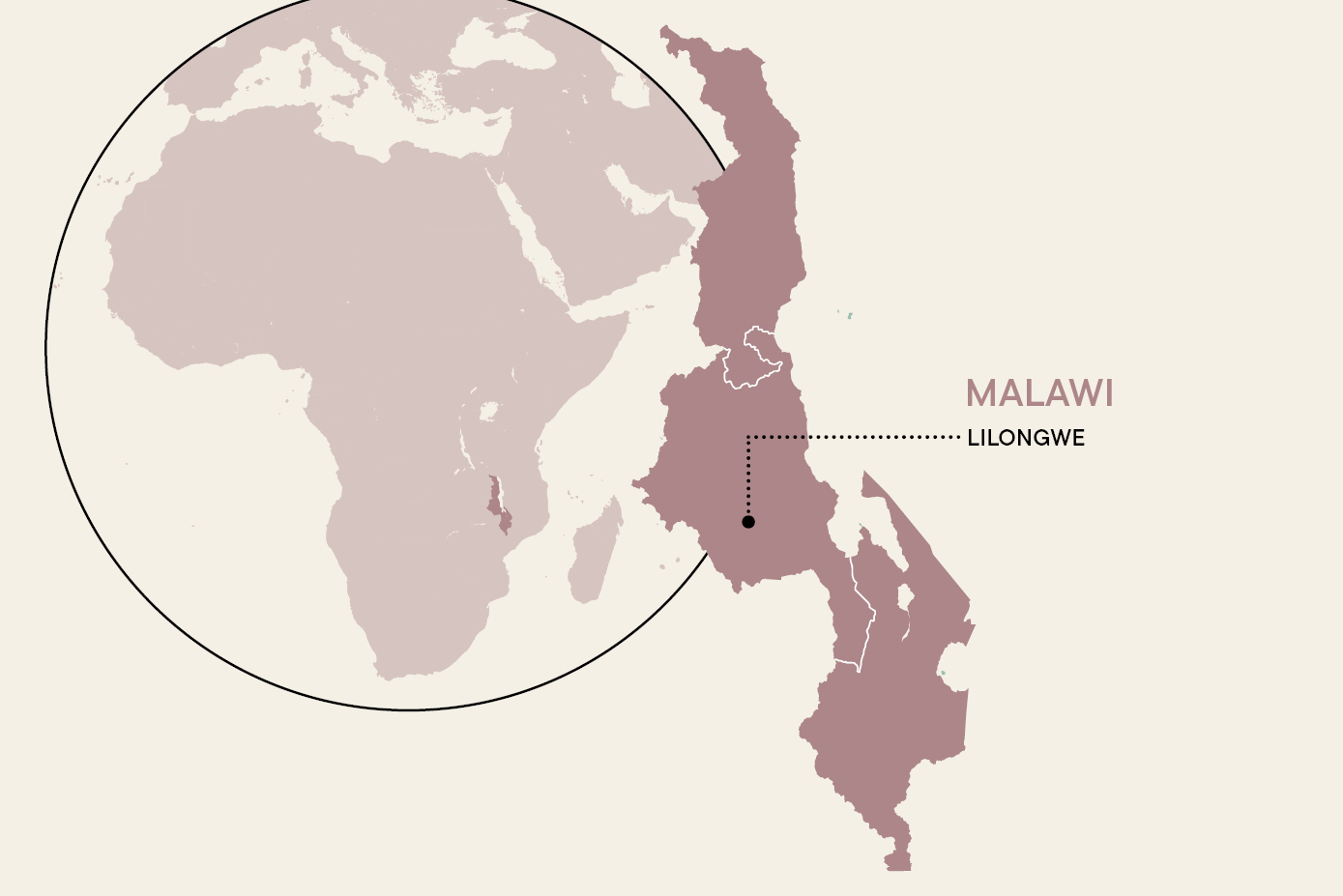
Mali: close cooperation with health authorities
Since 2018, the IRC has been working to support the health authorities in local communities in Mali to test these approaches, including by conducting an operational pilot between 2018 and 2024, which implemented simplified interventions in the health districts of Nara, Ténenkou and Youwarou. As a result, there is now a national recommendation for the use of the simplified protocol in Mali and an available national guideline for the use of simplified approaches.
This success is the result of close collaboration between the IRC and the Ministry of Health, particularly the Nutrition Sub-Directorate, which played a leading role in overseeing the research activities. Furthermore, Ministry of Health officials served as co-investigators in the studies, promoting knowledge transfer, strengthening ownership of the interventions and building confidence in the findings and their application.
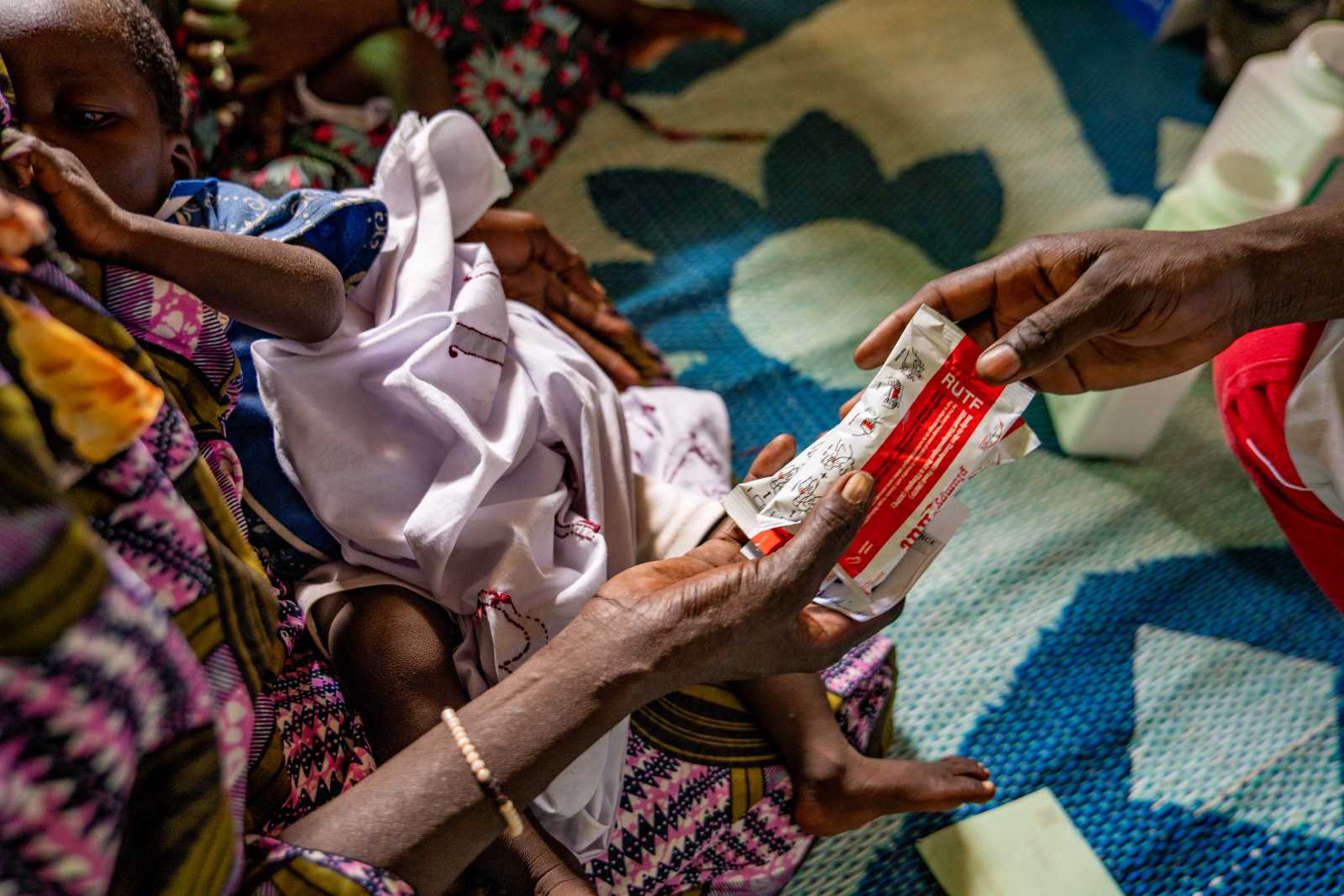
Hawa and Adama were able to receive treatment because simplified approaches enabled early detection and treatment by community health workers in hard-to-reach villages such as Laourou. Mamadou measured the children’s arm circumference using the MUAC tape. Hawa’s measurements fell in the red zone, indicating severe acute malnutrition, while Adama’s fell in the yellow zone, indicating moderate acute malnutrition. Hawa was given ready-to-use therapeutic food (RUTF), a nutrient-rich peanut paste, along with essential medicines, and Adama was given RUTF only. Both were monitored for several weeks until they recovered.
Closing the treatment gap
The new Malian protocol on the management of wasting and oedema, published in 2022 and in line with the WHO’s 2023 recommendations, recommends that children suffering from moderate acute malnutrition (MAM) receive specially formulated foods, as well as medical and psychosocial advice and support. However, this approach is complex to implement, which limits access to care for children with MAM. Adama, for example, would have been referred to a separate nutritional programme offering a different nutritional product, such as a ready-to-use supplementary food (RUSF), provided by another UN agency, the World Food Programme (WFP).
This would have placed an additional burden on her mother, who would have had to visit different programmes, at different times and sometimes in different locations, simply so that her two children – one with severe acute malnutrition and the other with moderate acute malnutrition – could receive care.
In Mali, most children with acute malnutrition, approximately 900,000 of the 1.12 million affected children, fall into the MAM category. However, treatment for MAM is rarely available because of funding limitations. As a result, many children do not receive the care they need and remain at increased risk of death, particularly when illness or infection occurs. Those who survive may also face long-term consequences, including stunted growth and impaired development. Providing treatment and nutritional support to children with MAM could significantly reduce the risk of death and prevent lifelong health and developmental consequences, some of which may be irreversible.
Hawa and Adama are still well. Mamadou has taught Fada and other caregivers of children under five how to screen their children at home using the colour-coded MUAC tape, which he provided to them. Caregivers in the community now regularly screen their children and immediately contact Mamadou if a child’s measurement falls in, or is close to, the yellow zone, allowing care to begin before the child’s condition worsens.
Mali has been successful in closing the treatment gap for children with acute malnutrition through the use of simplified treatment approaches, due to close collaboration between the IRC and health authorities. However, funding shortfalls have limited the scale-up of these approaches to other areas where children could benefit, leaving many without access to life-saving treatment and contributing to persistently high rates of malnutrition.

The global protocols are still leaving children behind
The 2023 WHO guidelines endorse many of the simplifications in the revised protocol, with the exception of those related to MUAC-based dosing, which calls for a simplified dosing regimen (two sachets for children with severe acute malnutrition and one sachet for children with moderate acute malnutrition). However, combining all of these simplifications into a single protocol requires significant changes.
Consequently, these approaches are not standard practice, and governments tend to apply them only under exceptional circumstances, such as in emergencies or for time-limited projects. As a growing body of evidence shows, treatment could be significantly expanded to children who are not currently receiving it. Broader adoption by governments would reach many more children, and explicit recognition of the approach by the WHO in its guidelines would help make this a reality.
Current treatment approaches are often complex to implement, monitor and finance, leaving an estimated 80 % of children who need treatment without access to care. This deepens inequalities and slows global progress in reducing acute malnutrition. Simplifying and scaling effective treatment approaches is critical to ensuring that more children receive the life-saving care they need.
With shrinking budgets limiting the ability to respond to the malnutrition crisis and little prospect of funding growing fast enough to sustain separate systems for severe and moderate acute malnutrition, governments and humanitarian agencies must follow the evidence. They should adopt simplified approaches, including a combined protocol, as the default standard of care, provide community health workers like Mamadou with the resources to deliver it, and close the treatment gap that leaves 80 % of malnourished children without care.
Source
International Rescue Committee (IRC)
Dembele Salimou is the Health and Nutrition Co-ordinator for the IRC in Mali.
dembele.salimou@rescue.org