Resources
The fact that life in eastern Chad works is nothing short of a miracle


Abdoulay Abdessalam is the representative of the chef de canton of the Chadian border city Adré, where refugees arrive daily from Sudan. The office of chef de canton dates back to colonial times and serves as an intermediary between the administration and local communities.
In the eastern Chadian province of Wadai, to which Adré belongs, all state administration is far away; there are hardly any hospitals, streets or goods traffic and certainly no running water or electricity in the villages scattered across the dry savannah. The chef de canton actually seems to mediate in a triangle between the international aid organisations, refugees and local communities.
“On the one hand, prices have increased as a result of the many new arrivals – the price of a chicken has doubled over the last three years, for example – and so have the diseases. On the other hand, we as a local community now have much more access to free services through the aid organisations, which never would have come here without the refugees,” Abdessalam says.
He also reports that the larger number of people has led to a rise in crime: there is more theft, more aggression, more chaos in the small city, which had a population of around 40,000 before the influx of refugees. The people who are being housed in the initial reception camps and in the large camp on the outskirts of the city have swelled that number to around 200,000.
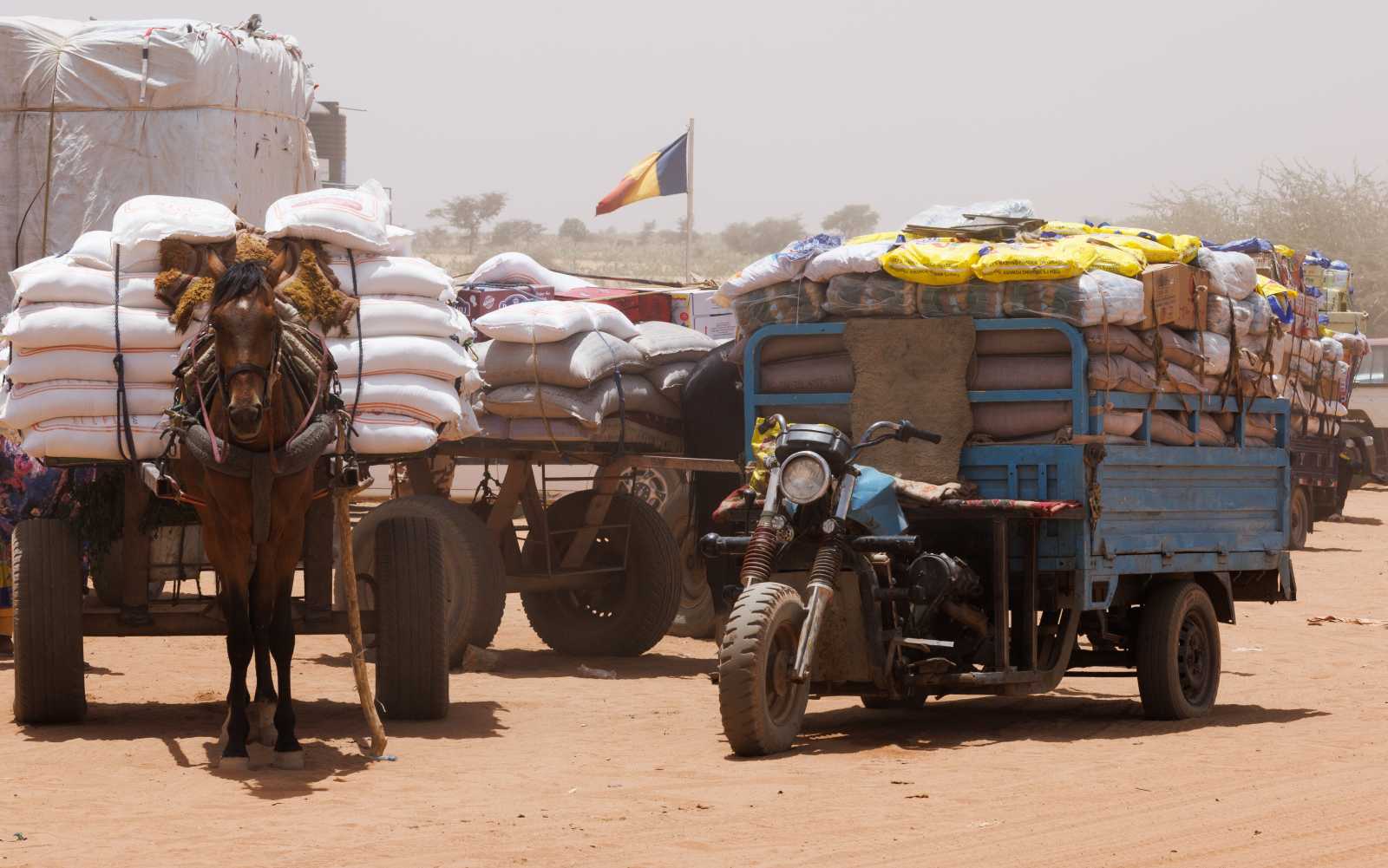
At the same time, Abdessalam says, the community’s healthcare in particular has improved thanks to the presence of the refugees, as has access to water – and there are more opportunities for the local youth to earn money by selling them goods. “The relationship between the refugees and the local community is generally good; there have already been many mixed marriages. The only potential for conflict is land use – the people gave the refugees space in their fields because they assumed that the guests would be gone in three weeks. Now it has been three years, and disputes arise especially at harvest time,” he explains. According to Abdessalam, the UNHCR promised compensation for the occupied fields at the time, but it still has not arrived. His community is receiving no state support in response to the influx of refugees – the locals are simply allowed to use the free services provided by the international aid organisations.
The local community in Adré expects more from them: “Our young people are very frustrated that they are so little involved in the organisations’ work. Short-term jobs are offered here and there, but the important long-term positions go to foreigners – even though many people here have university degrees and went to the university in the capital, for example.” Some organisations are trying to include local people, he says. But the young people are frustrated about unemployment, especially since there are very obviously potential employers here. “Sometimes I think that we’re standing on the brink of a revolt of the young people against the NGOs,” Abdessalam says.
Committees on conflict resolution
“The local people here have asked us repeatedly over the past 20 years whether we want to go home,” says Tahir Ismail, who came to Chad from Sudan in 2007. “But we kept saying that this conflict is far from over – and the outbreak of war three years ago proved us right.” Since last year, Ismail has been the president of the refugee camps in Farchana – both the camp that has been here since 2004 and the newer camp that was built in 2023. The teacher has continued to teach in the camps and has long been a central figure in the refugee community.

In response to the question about the relationship to the local community, he spoke of a committee that was founded with help from the UN Refugee Agency (UNHCR) in which refugees and locals work together to solve conflicts. “The committee makes the people in the villages aware that we didn’t come here voluntarily – and that we have the same needs as they do. We need wood, water and food. But we also emphasise that we have brought good things to the region, like the local health centre,” Ismail says.
Cholera outbreak highlights disparities
Generally speaking, one hears little about conflicts between refugees and locals in the area – if anything, it is about land. Sometimes nomadic camel herders buy alcohol in the refugee camps that the Sudanese have brewed and create problems when they get drunk. Shots have occasionally been fired. But the bush surrounding the camp, where women in particular have to collect firewood, is feared above all. Many have reported violent, sometimes sexual, assaults.
Yet many call it a miracle that in this desperately poor region, which has now taken in hundreds of thousands of traumatised and desperate people, there has not been much more unrest. On the contrary, many report receiving a warm welcome and feeling a sense of cohesion. Part of the reason is likely that many people on both sides of the border belong to the same ethnic group, the Zaghawa. The ethnicity dominates in many of the camps as well, and people try to be housed with other Zaghawa from their region.
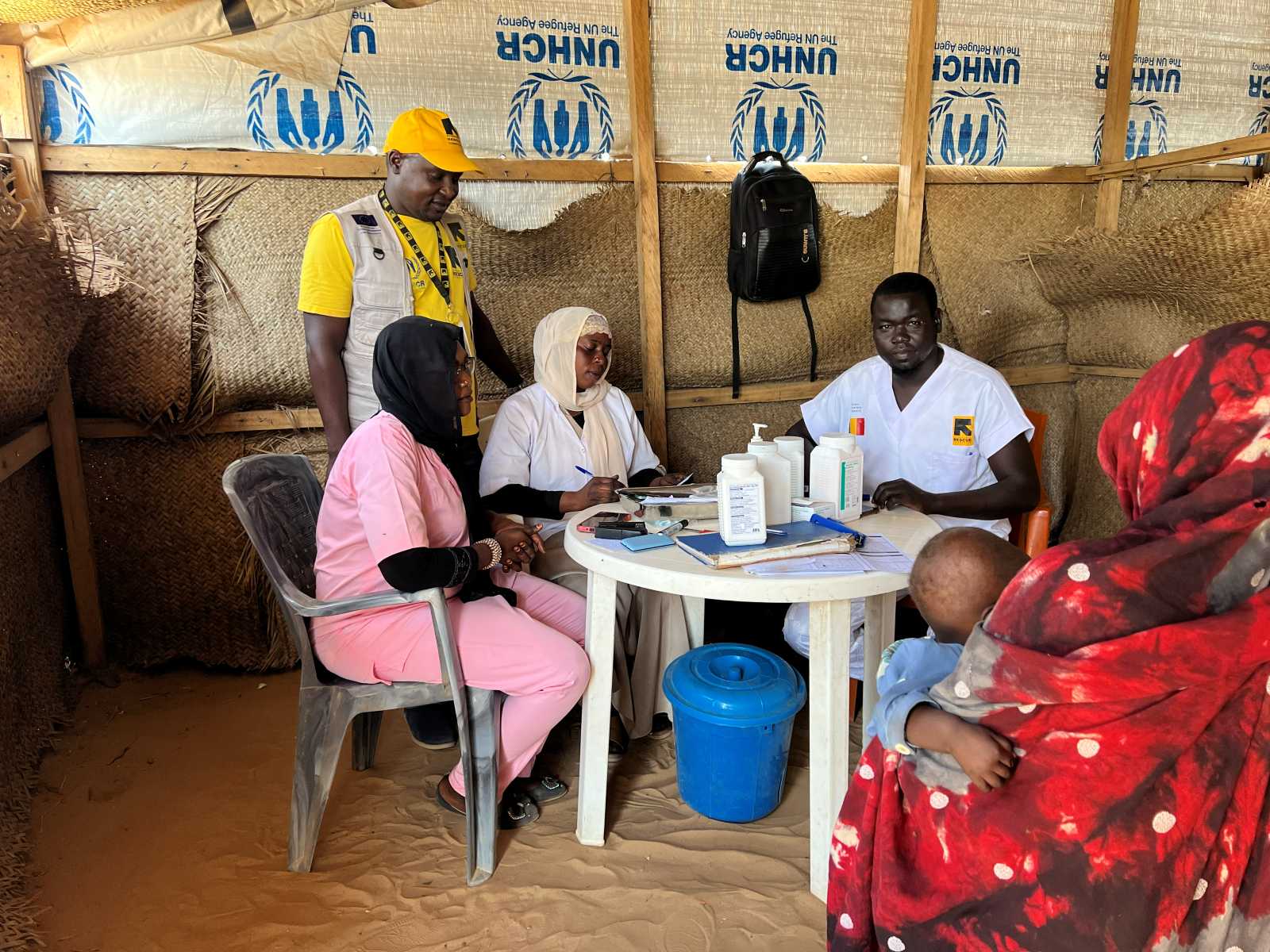
The cholera outbreak in July 2025 in Wadai and the neighbouring province nevertheless highlighted the disparities in services. In the local villages, the disease raged mercilessly, employees of the International Rescue Committee (IRC) reported. There is no state aid or functioning health or hygiene infrastructure in the straw-hut settlements. IRC responded with basic cholera kits, immunisations and mobile stations. In the refugee camps, however, the outbreak was contained relatively quickly and in an orderly manner, thanks to the presence and infrastructure of multiple international aid organisations – the camps, after all, have a water supply and health centres.
Katharina Wilhelm Otieno belongs to the editorial team of D+C and works partly in Nairobi. She travelled to Chad in January.
euz.editor@dandc.eu