Informal business
Hard working female head porters in Ghana


The women are largely unskilled and cannot find decent employment in urban areas. Some engage in petty trading, while others are tasked with looking for customers for shop owners. Others serve as house helpers or work in local restaurants, called “chop bars.”
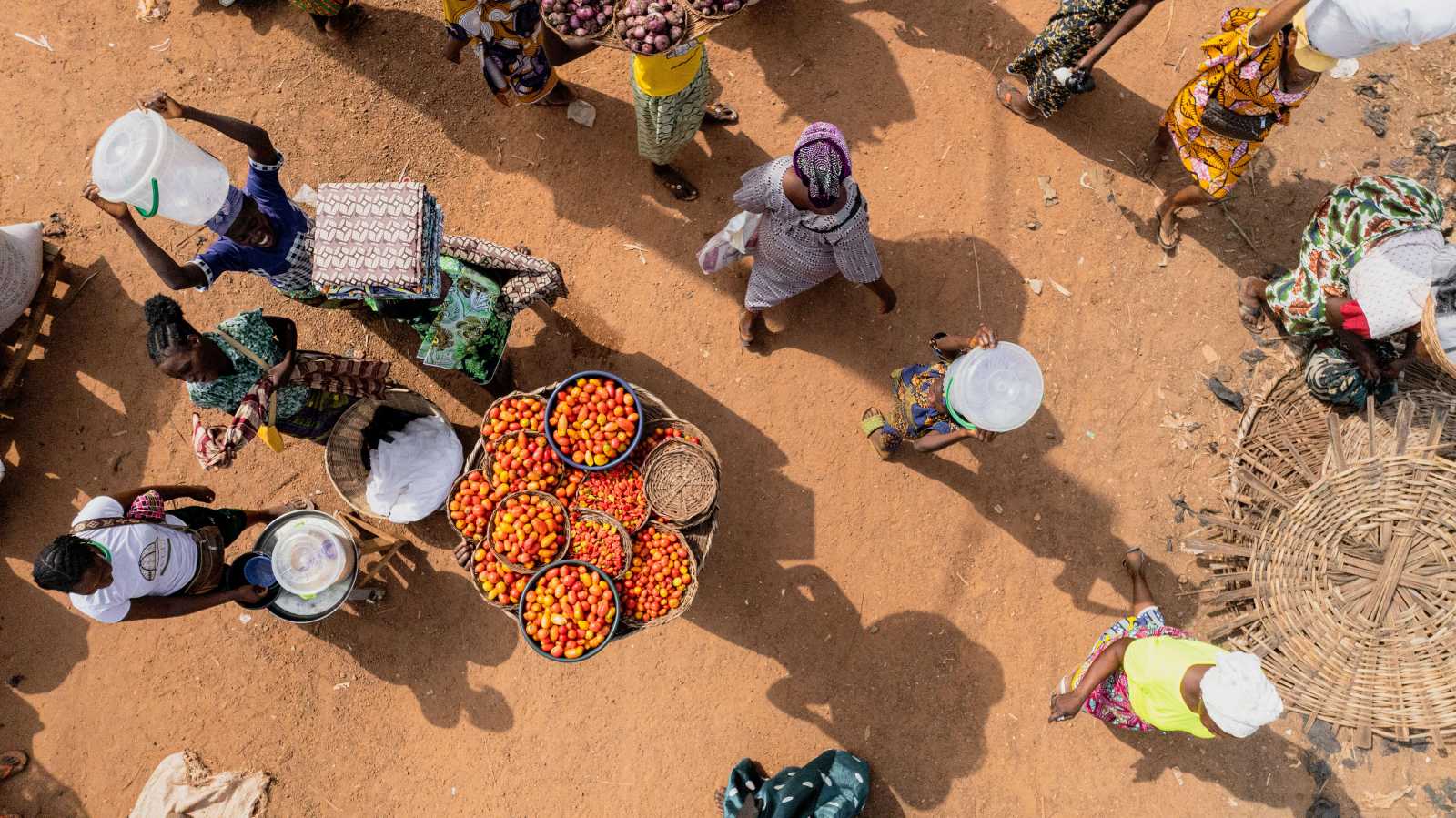
Many others are left with no option but to take up labour-intensive blue-collar jobs, such as carrying heavy loads with pans on their heads. These kinds of workers are called head porters, commonly referred to as “kayayei” in Ghana. Women and girls shoulder the burden of heavy loads on their heads, sometimes exceeding their body weight, as they navigate the busy streets of cities.
Kayayei wear headscarves to relieve their scalps from the heavy loads. They contribute to taxes, levies and tolls collected by city authorities. Without a doubt, kayayei play a crucial role in shaping Ghana’s economy by offering affordable services, including transporting goods in the market, selling drinking water and engaging in construction projects, ensuring shops and markets remain well-stocked. They also ensure a clean and sustainable environment through waste collection and disposal.
However, these women work in difficult conditions. They are too poor to be able to afford a room, so many of them sleep on open streets, on store verandas or even in parked vehicles. This puts them at risk of rapists, robbers and other forms of danger.
In the face of these challenges, kayayei earn money for their upkeep and still remit some to their families on a monthly or yearly basis, which goes into supporting children’s education and the development of their local communities.
Fatima, a 14-year-old girl from Talensi, shares her experience of sleeping outside a mosquito-infested shop in the central business district of Accra, along with other young girls from her hometown. “At times we are beaten by rain and attacked by criminals, who take away our money, but I manage to save money to take care of myself and support my parents and siblings back home,” she was quoted in local media.
Adjoa Yakubu, a 19-year-old from Bolgatanga, has managed to overcome these challenges and has achieved impressive success in her seam-stressing career after saving up for her new trade. She now would like to return home and reunite with her husband, “I also want to take my child to school so that she does not face the same fate.” She believes that providing kayayei with vocational skills will help them secure stable, decent employment and curb the migration of women in search of non-existent jobs.
Joseph Whittal, a commissioner of Ghana’s Commission on Human Rights and Administrative Justice, acknowledges the substantial contributions of kayayei. “It is the primary responsibility of the state to ensure the development of kayayei, and the government should empower them to become more economically viable,” he said.
Dasmani Laary is a journalist in Ghana.
laarygna@gmail.com