Latin America
Trump’s vision to reclaim the “US backyard”


Let’s be honest: the US intervention in Venezuela – or to put it more clearly, the illegal abduction of Nicolás Maduro – didn’t come without warning. On 2 December 2025, Trump announced in a Presidential Message that “reinvigorated by my Trump Corollary, the Monroe Doctrine is alive and well — and American leadership is coming roaring back stronger than ever before”. In so doing, he made it abundantly clear that he wants Latin America to become part of the US sphere of influence once again.
The Monroe Doctrine dates back to 1823, when US President James Monroe claimed the Western Hemisphere as a US sphere of influence, opposing European colonial intervention. In 1904, President Theodore Roosevelt expanded this idea through the “Roosevelt Corollary”. He declared the US to be the guarantor of order and stability in the region, a claim which justified repeated US interventions and occupations in Central America and the Caribbean. This was the era when Latin American countries were commonly referred to as the USA’s “backyard”.
Today, the Trump Corollary manifestly places relations with Latin America high on Washington’s foreign policy agenda after what it calls “years of neglect”. In practice, however, it is an unclear and inconsistent approach rather than a coherent strategy. It confuses hegemony with domination and militarises problems that are not military in nature, such as migration and organised crime. Trump’s military intervention in Venezuela constitutes a blatant violation of international law.
The same holds true for Washington’s new National Security Strategy (NSS), which was announced on 5 December 2025. With regard to Latin America, it focuses on irregular migration and drug trafficking. However, the document largely ignores Haiti’s severe crisis, which is perplexing given the impact it is having on migration and regional stability. Relations with Brazil and Mexico, the region’s largest economies, are likewise not addressed in the NSS.
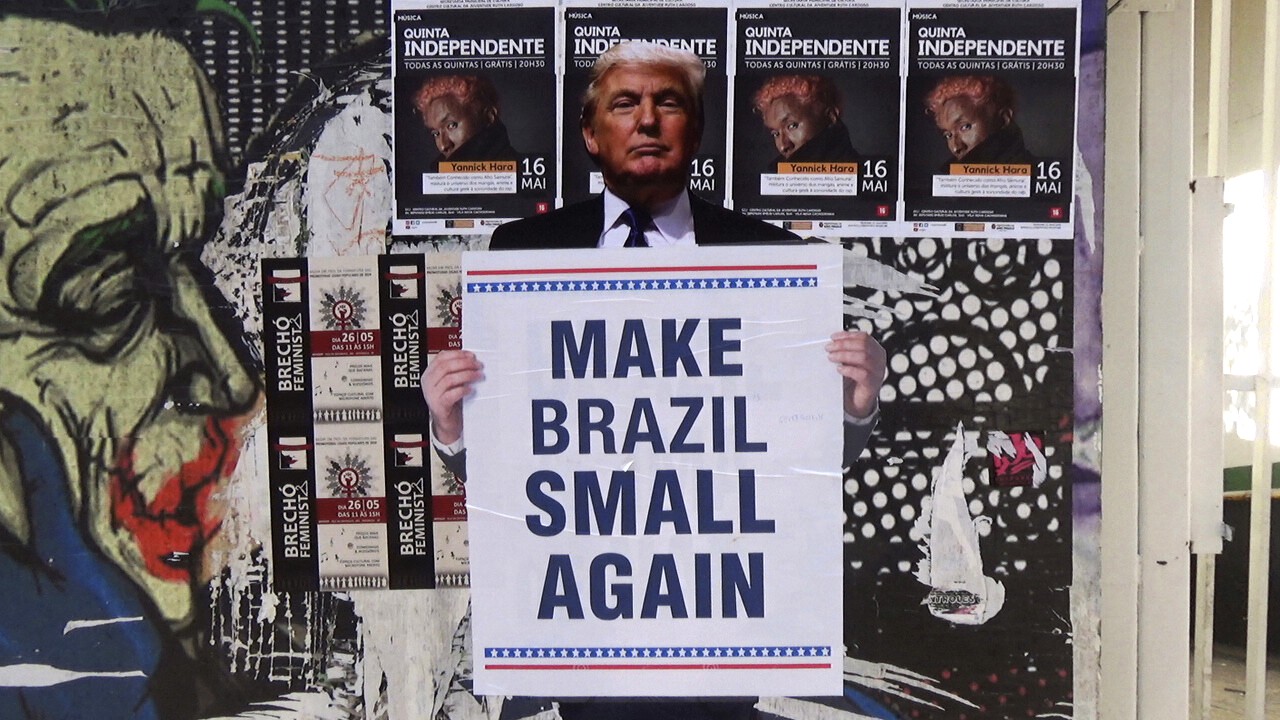
After all, migration and drug trafficking do not seem to be the only motivation behind Trump’s policies. It is true that narcotrafficking and trade deficits have been used to justify tariff increases in countries such as Mexico. However, the 50 % tariffs imposed on Brazil were clearly politically motivated and aimed at supporting Trump’s ally Jair Bolsonaro. Conversely, Trump has offered financial support to like-minded governments, most notably that of Javier Milei in Argentina.
André de Mello e Souza is an economist at Ipea (Instituto de Pesquisa Econômica Aplicada), a federal think tank in Brazil.
andre.demelloesouza@alumni.stanford.edu