War and flight
From Sudan to Chad: Refuge in one of the world’s poorest countries


Toma Adani says that her childhood was happier than her daughter Ihsan’s is likely to be. Ihsan is 16 months old and severely malnourished. She is receiving inpatient care at a clinic for malnutrition in the Chadian town of Farchana, around 50 kilometres from the Sudanese border.
Adani is from Sudan; 22 years ago, she fled from Darfur to Chad when the Darfur conflict first broke out. Various ethnic groups in the region had called for greater participation in the Sudanese government, and the repression of the uprisings culminated in a genocide.

There was much more to eat then, international organisations distributed cash more often, and there were fewer problems in general, Adani reports. However, when the war broke out in 2023 between the Sudanese army and the Rapid Support Forces (RSF; a paramilitary force that arose from the militias that were responsible for the genocide in Darfur) over control of Sudan, many people were once again forced to flee. Now, Adani says, all the refugees are lacking many necessities.
The 26-year-old lives in Farchana in a refugee camp that has existed since 2004 and has now developed into its own little community, more than doubling the population of the original community. She attended school here, though her education was repeatedly interrupted by periods when she had to work in the fields. Her 13-member household, consisting of her husband, daughter, two sisters and their families, still lives primarily on what they harvest: millet and nuts from a field they lease from a Chadian family. They have to give the owners either cash or a portion of the harvest.
On good days, during the rainy season, the family can eat twice, usually millet with a variety of vegetables. Sometimes they can sell a surplus. On bad days – and during the dry season, every day is a bad day – they cannot work in the field and are completely dependent on aid from the international organisations. Adani herself is not considered malnourished, but she does not have enough breast milk for Ihsan.
Adani’s mother, Halimé Yaya, has come to visit the stifling hospital room that Adani and Ihsan share with other mothers and their malnourished children. She is also worried about her grandchild’s future – her own children had it better after they were forced to flee, she recalls. Nowadays, many of the increasingly scarce resources go directly to new arrivals, she says; water, for example, is becoming less and less available.
Around 700 patients a day – and one doctor
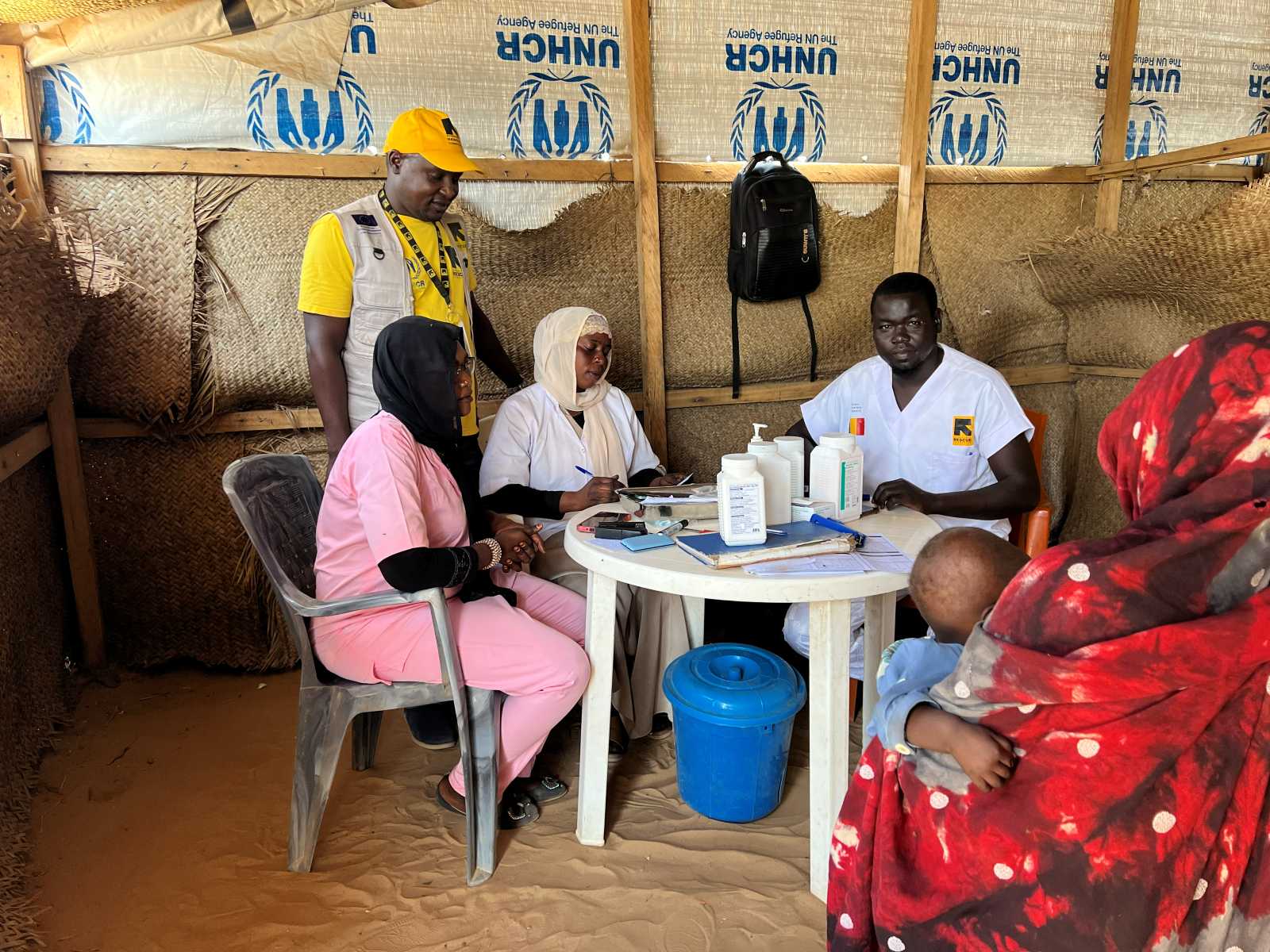
The clinic is part of the health centre of the International Rescue Committee (IRC) in Farchana. In addition to malnutrition, it focuses on maternal and reproductive health. There is a maternity ward, and patients can receive gynaecological treatment as well as general health screenings and psychological counselling. Immunisation is another important component of the work: every day, 60 to 70 children are immunised, partly in cooperation with the vaccine alliance GAVI. The centre serves the two refugee camps in the area as well as the local community.
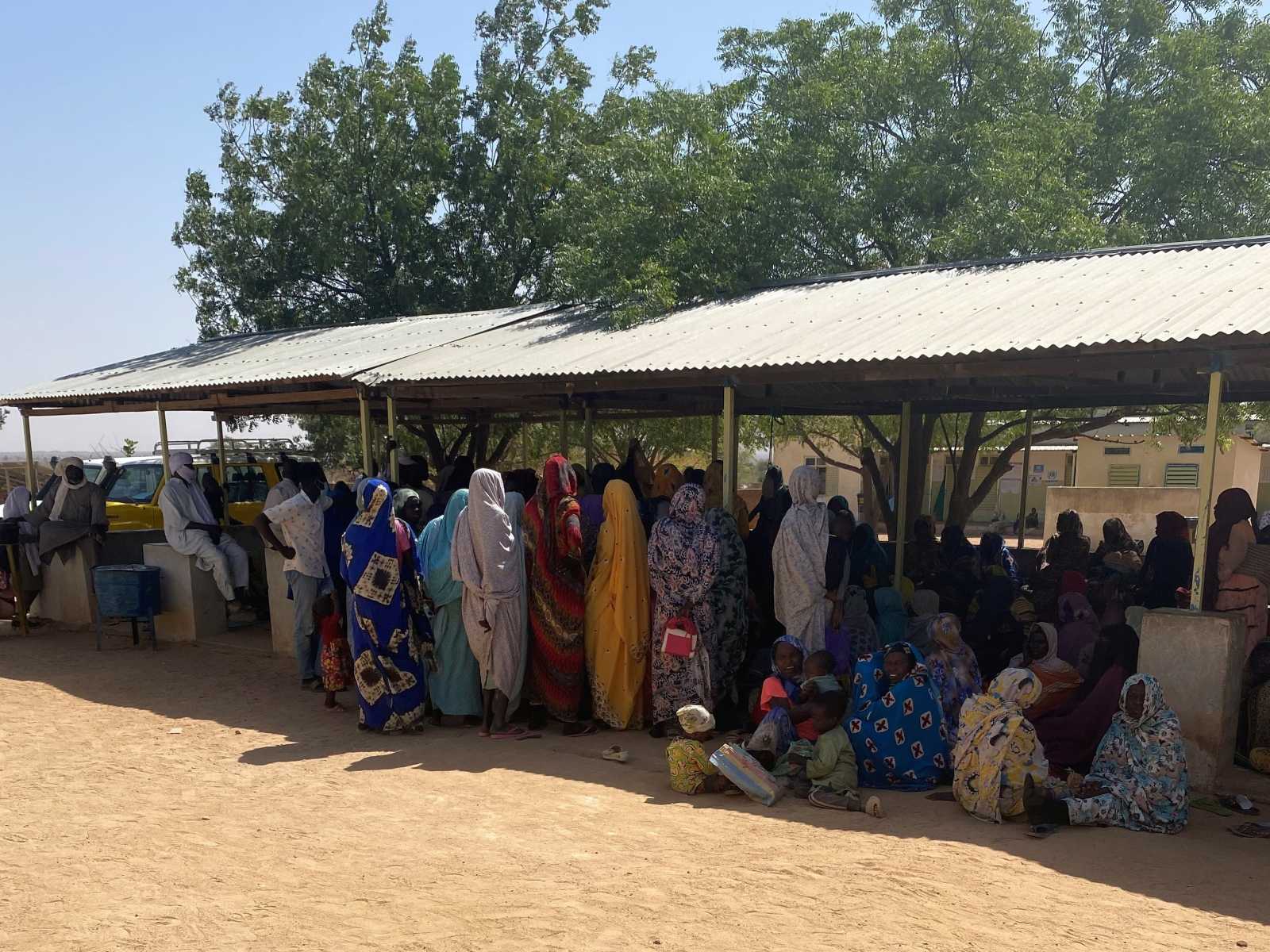
Every day, between 600 and 700 people come to the centre for treatment. Five nurses and a single doctor have to cope with this volume. Moussa Gamané, the coordinator of the IRC health centre, says that the staff is stretched to breaking point. The centre lacks not only doctors but also medicine, reliable electricity, water and a stable infrastructure. Since last year, there has also been a health centre in Farchana that is financed entirely by the state. Treatment there costs money, however, which is why it is not visited nearly as often. The nearest true hospital is located in Adré on the Sudanese border. The health centre only has one ambulance. Gamané says that until recently, other organisations had helped supply medicine, for example. But since funding for humanitarian aid was cut and many organisations started running out of money, IRC has been shouldering the costs more or less alone.
Mahamat Albachir, the doctor at the health centre, says that they most frequently treat respiratory diseases caused by the pervasive Sahara dust and non-weatherproof tents, as well as diarrhoeal diseases caused by poor hygiene and dirty water. All of these factors contribute to and exacerbate the ubiquitous malnutrition and undernourishment. Almost all of the children who arrive in Farchana are malnourished, Albachir says, as are many of those who have lived here for a long time.
Refugees as medical personnel
Refugees suffer from mental health issues as well. In every IRC health centre, there is one person who is responsible for mental health – not necessarily someone with a psychology degree, but trained staff. In Farchana, that person is Nidal Shamshadine Abdallah. Abdallah herself fled Sudan as recently as 2023. She is a trained psychologist and was able to join IRC after completing an internship.
The aid organisations want to make more use of refugees’ human capital. The UN Refugee Agency (UNHCR), for example, has started recognising Sudanese degrees – not least because medical care in Sudan before the war had been much better than in Chad. Many Chadians regularly travelled to the neighbouring country for treatment. At the same time, the Chadian government is raising its eyebrows at the employment of refugees and making qualification recognition processes more difficult because it would rather see Chadian staff on the payrolls of the international organisations.
Abdallah says that the majority of arriving people have been traumatised. She and her colleagues from other camps report spontaneous epilepsy, memory loss, speech disorders, PTSD, depression, psychosis and sleep disturbances. Abdallah sees between five and 15 patients per day. She herself witnessed violence as she fled Sudan. Her mother was shot at but survived. Young women disappeared from her group and returned having been abused. Working at the centre gives her strength, as does the omnipresent help from the organisations and local communities. “But the most important thing is simply to be in safety,” she says.
The camps are more comfortable than the villages
The health centre is located on the way to both refugee camps: the “old” camp and “Farchana Extension”. A total of around 55,000 refugees live there. 21,000 of them have arrived since 2023. Whereas the old camp now resembles its own village, with a mosque, a school and many mud brick buildings, the new camp remains a tent city, with rows of one white UNHCR canvas after another.
On the drive to the border city of Adré in January, it becomes clear that the refugees are probably living more comfortably, even in their tents, than the local Chadians. There are almost no roads in the area; the route leads over sandy tracks and through dry riverbeds. These wadis conduct so much water during the rainy season that the route becomes completely impassable – travel along many routes in Chad would then require an airplane or is not attempted at all. The houses in the villages along the way are built of straw and brush; there is neither electricity nor running water. People travel either on foot or on donkeys, sometimes on horseback. Nomads drive their camel herds through the area. The crime rate is high, not only because of the proximity of the war zone in Sudan – attacks are frequent, particularly against women as they collect firewood in the bush, for example.
After the two-hour drive, Adré looks like a metropolis. The border to Sudan is visible from a long way off. There is a lot of traffic; donkey carts and lorries still carry goods back and forth between the two countries. Everywhere there are small stands where refugees and locals alike sell food, clothing and other items.
At this point in time, it is difficult to believe that not far away, a brutal war is raging. So far, the violence has come only rarely to Chad. There was a single incident in this part of the border region recently in which drones struck a small mobile fuel depot in Adré in December. Nine people died. The RSF and their militias accept the border, but there are very few places where it is fortified. Therefore, it has certainly happened that the fighting has spilled over onto Chadian soil more or less by accident – forcing a few villages to flee in January, for example. The Chadian military has remained calm so far, but it is also barely trained and poorly equipped. The most stabilising factor in the eastern part of the country is probably the fact that both the Chadian government and the RSF receive support from the United Arab Emirates. Officially, Chad is neutral towards both parties to the Sudanese conflict and has received the leadership of both the Sudanese army and the RSF in the capital N’Djamena. At the end of February 2026, as violence in Darfur escalates once again and the war continues to draw closer to the border, it is nevertheless closed for the time being. No one knows how long it will remain that way.

Around 900 refugees per month
In January, the only other sign of the war on the Chadian side of the red-and-white border arch are the UNHCR tents and all the people sitting around them, staring off into space in the heat – young men on one side, women and children on the other. These are new arrivals: people who fled Sudan just now or a few days ago and now find themselves in the initial reception machinery of the aid organisations. There is a mix of responsibilities: the Red Cross is on site distributing packets with blankets, soap and pots, for example; UNICEF offers psychosocial counselling; UNHCR handles registration and distribution; the IRC and Doctors Without Borders conduct medical screenings and deliver immunisations; Acted hands out nutritional supplements.
Like most people, Zerab Adam came over the border in early January with nothing but the clothes on her back. The 25-year-old is from the city of El-Fasher, which fell to the RSF after heavy fighting in October 2025. Terrible atrocities have been reported there in the aftermath. Her husband had already died in the war in the middle of last year. When the situation became unbearable, she fled with her four children and her parents on foot to the city of Nyala, an important trading centre that is somewhat more stable. There she managed to earn money by doing laundry, which she used to finance transportation to the Chadian border. But it was only enough for her – she had to leave her children and parents behind, which she calls “unforgivable”.
She says she is happy to be in safety now and thankful for the initial help that she has received from various organisations in the form of basic services – but her thoughts constantly circle around her children in Sudan. She wants to leave the initial reception camp, where she shares a small compartment in a large tent with three other Sudanese women, as soon as possible and earn money so she can bring her family over. She has already begun; every day she follows in the footsteps of other refugee women and goes back over the Sudanese border to sell food, coffee or whatever other provisions she can find.
She is one of 605 refugees who crossed the border in Adré between 1 and 21 January. According to UNHCR, about 900 people come every month. Chad doesn’t send anyone back. Some people turn up twice, for example because they are looking for their families or have left other camps when the humanitarian situation there also became unbearable.
This situation will deteriorate further this year in light of the massive cuts to humanitarian aid budgets of most Western countries. Benjamin Bach, the deputy director of programmes for IRC in Chad, can already cite concrete impacts: “In some areas in the west of the country, we simply have to stop working. In other areas we have to scale back services – for instance, instead of having six midwives in Farchana, we now only have three. That means, among other things, that there is no midwife there overnight anymore.”
At the same time, efforts are being made to give greater consideration from the outset to the so-called “nexus” between humanitarian aid and development cooperation. “There are refugees who have been dependent on the humanitarian system since the first Darfur crisis in 2003. Attempts are being made to address that by establishing more economic activity in the camps, sharing more land with local communities and thereby creating more opportunities for exchange,” Bach says. But that only works in some areas, he concedes; if organisations had to withdraw from the education sector, for example, there would be an immediate teacher shortage.
Ihsan and her mother Adani probably don’t care whether the assistance their family urgently needs is called development cooperation or humanitarian aid. The situation in Sudan and Chad is already dramatic. In the long term, the cuts to Western aid budgets will lead people who have survived the hell of war to die because of the lack of access to basic resources.
Katharina Wilhelm Otieno belongs to the editorial team of D+C and works partly in Nairobi. She travelled to Chad in January.
euz.editor@dandc.eu