West Africa
Senegal: An anchor of stability in a turbulent region


The security situation in the region around Senegal has been extremely tense for some time. In Mali, its neighbour to the east, jihadist groups control large parts of the country. While Mauritania to the north is more stable, its desert is used as a transit route by groups based in Mali. To the south lie Liberia and Guinea, which have been destabilised by international drug trafficking and past civil wars. Countries further east, such as Burkina Faso and Nigeria, are likewise highly unstable because extremist groups are engaged in conflicts both with one another and with the governments in their respective countries.
Democratically elected governments are few and far between in this region, which has seen a series of coups since 2020: two in Mali in 2020, one each in Guinea and Sudan in 2021, two in Burkina Faso in 2022 and in Niger and Gabon in 2023.
Saliou Ngom, a colonel in the Senegalese army and vice president of the Commission for Military History, views this fraught environment as the greatest threat to Senegal’s national security. The armed forces are currently focusing above all on securing the country’s borders, he explains. However, Senegal safeguards its territory not only at its own borders but also on a global scale, as is particularly evident from its high level of participation in international missions. Last year, the country was the 14th largest contributor of troops to UN peacekeeping operations. Ngom believes such international cooperation makes sense because terrorism cannot be tackled by one country alone.
Senegal’s capacity to fight terror abroad implies that its society is relatively stable and at significantly less risk from extremism than in other states. So how does the country differ in this respect from its neighbours?
Senegal’s robust civil society and “intellectual army”
Senegal has a robust civil society whose religious make-up is characterised primarily by Sufi orders. These Islamic brotherhoods are groups of believers who are often interconnected and take an active part in society through their involvement in education and business. The leaders of the orders tend to play a central intermediary role in conflicts. Over 95 % of the population is adherents of this conservative yet highly tolerant interpretation of Islam. Because the Sufi orders dominate society, jihadism has been virtually unable to gain a foothold there.
Asked what sets Senegal apart from its neighbours, Colonel Ngom stresses the way its soldiers are trained: “The Senegalese army is an intellectual army. We all come from universities, military academies and international missions.” Training places particular emphasis on neutrality and on checks and balances. The principle of the “Armée-Nation”, with the armed forces as servants of the nation, was established by Senegal’s first president Léopold Sédar Senghor and continues to shape the way the military sees itself to this day. Ngom explains that the Senegalese military aims first and foremost to support the country’s democratic institutions and makes no claim whatsoever to power for itself.
Election year 2024 – an acid test for institutions
The country’s stability proved its worth in the 2024 presidential election. With less than three weeks to go before the election, longstanding President Macky Sall announced that it was to be postponed indefinitely. Sall blamed the delay on disputes over the election process. The country’s civil society and international observers viewed this as an attempt by Sall to extend his term in office beyond the constitutional limit.
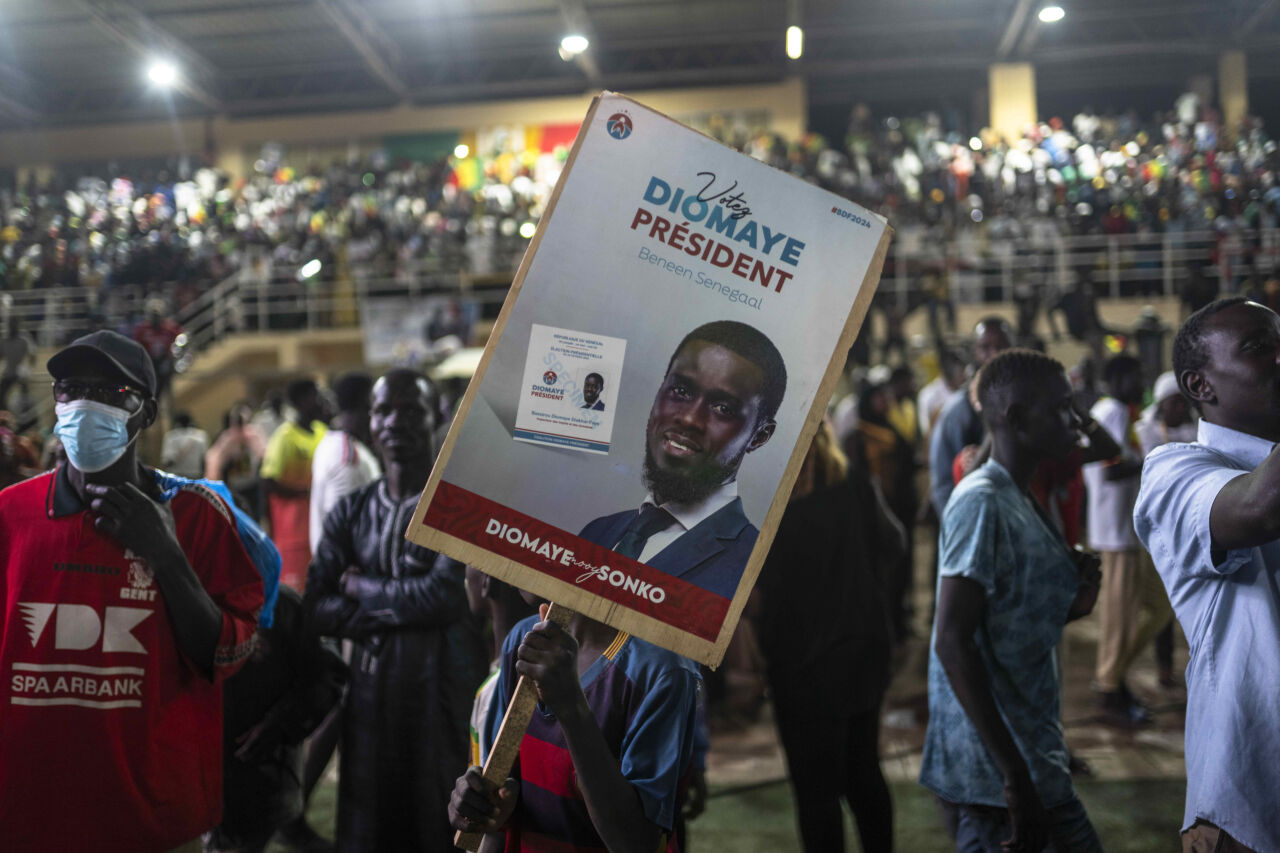
However, in a judgement that was unprecedented in West African history, the Senegalese Constitutional Council ruled that the president’s decision was unconstitutional and demanded that the executive set a new date for the election. The subsequent landslide victory of opposition leader Bassirou Diomaye Faye, who had been imprisoned until shortly before the election, was testimony to the electorate’s desire to bring about a paradigm change in Senegalese politics: the new administration had campaigned on a left-wing, pan-African and sovereignty-focused ticket.
Barcelona or death
According to Colonel Ngom, “Sovereignty” is also the name of a naval operation in which the Senegalese armed forces are currently engaged. One major challenge faced by Senegal and other coastal states in West Africa is the exploitation of the oceans by the international deep-sea fishing industry – especially by fleets of European, Russian and Chinese fishing vessels. These fleets, some of which operate quite legally under official partnership agreements, but often under the guise of other activities and usually in a manner that is highly damaging to the environment, are decimating fish stocks and destroying both local fisheries and entire ecosystems.
More than half of Senegal’s fish populations are facing collapse, which would trigger ecological chain reactions. Fish prices in the country have skyrocketed, with the cost of a crate of sardines soaring tenfold in some cases. In Senegal, people get 70 % of the animal protein they need by eating fish. Jobs are no less important: around 2 million people work in the fishing sector, either directly or indirectly. The consequences for food and income security in Senegal are therefore serious, and one of the main reasons for illegal migration to Europe. People in fishing villages can frequently be heard saying “Barça ou Barsakh” – (migration to) Barcelona or death.
In a bid to tackle the negative consequences of overfishing, the new government has reversed the previous administration’s approach and implemented far-reaching reforms. These include publicly disclosing all fishing licences that are issued and having the navy monitor the country’s own economic zone more closely. Furthermore, a fishing treaty with the EU expired in November 2024 that both sides regarded as unfavourable. Senegal accused European fishing fleets of catching many times more than the permitted quotas, while the EU complained that Senegal was not taking resolute enough action to combat illegal and unregulated fishing, especially by Asian trawlers.
France: the “bad guy”
The new government isn’t just keen to establish genuine sovereignty in its own waters, however. Senegal experienced a prolonged and brutal colonial history. The French colonisation of Senegal began in the 17th century when trading posts along the coast were established – primarily to serve the slave trade. With the exception of a handful of urban areas, the majority of the population was subject to rigorous colonial oppression until the country gained independence in 1960.
As vice president of the Commission for Military History, Colonel Ngom particularly studies the crimes committed by the French colonial rulers during the Second World War. “I always focus on France, not on other European countries. France is the bad guy,” he says. Even after attaining official independence in 1960, Senegal continued to be heavily influenced by French postcolonial power structures. “We have never been independent,” says Ngom. “But now we want to be.”
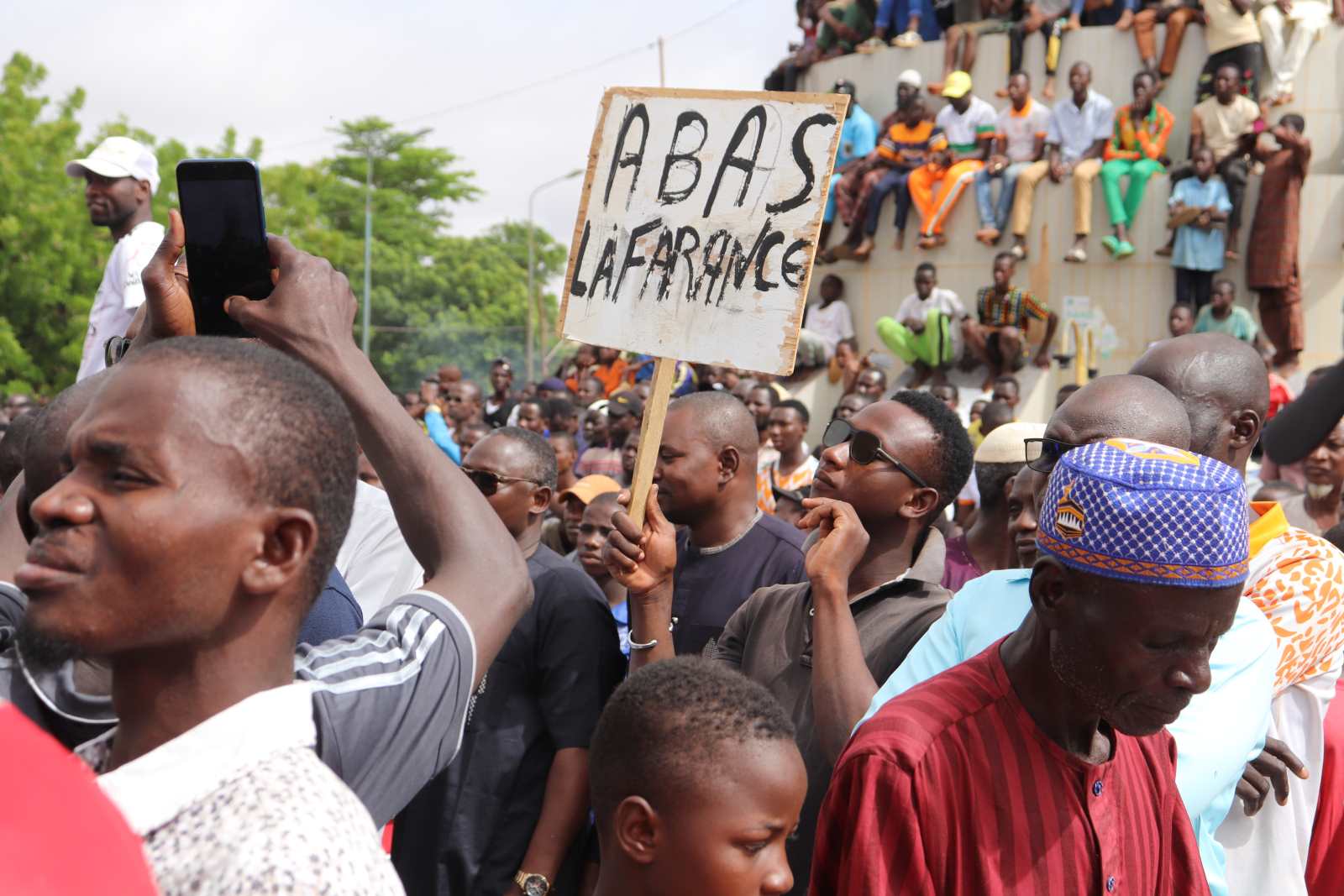
Indeed, France did maintain its influence in Senegal by pursuing a policy of close ties. France kept military bases in the country and intervened when this was deemed necessary. The administrative and justice systems reflected the French model. This influence is clearly evident in economic terms to this day: Senegal’s currency – the CFA franc – is pegged to the euro and French companies are active in key sectors such as telecommunications, construction and infrastructure.
In electing Faye and his government, the Senegalese people expressed their unequivocal rejection of France’s interventionist policy – a message that had very direct consequences. Last year, France withdrew the last French soldiers from the country.
When asked whether Senegal might seek closer ties in future with countries such as Russia and China – as many of its neighbours have – Ngom’s response is noncommittal. However, he does stress that Senegal will take decisions about international cooperation autonomously: “We are free to say: that’s our partner. We can choose our partners ourselves. Sovereignty is our top priority, especially with the new administration in the country.”
Big ambitions, big obstacles
This ambitious vision of national sovereignty is hampered by huge structural and financial challenges, however. Though the government wants to regain control of critical resources and reduce its dependence on foreign countries, its room for manoeuvre is significantly curtailed by a substantial legacy of debt left behind by the previous government (which it had failed to disclose), pressure from international donors and dependence on multinational agreements. Corruption also remains extremely widespread in many areas, posing an obstacle to fair competition, planning certainty and independent government agencies.
The country’s economic stagnation is attributable first and foremost to a lack of industrialisation: Senegal exports cheap raw materials and imports expensive finished products as well as basic foods, making it susceptible to global price shocks. In addition, it suffers from high energy costs and a massive informal sector that generates virtually no tax revenue.
In spite of all this, the country is undergoing a process of political transformation and shows promising potential to serve as a prime example of African sovereignty. Expectations are extremely high, especially among the young population, who primarily voted for Faye.
Jannis Düngemann is a political scientist and freelance author specialising in international topics.
jannisduengemann@yahoo.de