Right-wing populism
“The Sustainable Development Goals are seen as the enemy”


Imme Scholz in an interview with Eva-Maria Verfürth
A little over ten years ago, 193 UN member states agreed to a vision of a more just future for all countries, regardless of their development status – the UN Sustainable Development Goals (SDGs). At the time, it was revolutionary. Now, under President Donald Trump, the USA of all countries has made it clear that it couldn’t care less about that shared goal. Is something being lost?
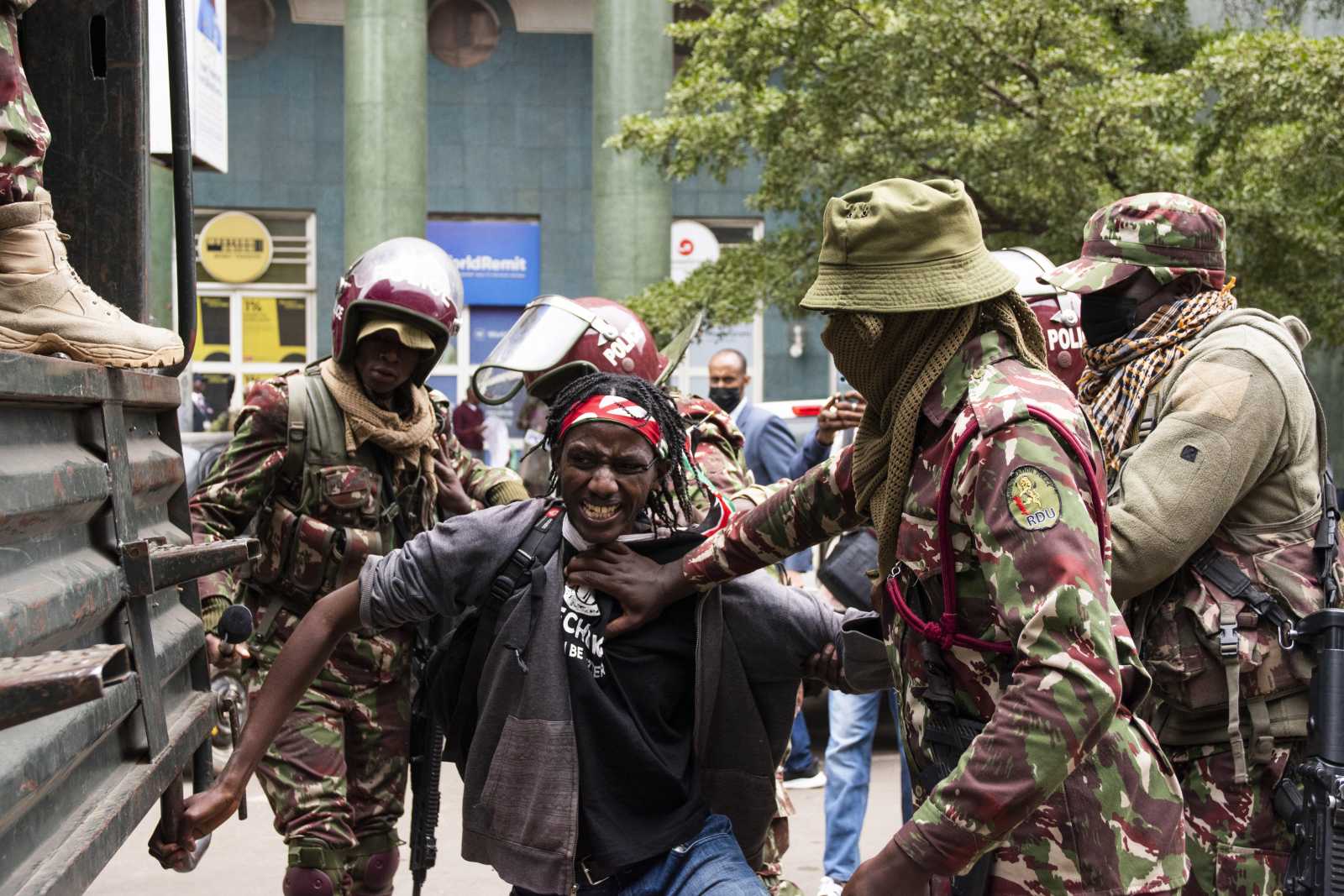
The forces behind Donald Trump and right-wing extremists elsewhere have clearly made the SDGs and the 2030 Agenda part of their enemy narrative. The same trend can be observed in Europe, like when right-wing extremist forces from Latin America and Europe gathered in 2024 at the invitation of Spain’s Vox party. These groups do more than simply ignore the issues the SDGs address – they actively oppose them. They are against gender equality, human rights and climate and biodiversity protection. They are taking political action against the spirit of the SDGs and downplaying the progress that has been made.
Can you explain where this opposition comes from?
Right-wing extremist forces have a completely different worldview. They are working for a future in which everyone fights for themselves. Ideals like international solidarity and democratic values contradict their basic assumptions. The same is true of the idea that humanity has shared interests and must work together to curb climate change or advance global justice. If everyone is their own neighbour, international cooperation is not important or directed at completely different goals.
You anticipated resistance to the implementation of the SDGs: the topic was addressed in the Global Sustainable Development Report (GSDR) 2023, for which you acted as co-chair of the independent group of scientists appointed by the UN. Do the recent developments match your expectations?
We understood at the time that resistance is part of change. If we want to achieve the SDGs, we have to replace unsustainable structures and technologies with sustainable ones – which will generate resistance from those who have profited from these structures and business models in the past. But we assumed that these forces could be integrated. The political resistance that we are experiencing now is something entirely different. These aren’t just reservations about a change that you know has to happen. No, the aim is to completely undermine the change. Climate change is being denied, and everything is being done to expand the fossil fuel economy. The West was never free of contradictions and has not always adhered to its own rules. But the UN Charter with its universal human rights – even though it wasn’t explicitly included in the SDGs – was always a clear reference point. It’s being weakened now.
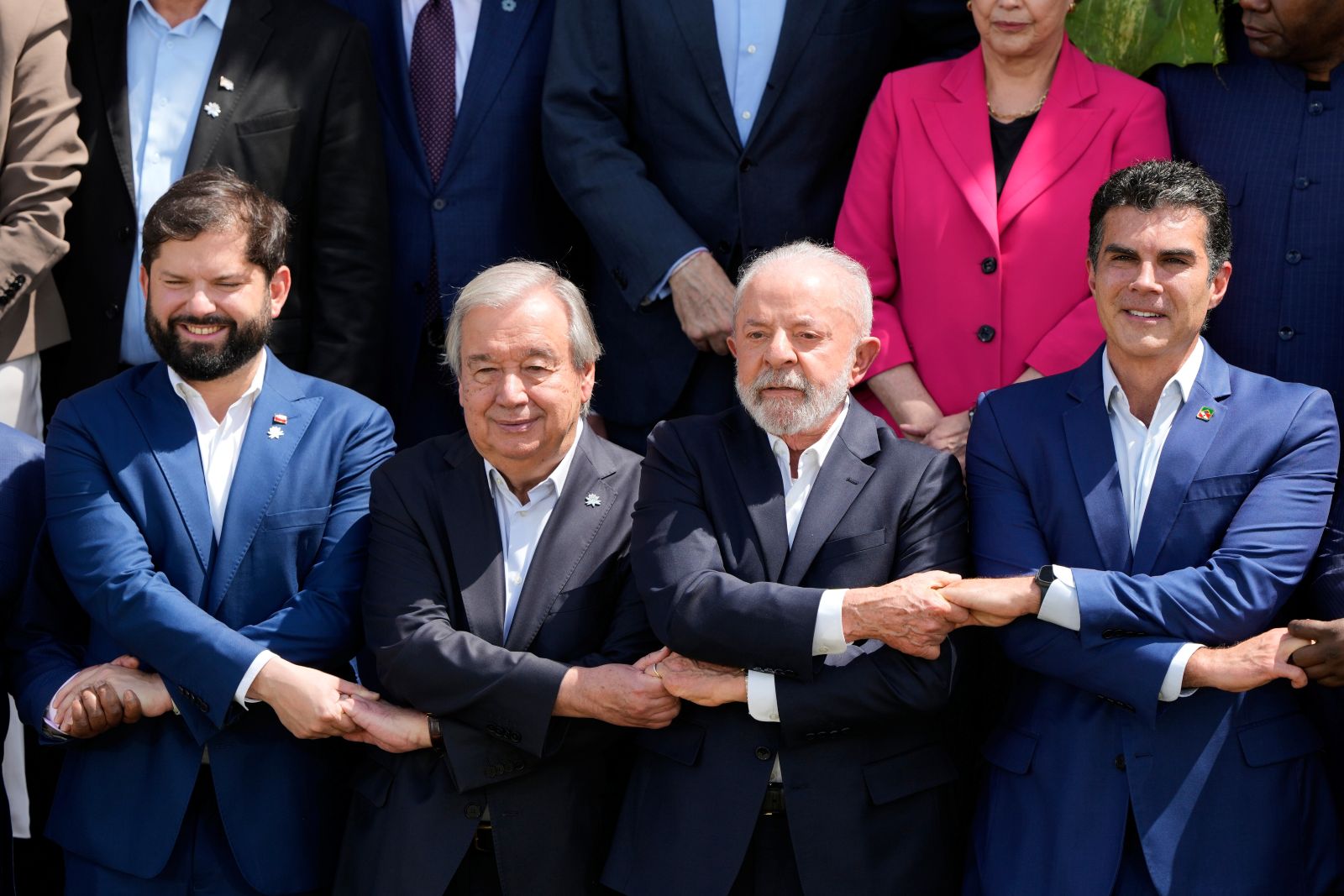
Some countries, like Brazil under its current government, are still promoting shared values. How much support do the SDGs still have?
The fiercest opponents of the 2030 Agenda are obviously in the minority. At the last SDG summit in 2023, the UN confirmed its intention to further the SDGs. The basic consensus is therefore still in place – and that is extremely important. At the same time, there is a sense that the alliance is not very strong at the moment and that the SDGs are not at the top of the agenda. The enthusiasm of 2015 has waned significantly. The multilateral order is being undermined, ignored and supplanted by wars, conflicts and the actions of the USA and Russia in particular. The so-called West, as a political category, no longer exists. And we shouldn’t have any illusions about China, even though it hasn’t proactively opposed the SDGs.
The West is currently withdrawing financially from development cooperation; in Europe, other issues are taking priority. Can an argument still be made for development policy?
Since Russia’s attack on Ukraine, Europe is under more pressure and must put more money into defence. In Germany, however, the National Security Strategy states that military defence is only one aspect of security. A proactive foreign policy and development cooperation with other countries are essential too. Europe is still a powerful union, though not powerful enough to defend its interests against the USA and China on its own. For that, we need cooperation – including with countries of the Global South. We need multilateral rules, institutions and precisely these goals that we have set ourselves together.
In public debates, these considerations are rarely mentioned. Is global cooperation no longer in keeping with the spirit of the times?
If the spirit of the times is defined by right-wing extremist groups, then that is certainly true. But there could be other reasons. When you put the economies of the Global South together, then they have been larger – in terms of purchasing power parity – than those of the old industrialised countries since 2008, even though there are still many small, very poor countries that are facing adversity. But the balance of power has shifted. That has been difficult to accept for the countries that used to clearly be on the winning and dominant side.
In other words: Rich countries can’t accept that they aren’t the strongest anymore? The economic historian Adam Tooze has argued, roughly, that achieving the SDGs was never an honest goal of all of the countries of the Global North because they didn’t actually want to renounce their hegemony. And in fact, the USA and many European countries now want to focus more strongly on their own interests again. What is your reaction to that?
When countries cooperate, their own interests always play a role too, which isn’t necessarily a bad thing. The 2030 Agenda and the climate and biodiversity agenda weren’t agreed on as an act of charity, but rather because they were in everyone’s interest. That fact is often ignored when self-interest is emphasised. At the same time, however, we have planetary boundaries: an increase in prosperity in some regions must be accompanied by a change in prosperity in the wealthiest countries. Innovations, the circular economy and non-fossil fuel technologies can do a lot, but material consumption must also be reduced – especially in the social classes that can afford high levels of consumption. That creates conflict and may have contributed to the opposition we’re seeing now.
Still, I reach a different conclusion than Adam Tooze. These ethical questions were discussed for a long time during the development of the SDGs. They were taken very seriously by many civil-society actors who participated in the development and implementation of the 2030 Agenda, including in Western countries. They had no intention of withdrawing later, like the USA is planning to do now.
What factors have most hindered progress toward the SDGs?
Wars and conflicts not only hinder progress, they also create setbacks. People are killed, societies are destroyed, trust is eroded and, with it, the conditions to bring about improvements. That’s what we determined in the Global Sustainable Development Report from 2023. Global developments since then have unfortunately confirmed our view. Another essential point is the lack of gender equality.
Why is that so central?
Besides the fact that women have rights that must be upheld, greater gender equality has a very positive impact on education and health and therefore also on economic productivity. It is also of central importance for democracy that half of humanity can participate to its full potential. In 2023, UN Secretary-General António Guterres warned that it would take over 300 years to achieve gender equality if we continued at our current pace. That is outrageous.
A third factor is the high level of indebtedness of developing countries. Because they lost income during the Covid-19 pandemic, many developing countries had to borrow money on the private market. Now their interest payments are so high that they can no longer invest in transformation. Rich countries, including China, urgently need to agree to debt relief, but that has not yet occurred.
What will or could the future of the SDGs be?
This fall, the UN appointed the scientists who will draft the GSDR 2027. They will determine what can still be done to achieve the SDGs by 2030 and what should come after them. It is important that we stay focused on this goal, and the report will surely offer another good point of reference. At the same time, we have to think about what a post-2030 Agenda could look like. The “Pact for the Future” already identified new action areas that were not included in the 2015 agreement. The Global Digital Compact, for example, addresses the digital public sphere, disinformation and the erosion of academic freedom. All of these are important battlefields for right-wing extremist forces.
Imme Scholz is the co-president of the Heinrich Böll Foundation and a member of the supervisory board of Brot für die Welt. She is the former director of the German Institute of Development and Sustainability (DIE; now IDOS).
info@boell.de