Disability rights
For Nigeria’s disabled people, inclusion almost only exists on paper


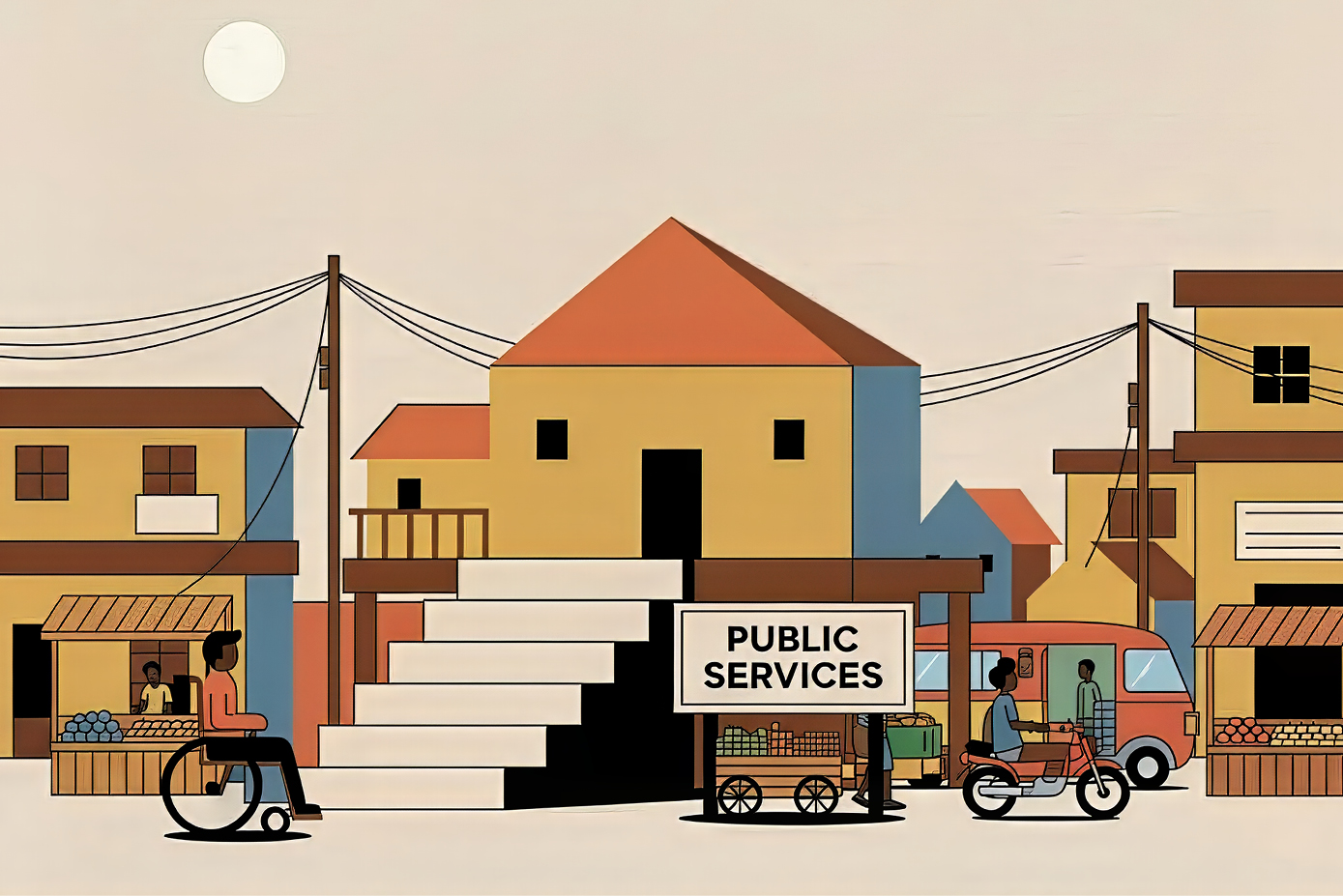
When Amina Yusuf arrived for a job interview in northern Nigeria, the building had no lift, only a steep staircase leading upstairs, a reminder of how legal requirements often fail to be fulfilled due to physical accessibility issues. As a mobility-impaired graduate, she could not reach the office. “I was barred before it began,” she recalls. She didn’t get the job, not because of her qualifications but because even basic accessibility standards were not enforced.
Her experience illustrates a deeper institutional challenge in Nigeria: disability rights are formally protected by law, yet enforcement gaps continue to undermine their practical impact. Nigeria’s Discrimination Against Persons with Disabilities (Prohibition) Act of 2019 mandates that at least five percent of public-sector jobs be reserved for persons with disabilities and establishes the National Commission for Persons with Disabilities (NCPWD) to oversee implementation.
About seven years after its passage, however, gaps in implementation remain, highlighting the challenge of translating legal commitments into measurable inclusion outcomes. According to a new report, about 35 million Nigerians are living with disabilities. Despite this scale, labour participation rates remain significantly lower than those of non-disabled citizens.
For many, legal guarantees have yet to translate into real opportunity – although the country had already ratified the UN Convention on the Rights of Persons with Disabilities in 2008, committing to inclusive governance and equal participation and binding the state to progressively implement and enforce the rights of persons with disabilities.
Ayuba Burki Gufwan, Executive Secretary of the NCPWD, admitted to the Nigerian media that implementation of the five percent quota is progressing but stressed that stricter monitoring and greater institutional commitment are essential. He also noted that inaccessible infrastructure, a lack of awareness among employers and weak enforcement mechanisms at state level continue to undermine the law’s effectiveness. Without a clearer framework for accountability, compliance with the regulations remains more a matter of voluntary action than an enforceable obligation.
International experience shows that effective enforcement mechanisms are essential. In Brazil, quota systems for the employment of people with disabilities – compliance with which is ensured by labour inspectorates and financial penalties – have, according to labour market studies, led to a measurable increase in recruitment figures. This demonstrates that legal reforms must be accompanied by appropriate enforcement capacities and continuous monitoring.
For, amidst all the figures and political objectives, we must not forget that for Amina Yusuf and millions of others, inclusive employment means more than that – it is a path to independence and full participation in society. Furthermore, it is also an investment in economic productivity and social cohesion. The real test for Nigeria now lies not in the strength of its laws but in the political will and institutional capacity to enforce them.
Sarafadeen Olalekan Oyeleke is a professional amputee football player, coach, writer and disability sports educator based in Ilorin, Kwara State, Nigeria.
rhassmako@googlemail.com