Elections
Tanzania is a captured state


Three decades after multiparty democracy was restored in Tanzania, a system that before was briefly in place only for four years after the country’s independence in 1961, the nation is now sliding increasingly into authoritarianism. This is evident in the rise of a powerful class of wealthy individuals, “business politicians” who manipulate electoral processes and exercise control behind the scenes in order to pursue their own economic interests.
A significant part of the problem lies in the country’s constitution, which not only fails to distribute power equitably among the three branches of government – the executive, the legislature and the judiciary – but also lacks provisions that empower citizens to hold elected officials accountable.
Experts agree that a constitution should be evaluated in terms of power and authority – where it is located, how it is granted and how it is distributed, exercised and limited across the various organs of the state. Being the fundamental law from which both legislative and administrative acts derive their authority, an ideal constitution should clearly define the relationship between the state and society.
The doctrine of the separation of powers, with its system of checks and balances, is intended to distribute authority among those who make the law (the legislature), those who enforce it (the executive) and those who interpret it (the judiciary). This principle was designed to ensure that no one stands above the law. Yet although Tanzania’s constitution formally delineates the powers of these three branches, in practice the executive often oversteps its boundaries and encroaches on the functions of the others.
This is partly because Tanzania’s constitution, which has been in force since 1977, vests excessive discretionary power in the presidency. Under the constitution, the president occupies an exceptionally dominant position within the state structure. He or she serves simultaneously as head of state, head of government and commander-in-chief of the armed forces. The president also appoints ministers, senior civil servants and judges to both the High Court and the Court of Appeal. Moreover, the constitution grants the president the authority to declare a state of emergency. He or she also has the power to detain individuals without trial under the “Preventive Detention Act”.
Blurred roles
The constitution further states that courts may not review decisions made by the electoral commission in the exercise of its constitutional functions. The situation is further aggravated by the growing influence of wealthy political-business networks that have effectively captured the executive. As a result, rules, regulations and even court decisions are ignored with impunity.
The presence of judges in administrative institutions is nothing new in Tanzania. They are, for example, present in the electoral commission, which remains a sensitive issue during election periods. It is also not unusual for cabinet ministers – members of the executive branch – to retain their parliamentary seats in various constituencies, rendering the oversight function meaningless.
Similarly, judges have at times served in the executive. For example, High Court Judge Julie Manning was appointed minister of justice, and Court of Appeal Judge Damian Lubuva served as minister of justice too. Both were later appointed, at different times, to positions within the electoral management body. This blurring of roles raises serious concerns about institutional independence and the integrity of governance.
This is why legal experts and opposition leaders have been outspoken in calling for a new constitution – one that clearly upholds the doctrine of the separation of powers and establishes an effective system of checks and balances to ensure that the three branches of government hold each other accountable. Boniface Mwabukusi, president of the Tanganyika Law Society (TLS), told a local newspaper: “We want a constitution that confines parliamentarians to parliamentary duties only.”
Citizens should also have the constitutional power to recall, through a vote of no confidence, both members of parliament and local government councillors who fail to represent their constituents effectively. The lack of responsiveness among parliamentarians is a key factor driving voter apathy in Tanzania. According to media reports, there are a considerable number of members of parliament who rarely ask questions or participate in debates.
“Business politicians”
An equally significant problem is the country’s wealthy politico-economic elite. It has effectively merged business and politics by infiltrating the ruling party and using money to finance its preferred candidates for office in the presidency, parliament and local governments. This financial influence ensures that the government turns a blind eye to corruption and willingly bends the rules to protect the interests of the powerful.
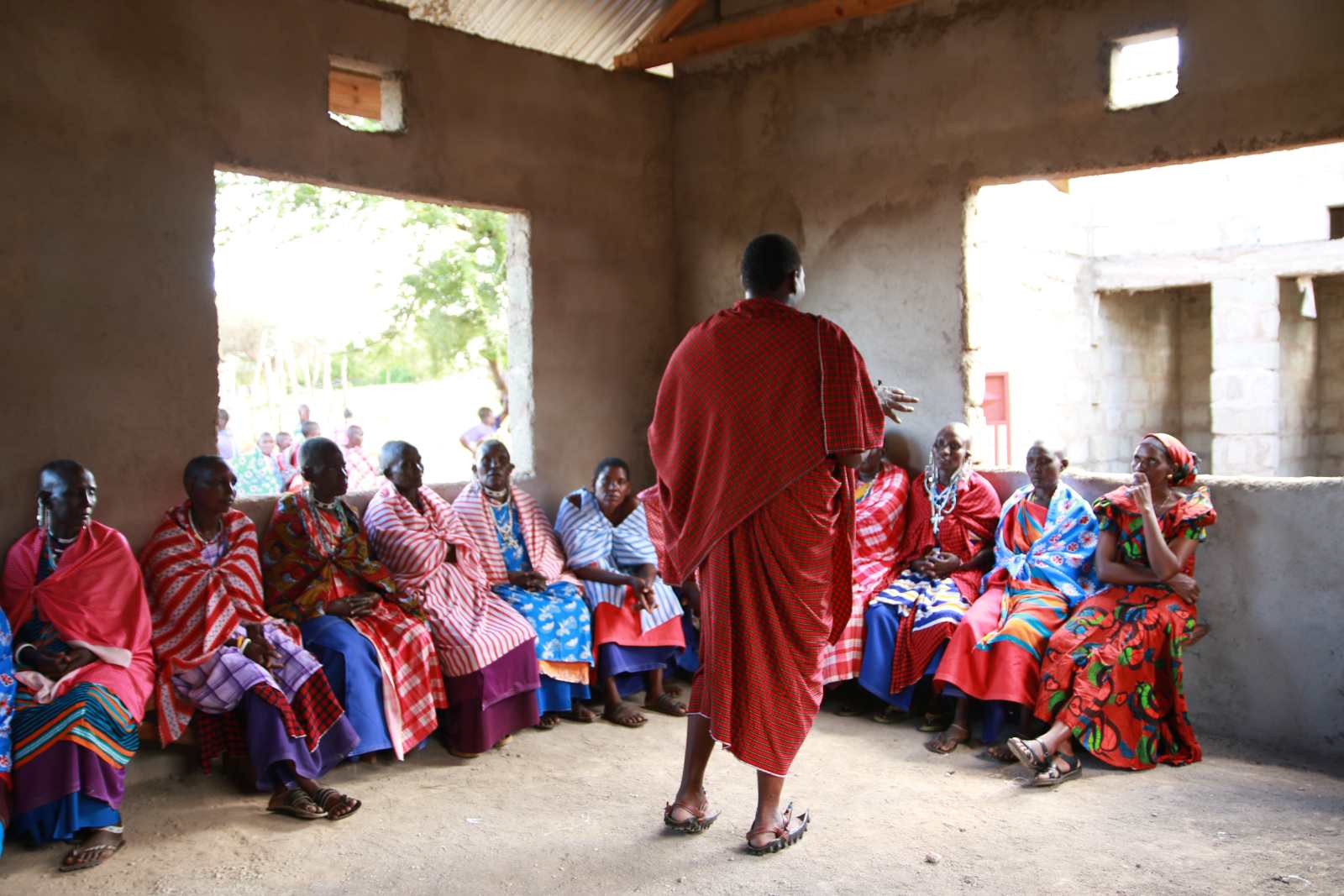
The violent eviction of thousands of Indigenous Maasai from the Ngorongoro Conservation Area – where they had lived for centuries – to make way for tourism and foreign investment is just one example of what happens when the executive, legislature and judiciary are intertwined and dominated by powerful business interests. It is unsurprising therefore that ruling party candidates who opposed the eviction, including Christopher Ole Sendeka, a veteran Maasai parliamentarian of over two decades, were removed from the party’s nomination list.
The commercialisation of politics by the wealthy business elite has hollowed out Tanzania’s democratic process. Elections are no longer determined by candidates’ merit or their responsiveness to citizens’ concerns, hopes and expectations – only money matters.
This leads to a scramble for parliamentary seats in which anyone and everyone participates, driven less by a desire to serve the public than by a quest for access to state resources through connections. This reality explains why political corruption – widely recognised in Tanzania as the root cause of all other forms of corruption – remains deeply entrenched.
Unfortunately, opposition parties are also increasingly driven by greed. And those who do wish to engage in genuine opposition have very little room for manoeuvre without financial independence.
This means that the elite class rules almost without restriction, as the weakness of the constitution – and the resulting blurring of the lines between the executive, the parliament and the judiciary – has undermined accountability and good governance. The question now is where Tanzania is heading as government structures weaken and public trust is shattered. Can the country hold together on a continent plagued by coups and counter-coups?
The influence of money in politics is exacting a heavy toll on Tanzania’s development, tarnishing the reputation of what was once considered one of Africa’s most peaceful and stable nations. Given how deeply money-driven politics has taken root under the control of business politicians, Tanzania risks descending further into a state of political turmoil unlike anything it has experienced since gaining independence in 1961.
Lawrence Kilimwiko is a journalist based in Dar es Salaam, Tanzania.
lkilimwiko@yahoo.com